Use Code: ND30 And Get 30% OFF | Get Free Delivery With No Minimum Order
-1744229570.gif "Almujtama Pharmacy logo")




Frequently bought together
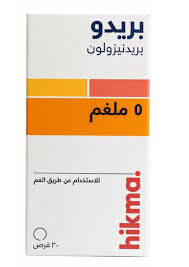
PREDO 5/MG TAB 30/TAB
- Sku : I-023602
Key features
Predo 5mg Tablets 30 Tablets is a tablet formulation containing prednisolone 5 mg as the active ingredient. It is a systemic synthetic glucocorticoid that binds intracellular glucocorticoid receptors to alter gene transcription, decreasing pro‑inflammatory mediators and inducing lipocortin to inhibit phospholipase A2, thereby reducing prostaglandin and leukotriene production. PREDO is indicated for suppression of inflammation and allergic responses and for replacement therapy in adrenocortical insufficiency, and is used across conditions such as asthma/COPD exacerbations, rheumatoid and other autoimmune diseases, dermatologic and ocular inflammation, inflammatory bowel disease, nephrotic syndrome, hematologic immune disorders and certain malignancies. Available as tablets in a pack of 30 (prescription).- Brand: PREDO
- Active Ingredient: PREDNISOLONE 5mg
- Strength: 5mg
- Dosage Form: Tablet
- Pack Size: 30 Tablets
- Route: Oral use
- Prescription Status: Prescription
- Therapeutic Class: Ophthalmic
- Pharmacological Group: Anti-inflammatory (Eye)
- Drug Class: Systemic corticosteroid (synthetic glucocorticoid).
- Manufacturer: Jazeera Pharmaceutical Industries (JPI)
- Country of Origin: Saudi Arabia
- SFDA Registration No.: 2108258092
- Shelf Life: 36 months
- Storage: store below 30°c
- Symptom Target: Inflammation, allergy, autoimmune conditions, adrenocortical insufficiency
- Sedating: No
Frequently bought together
Indications
Approved Uses
Systemic corticosteroid for suppression of inflammation/allergy and for replacement therapy in adrenocortical insufficiency; used across many conditions (e.g., asthma/COPD exacerbations, rheumatoid/autoimmune diseases, dermatologic and ocular inflammation, inflammatory bowel disease, nephrotic syndrome, hematologic immune disorders, and certain malignancies) per local label/clinical use.
Off-Label Uses
Common off-label uses include Bell’s palsy and cluster headache; other uses depend on local protocols (e.g., adjunct in Pneumocystis jirovecii pneumonia, croup) and COVID-19 protocols typically prefer dexamethasone rather than prednisolone.
Dosage & Administration
Dosing by Condition
Dosing is individualized by indication and severity; typical adult initial total daily dose ranges 5-60 mg/day (single morning dose or divided), then taper to the lowest effective dose; pediatric dosing is weight-based (commonly ~0.14-2 mg/kg/day in divided doses) per indication-specific guidelines.
Initial Dose
5-60mg per day, depending on the severity of the condition. [10, 31]
Maintenance Dose
2.5-15mg/day (lowest effective dose)
Maximum Dose
Varies by indication; typical adult range 5-60 mg/day, but short-term high-dose regimens may use ~80-100 mg/day or higher in severe disease under specialist direction (no single universal maximum).
Dose Adjustment Notes
Taper gradually after prolonged therapy to avoid adrenal insufficiency; use the lowest effective dose; increase dose temporarily during significant physiologic stress (e.g., surgery, severe infection) in patients on chronic therapy; no routine renal dose adjustment, and hepatic impairment may increase exposure-use caution and monitor.
How to Take
Oral: take with food or milk to reduce gastrointestinal irritation; swallow with water; if once daily, take in the morning (after breakfast) to better match circadian cortisol and reduce insomnia; follow prescriber directions and do not stop abruptly after prolonged use.
Side Effects
Common Side Effects
Increased appetite, weight gain, fluid retention/edema, insomnia, mood changes, dyspepsia/indigestion, hyperglycemia, hypertension, acne, increased sweating, headache.
Side Effect Frequency
Common/very common (especially dose- and duration-dependent): increased appetite, weight gain, hyperglycemia, dyspepsia/GI upset, insomnia, mood changes, fluid retention/edema and hypertension; with longer-term use: osteoporosis, adrenal suppression, cataract/glaucoma, myopathy, skin thinning/bruising, and increased infection risk; rare but serious: peptic ulcer/GI bleeding, psychosis, avascular necrosis, opportunistic infections.
Safety & Warnings
Contraindications
Systemic fungal infection; hypersensitivity to prednisolone (or excipients); administration of live/live-attenuated vaccines in patients receiving immunosuppressive doses of systemic corticosteroids.
Warnings & Precautions
Key precautions: increased infection risk/masking of infection (consider TB/strongyloides risk assessment before long-term therapy); avoid live vaccines at immunosuppressive doses; monitor BP, glucose, weight/edema, electrolytes, and eye health with prolonged use; use caution in diabetes, hypertension, heart failure, peptic ulcer disease, osteoporosis, glaucoma/cataracts, and psychiatric history; taper after prolonged/high-dose use; monitor growth in children; consider bone protection for long-term therapy and provide a steroid card/medical alert for chronic use.
Age Restriction
No absolute minimum age; can be used in pediatrics (including infants/neonates) only when clearly indicated and under specialist supervision; monitor growth with prolonged therapy.
Drug Interactions
Drug Interactions
Key interactions: NSAIDs (↑ GI ulcer/bleed risk); warfarin/anticoagulants (variable INR effect-monitor); antidiabetics (↓ glycemic control); CYP3A4 inhibitors e.g., ketoconazole/macrolides (↑ prednisolone exposure); CYP3A4 inducers e.g., rifampicin/phenytoin/carbamazepine (↓ exposure); diuretics/amphotericin B (↑ hypokalemia); ciclosporin (↑ levels/toxicity both ways); live vaccines (avoid/contraindicated at immunosuppressive doses).
Interaction Severity
MAJOR: live vaccines (avoid with immunosuppressive doses/prolonged therapy). MODERATE/CLINICALLY SIGNIFICANT: NSAIDs/aspirin (GI ulcer/bleed), warfarin (INR changes), antidiabetics (hyperglycemia), strong CYP3A inducers e.g., rifampicin (reduced effect), strong CYP3A inhibitors e.g., azoles (increased exposure), diuretics/amphotericin B (hypokalemia), cyclosporine (mutual toxicity), fluoroquinolones (tendon rupture risk). MINOR: antacids may reduce absorption if taken simultaneously (separate dosing).
Food Interaction
Take with food or milk to reduce gastrointestinal irritation; otherwise no specific food restrictions.
Special Populations
Kidney Impairment
No dose adjustment required; use with caution in significant renal impairment due to fluid retention, hypertension, and electrolyte effects.
Storage & Patient Advice
Missed Dose
Take the missed dose as soon as remembered the same day; if it is close to the next dose, skip the missed dose and resume the regular schedule; do not double doses.
Stopping the Medicine
Do not stop abruptly after prolonged therapy (typically >2-3 weeks) or high-dose/repeated courses; taper gradually under medical supervision.
Overdose
Acute overdose is usually not life-threatening; may cause GI upset, fluid retention, hypertension, hyperglycemia, mood changes, and electrolyte disturbances; chronic excessive dosing can cause Cushingoid features and adrenal suppression-management is supportive with monitoring (glucose, BP, electrolytes) and medical evaluation.
Patient Counseling
Take with food or milk; take in the morning (single daily dosing) to reduce insomnia/HPA-axis disruption; do not stop abruptly-taper if used beyond a short course; report signs of infection and avoid exposure to chickenpox/measles if non-immune; avoid live vaccines during systemic therapy (and follow clinician advice on timing); monitor blood glucose if diabetic; watch for mood/psychiatric changes, GI upset/bleeding, swelling/weight gain, and vision changes; carry a steroid card/alert if on prolonged or high-dose therapy.
Monitoring Requirements
If prolonged/high-dose therapy: monitor blood pressure, blood glucose, weight, electrolytes (especially potassium), signs of infection, and for long-term use bone health (BMD/osteoporosis risk), eye exams (cataract/glaucoma), growth in children, and adrenal suppression/HPA-axis recovery when tapering.
Pharmacology
Mechanism of Action
Binds intracellular glucocorticoid receptors to alter gene transcription, decreasing pro-inflammatory cytokines/mediators; induces lipocortin to inhibit phospholipase A2, reducing arachidonic-acid-derived prostaglandins and leukotrienes, producing anti-inflammatory and immunosuppressive effects.
Onset of Action
Clinical onset is typically within a few hours; peak plasma levels occur in ~1-2 hours after oral dosing, while maximal anti-inflammatory benefit may take longer depending on condition.
Duration of Effect
Biologic effect typically lasts about 12-36 hours (intermediate-acting glucocorticoid).
Half-Life
Plasma elimination half-life ~2-4 hours (biologic effect duration is longer).
Bioavailability
Approximately 70-90% (commonly cited ~80%).
Metabolism
Primarily hepatic metabolism (CYP3A4 and reduction/oxidation pathways), with interconversion with prednisone via 11β-hydroxysteroid dehydrogenase; metabolites are then conjugated.
Excretion
Primarily renal excretion as inactive metabolites (mainly glucuronide and sulfate conjugates), with a small fraction excreted unchanged.
Protein Binding
High protein binding ~70-90% (to albumin and corticosteroid-binding globulin/transcortin), concentration-dependent.
Product Information
Available Dosage Forms
For this SFDA-registered product: oral tablet 5 mg (blister pack of 30).
Composition per Dose
Each tablet: 5mg prednisolone
Generic Availability
Yes
OTC Alternatives
No true OTC alternative to oral prednisolone (systemic corticosteroid); for mild self-limited allergic symptoms, OTC non-sedating antihistamines (e.g., cetirizine, loratadine) may be used, and for minor pain/fever OTC analgesics (e.g., paracetamol/ibuprofen) may be used if appropriate, but these are not therapeutic substitutes for systemic steroid indications.
Symptom Target
Inflammation, allergy, autoimmune conditions, adrenocortical insufficiency
Sedating
No
Reviewed by Al Mujtama Pharmacy Medical Review Team. Last reviewed 20-08-2026
Similar Products