
Use Code: ND30 And Get 30% OFF | Get Free Delivery With No Minimum Order
-1744229570.gif "Almujtama Pharmacy logo")




Frequently bought together

Skin And Body Care > Moisturizers

Skin And Body Care > Moisturizers
Health Care & Wellness > Medical Supplies
Health Care & Wellness > Medical Supplies
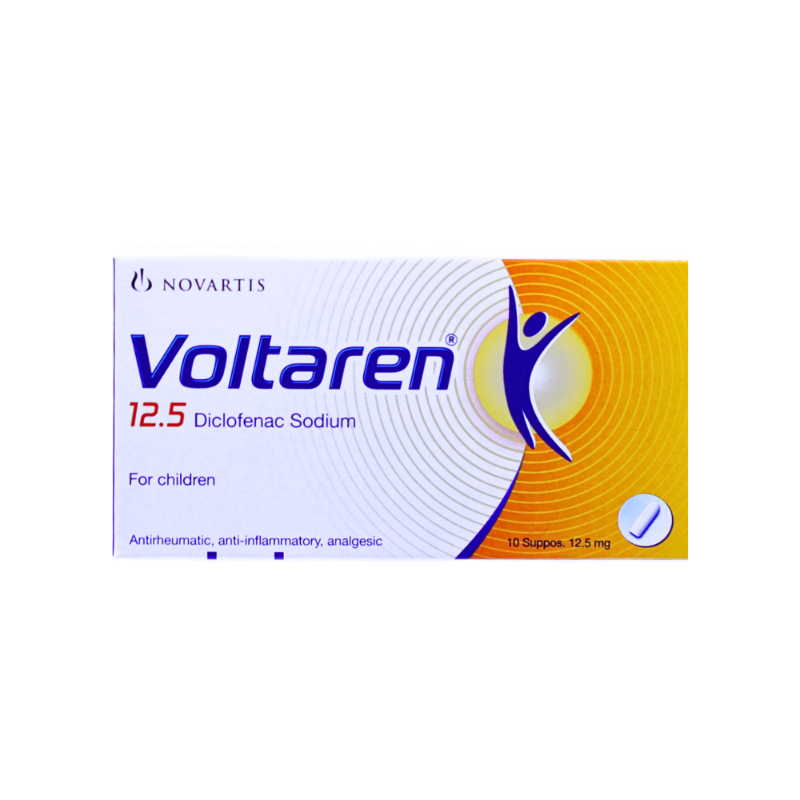
VOLTAREN 12.5/MG SUPP FOR CHILDREN 10/SUPP
- Sku : I-006743
Key features
VOLTAREN 12.5 mg Suppositories for Children are a prescription rectal formulation containing the active ingredient diclofenac sodium. Diclofenac inhibits cyclooxygenase enzymes (COX‑1 and COX‑2), reducing prostaglandin synthesis to relieve inflammation, pain and fever. It is indicated for short-term symptomatic treatment of pain and/or fever and inflammatory conditions where rectal diclofenac is appropriate, including acute (post‑operative) and musculoskeletal inflammatory pain in children. Supplied as 10 suppositories per pack.- Brand: VOLTAREN
- Active Ingredient: DICLOFENAC SODIUM
- Strength: 12.5mg
- Dosage Form: Suppository
- Pack Size: 10 Suppositories
- Route: Rectal use
- Prescription Status: Prescription
- Therapeutic Class: Analgesic
- Pharmacological Group: Acetic Acid Derivatives (NSAIDs)
- Drug Class: Nonsteroidal anti-inflammatory drug (NSAID); non-selective COX inhibitor; acetic acid (phenylacetic acid) derivative (ATC M01AB05).
- Manufacturer: DELPHARM HUNINGUE S.A.S.
- Country of Origin: France
- SFDA Registration No.: 124-9-16
- Shelf Life: 36 months
- Storage: store below 30°c
- Pain Type: General, Muscular, Joint
- Nsaid: Yes
- Opioid: No
Frequently bought together
Skin And Body Care > Moisturizers
Skin And Body Care > Moisturizers
Health Care & Wellness > Medical Supplies
Health Care & Wellness > Medical Supplies
Indications
Approved Uses
Short-term symptomatic treatment of pain and/or fever and inflammatory conditions where rectal diclofenac is appropriate (e.g., acute pain including post‑operative pain, musculoskeletal/inflammatory pain); use in children is typically for short-term pain/fever under medical supervision.
Off-Label Uses
Juvenile idiopathic arthritis (JIA) symptom control may be used off-label depending on local labeling and specialist direction.
Dosage & Administration
Dosing by Condition
Children (rectal): 0.5 mg/kg per dose every 6-8 hours as needed; maximum 3 mg/kg/day
Initial Dose
0.5-1 mg/kg per dose rectally
Maintenance Dose
0.5 mg/kg rectally every 6-8 hours as needed
Maximum Dose
Rectal (children): do not exceed a total diclofenac dose of 3 mg/kg/day from all routes (rectal/oral combined).
Children's Dosage
For juvenile idiopathic arthritis (off-label), 2-3 mg/kg/day has been used in children aged 3-16 years. The 12.5mg suppository is intended for children.
Dose Adjustment Notes
Use the lowest effective dose for the shortest duration; avoid in severe renal impairment/advanced renal disease and use caution with renal dysfunction or dehydration; use caution in hepatic impairment and discontinue if significant LFT elevation occurs.
How to Take
For rectal use only. Remove suppository from the blister/foil, insert into the rectum (preferably after a bowel movement); for children, place on the side with knees flexed, insert the pointed end gently, and keep the child lying for a few minutes. Wash hands before and after.
Side Effects
Common Side Effects
Abdominal pain/dyspepsia, nausea/vomiting, diarrhea (or constipation), headache/dizziness; rectal irritation/discomfort may occur with suppositories.
Side Effect Frequency
Common: GI symptoms (abdominal pain, nausea, dyspepsia, diarrhea/constipation), headache/dizziness; rectal irritation can occur with suppositories. Uncommon/rare but serious: GI ulceration/bleeding/perforation (e.g., black stools), hypersensitivity/anaphylaxis, severe cutaneous adverse reactions (SJS/TEN), hepatotoxicity (elevated LFTs/jaundice), and renal impairment.
Safety & Warnings
Contraindications
Hypersensitivity to diclofenac/NSAIDs; history of aspirin/NSAID-induced asthma/urticaria/anaphylactoid reactions; active GI bleeding or peptic ulcer; severe hepatic or severe renal failure; severe heart failure; proctitis/anorectal inflammation (rectal products); third-trimester pregnancy; CABG peri-operative pain.
Warnings & Precautions
Use lowest effective dose for shortest duration; increased CV thrombotic and serious GI risk; avoid concomitant NSAIDs; monitor for GI bleeding, BP/edema/heart failure worsening, renal function (esp. dehydration/CKD/ACEi/ARB/diuretic use), and liver enzymes if prolonged; avoid in proctitis/anorectal disorders (rectal); pregnancy: avoid from 20 weeks onward due to fetal renal dysfunction/oligohydramnios and contraindicated in 3rd trimester (ductus arteriosus closure).
Age Restriction
Pediatric suppository; generally used in children ≥1 year (avoid in infants <1 year unless specialist-directed).
Drug Interactions
Drug Interactions
Clinically important interactions include: anticoagulants/antiplatelets (↑ bleeding), other NSAIDs/aspirin (↑ GI/CV risk), corticosteroids and SSRIs/SNRIs (↑ GI bleeding), ACEi/ARB/diuretics (↓ antihypertensive/diuretic effect; ↑ AKI risk-'triple whammy'), lithium (↑ levels), methotrexate (↑ toxicity), cyclosporine/tacrolimus (↑ nephrotoxicity), digoxin (↑ levels).
Interaction Severity
MAJOR: Anticoagulants/antiplatelets (e.g., warfarin), other NSAIDs (including high-dose aspirin) due to bleeding/GI risk; Methotrexate and lithium (increased toxicity/levels). MODERATE: ACE inhibitors/ARBs/diuretics (renal risk and reduced antihypertensive/diuretic effect), corticosteroids and SSRIs/SNRIs (increased GI bleeding), cyclosporine/tacrolimus (nephrotoxicity).
Food Interaction
No restriction
Special Populations
Children
For juvenile idiopathic arthritis (off-label), 2-3 mg/kg/day has been used in children aged 3-16 years. The 12.5mg suppository is intended for children.
Kidney Impairment
No formal adjustment for mild-moderate renal impairment but use cautiously with monitoring; avoid in advanced renal disease (eGFR/CrCl <30 mL/min) or if renal function worsens/dehydration is present.
Storage & Patient Advice
Missed Dose
If used on a schedule, give as soon as remembered unless it is close to the next dose; skip the missed dose if close to the next dose and do not double. If used PRN, give the next dose when needed within the prescribed maximum.
Stopping the Medicine
No taper is required; may stop when no longer needed-if used regularly/long-term, stop and seek medical advice if symptoms recur or if adverse effects occur.
Overdose
Possible overdose effects: nausea/vomiting, abdominal pain, GI bleeding, dizziness/drowsiness, headache, hypotension, renal impairment/failure, metabolic acidosis, seizures (rare), and hepatic injury; management is supportive with urgent medical evaluation/poison center contact (activated charcoal only if recent oral ingestion-less relevant for rectal).
Patient Counseling
For rectal use only: insert one suppository gently into the rectum (preferably after a bowel movement); wash hands before/after. Use the lowest effective dose for the shortest duration as prescribed. Do not use with other NSAIDs (e.g., ibuprofen, naproxen) or aspirin unless the prescriber directs. Stop and seek urgent care if signs of GI bleeding (black/tarry stools, blood in stool/vomit), severe abdominal pain, allergic reaction (wheeze, facial swelling, hives), severe skin rash, or unusual bruising occur. Avoid use if the child has rectal/anal inflammation or bleeding unless advised by a clinician. Store below 30°C and keep out of reach of children.
Monitoring Requirements
Monitor for GI bleeding/ulcer symptoms, renal function (especially if dehydrated or on ACEi/ARB/diuretics), liver enzymes with prolonged/repeated use, blood pressure/edema, and hypersensitivity/asthma exacerbation.
Pharmacology
Mechanism of Action
Inhibits COX-1 and COX-2, reducing prostaglandin synthesis and thereby decreasing inflammation, pain, and fever.
Onset of Action
30-60 minutes
Half-Life
1.2-2 hours.
Bioavailability
Rectal bioavailability is higher than oral, approximately 80-100%
Metabolism
Extensive hepatic metabolism primarily via CYP2C9 (major), with minor contributions from other CYPs (e.g., CYP3A4/2C8) and subsequent glucuronidation/sulfation.
Excretion
Elimination is mainly as metabolites: ~65% in urine and ~35% via bile/feces.
Protein Binding
>99% protein bound, mainly to albumin.
Product Information
Available Dosage Forms
For this SFDA-registered product: Suppository (rectal).
Composition per Dose
Each suppository: 12.5 mg diclofenac sodium
Generic Availability
Yes
OTC Alternatives
For pediatric pain/fever: paracetamol (acetaminophen) and ibuprofen (age/weight-appropriate formulations).
Pain Type
General, Muscular, Joint
Nsaid
Yes
Opioid
No
Reviewed by Al Mujtama Pharmacy Medical Review Team. Last reviewed 11-06-2026
Similar Products
Medications > Gastrointestinal Medications

Medications > Painkillers and Antipyretics
Medications > Psychiatric Medications
Medications > Psychiatric Medications
Medications > Painkillers and Antipyretics
Medications > Sexual Health
Medications > Dermatology Medications
Medications > Sexual Health
Medications > Dermatology Medications
Medications > Gastrointestinal Medications
