
Use Code: WF26 And Get 30% OFF, T&C Applay | Get Free Delivery With No Minimum Order
-1744229570.gif "Almujtama Pharmacy logo")




Frequently bought together
Skin And Body Care > Moisturizers
Skin And Body Care > Moisturizers
Skin And Body Care > Moisturizers

Skin And Body Care > Facial Wash And Exfoliators

Skin And Body Care > Facial Wash And Exfoliators
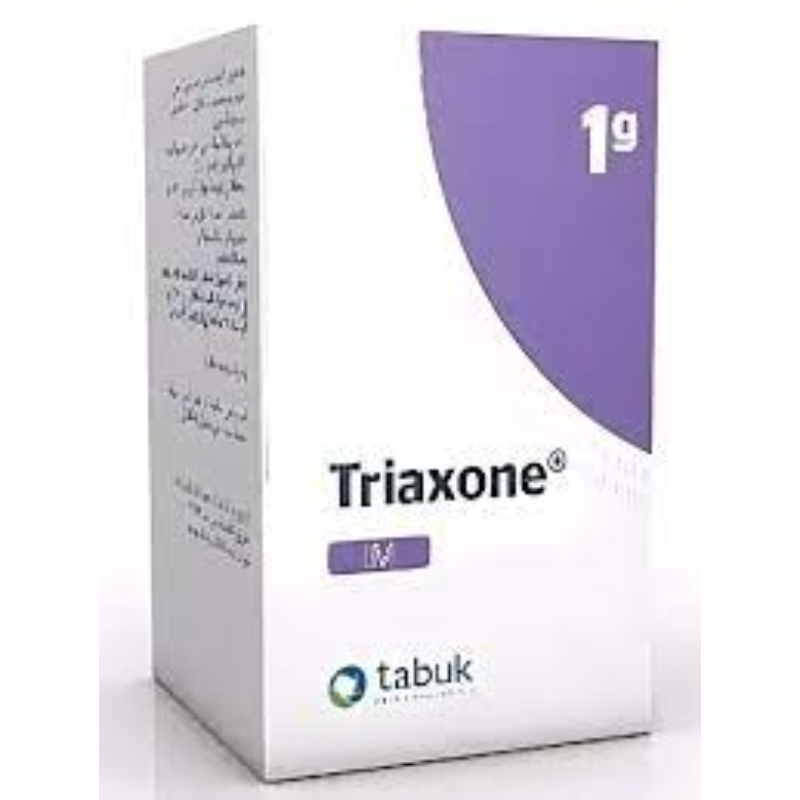
TRIAXONE (IM) 1/G 1/VIAL+1/SOLVENT AMP
- Sku : I-017455
Key features
TRIAXONE 1GM IM VIAL is an intramuscular solution containing the third-generation cephalosporin ceftriaxone 1 g. It inhibits bacterial cell wall synthesis by binding to penicillin-binding proteins and blocking the transpeptidation (cross-linking) step of peptidoglycan formation, resulting in bacterial cell lysis. It is indicated for a broad range of bacterial infections including lower respiratory tract infections (including pneumonia), acute bacterial otitis media, skin and skin structure infections, urinary tract infections, uncomplicated gonorrhea, pelvic inflammatory disease, bacterial septicemia, bone and joint infections, intra-abdominal infections, meningitis, and surgical prophylaxis. Available as a 1 g intramuscular vial (pack size: 1 vial); prescription only.- Brand: TRIAXONE
- Active Ingredient: CEFTRIAXONE 1g
- Strength: 1g
- Dosage Form: Solution
- Pack Size: 1 Vial
- Route: Intramuscular use
- Prescription Status: Prescription
- Therapeutic Class: Anti-infective
- Pharmacological Group: Third-generation Cephalosporins
- Drug Class: Third-generation Cephalosporin Antibiotic
- Manufacturer: TABUK PHARMACEUTICAL MANUFACTURING CO.
- Country of Origin: Saudi Arabia
- SFDA Registration No.: 45-277-98
- Shelf Life: 30 months
- Storage: do not store above 30°c
- Application: Intramuscular or Intravenous (this specific product is formulated for intramuscular use with lidocaine diluent, but ceftriaxone can be administered by both routes)
Frequently bought together
Skin And Body Care > Moisturizers
Skin And Body Care > Moisturizers
Skin And Body Care > Moisturizers
Skin And Body Care > Facial Wash And Exfoliators
Skin And Body Care > Facial Wash And Exfoliators
Indications
Approved Uses
Lower respiratory tract infections (including pneumonia), Acute bacterial otitis media, Skin and skin structure infections, Urinary tract infections (complicated and uncomplicated), Uncomplicated gonorrhea, Pelvic inflammatory disease, Bacterial septicemia, Bone and joint infections, Intra-abdominal infections, Meningitis, Surgical prophylaxis.
Dosage & Administration
Dosing by Condition
Community-acquired pneumonia (adult): 1-2 g IV/IM once daily. Bacterial meningitis (adult): 2 g IV every 12 hours. Uncomplicated gonorrhea: 500 mg IM single dose (<150 kg) or 1 g IM single dose (≥150 kg).
Initial Dose
1g IM once daily
Maintenance Dose
1-2g IM/IV once daily. Doses up to 4g daily (divided every 12 hours) may be used for severe infections like meningitis.
Maximum Dose
4g per day (for meningitis and severe infections)
Children's Dosage
Neonates (0-14 days): 20-50mg/kg/day IV (avoid IM with lidocaine solvent in neonates). Infants and children: 50-100mg/kg/day IV/IM once daily (max 4g/day for meningitis). Gonorrhea in children >45kg: adult dosing
Dose Adjustment Notes
No dosage adjustment is usually needed in renal impairment or hepatic impairment alone; in severe combined renal and hepatic impairment, limit total daily dose to ≤2 g and consider monitoring ceftriaxone levels/clinical response.
How to Take
For intramuscular use only (this product includes lidocaine diluent). Reconstitute as directed and administer as a deep IM injection into a large muscle (e.g., gluteal); rotate sites. Do not administer intravenously. If a total IM dose >1 g is required, divide between two injection sites.
How to Prepare
Reconstitute the 1 g IM vial with the supplied 5 mL lidocaine diluent, shake until fully dissolved, and administer by deep IM injection; use promptly after reconstitution and ensure the solution is clear to slightly yellow before use.
Safety & Warnings
Contraindications
Contraindicated in: (1) hypersensitivity to ceftriaxone/cephalosporins; (2) neonates (≤28 days) with hyperbilirubinemia, especially premature; (3) neonates (≤28 days) receiving or expected to receive IV calcium-containing solutions; plus for this specific IM product: (4) hypersensitivity to lidocaine (amide local anesthetics) and (5) IV administration of the lidocaine-containing diluent is contraindicated (IM use only).
Warnings & Precautions
Key warnings/precautions: do not mix/co-administer with calcium-containing IV solutions in neonates and avoid/segregate with calcium IV solutions due to precipitation risk; monitor for hypersensitivity (including in penicillin-allergic patients); monitor for C. difficile diarrhea; biliary sludge/pseudolithiasis can occur (more with high dose/prolonged therapy); monitor coagulation/INR in at-risk patients or on anticoagulants; not for intrathecal use; and for this SFDA IM product specifically, the lidocaine-containing diluent is for IM use only and must not be administered IV.
Age Restriction
Avoid this IM lidocaine-containing ceftriaxone product in neonates (≤28 days); ceftriaxone itself is contraindicated in hyperbilirubinemic neonates and in neonates receiving (or expected to receive) IV calcium-containing solutions. Use in older infants/children is permitted when clinically indicated.
Drug Interactions
Drug Interactions
Major: IV calcium-containing solutions in neonates (≤28 days) are contraindicated; avoid/segregate administration with calcium-containing IV solutions due to precipitation risk. Moderate/clinically relevant: warfarin/other anticoagulants (↑INR/bleeding risk), live bacterial vaccines (reduced vaccine efficacy), and additive nephrotoxicity risk when combined with other nephrotoxic agents (e.g., aminoglycosides) though ceftriaxone itself is not strongly nephrotoxic. Probenecid: minimal/no clinically meaningful effect on ceftriaxone exposure.
Interaction Severity
MAJOR: Calcium-containing IV solutions-do not co-administer or mix; contraindicated in neonates and avoid Y-site/line mixing in all ages due to precipitation risk. MODERATE: Warfarin/other anticoagulants (↑INR/bleeding risk-monitor). MODERATE: Live bacterial vaccines (e.g., oral typhoid, BCG) may have reduced efficacy-separate timing. (Aminoglycosides: no direct incompatibility with ceftriaxone, but if combined for clinical reasons monitor renal function due to aminoglycoside toxicity.)
Food Interaction
No food restrictions (parenteral administration).
Special Populations
Children
Neonates (0-14 days): 20-50mg/kg/day IV (avoid IM with lidocaine solvent in neonates). Infants and children: 50-100mg/kg/day IV/IM once daily (max 4g/day for meningitis). Gonorrhea in children >45kg: adult dosing
Kidney Impairment
No adjustment needed for renal impairment alone for usual dosing; in severe renal impairment (CrCl <10 mL/min) or when renal impairment is combined with significant hepatic dysfunction, do not exceed 2 g/day and monitor clinically (and levels if available).
Storage & Patient Advice
Preparation Instructions
Reconstitute the 1 g IM vial with the supplied 5 mL lidocaine diluent, shake until fully dissolved, and administer by deep IM injection; use promptly after reconstitution and ensure the solution is clear to slightly yellow before use.
Missed Dose
Because this is typically administered by a healthcare professional, if a dose/appointment is missed, contact the clinic to receive it as soon as possible; do not double doses to make up for a missed dose.
Stopping the Medicine
Complete the prescribed course; no taper is required-stop after the final dose unless the prescriber advises otherwise.
Patient Counseling
This product is for IM use only and is supplied with lidocaine diluent-tell your provider if you have allergy to lidocaine/local anesthetics. Complete the prescribed course; report severe/persistent diarrhea, rash, or breathing/swelling symptoms urgently. Inform providers about beta-lactam allergy history and anticoagulant use; keep follow-up appointments for injections and monitoring if therapy is prolonged.
Monitoring Requirements
With prolonged therapy: monitor CBC and liver enzymes; assess renal function as clinically indicated. Monitor PT/INR in patients on anticoagulants or with low vitamin K stores/malnutrition. Monitor for hypersensitivity, severe diarrhea/C. difficile, and superinfection; consider drug levels only in severe combined renal/hepatic impairment or unusual clinical scenarios.
Pharmacology
Mechanism of Action
Inhibits bacterial cell wall synthesis by binding to penicillin-binding proteins (PBPs), blocking the transpeptidation (cross-linking) step of peptidoglycan synthesis, leading to cell lysis and death.
Onset of Action
After IM administration, peak plasma concentrations occur in about 2-3 hours; clinical effect begins as therapeutic levels are achieved within the first few hours.
Duration of Effect
Approximately 24 hours (supports once-daily dosing for many infections).
Half-Life
About 5.8-8.7 hours in healthy adults (often cited ~6-9 hours).
Bioavailability
Approximately 100% bioavailability after IM administration.
Metabolism
Not significantly metabolized; eliminated largely as unchanged drug (any minor degradation in the gut is not clinically meaningful metabolism).
Excretion
Approximately 33-67% excreted unchanged in urine; the remainder excreted via bile into feces (largely unchanged).
Product Information
Available Dosage Forms
Powder for solution for injection (IM vial supplied with lidocaine diluent); ceftriaxone is also commonly available in other presentations (e.g., IV/IM powder for injection and infusion preparations), but this specific SFDA-registered product is the IM vial with lidocaine solvent.
Composition per Dose
Each vial: 1g ceftriaxone as ceftriaxone sodium; supplied with 5ml lidocaine hydrochloride solvent for intramuscular reconstitution
Generic Availability
Yes
Application
Intramuscular or Intravenous (this specific product is formulated for intramuscular use with lidocaine diluent, but ceftriaxone can be administered by both routes)
Reviewed by Al Mujtama Pharmacy Medical Review Team. Last reviewed 29-06-2026
Similar Products
Medications > Eye and Ear Medications
Medications > Eye and Ear Medications
Medications > Sexual Health
Medications > Diabetes Medications
Medications > Painkillers and Antipyretics
Medications > Painkillers and Antipyretics

Medications > Cold, Cough, and Allergy Medications
Medications > Cholesterol Medications
Medications > Cold, Cough, and Allergy Medications
Medications > Gastrointestinal Medications
