
Use Code: ND30 And Get 30% OFF | Get Free Delivery With No Minimum Order
-1744229570.gif "Almujtama Pharmacy logo")




Frequently bought together
Health Care & Wellness > Medical Supplies
Skin And Body Care > Moisturizers
Skin And Body Care > Moisturizers
Vitamins & Supplements > Vitamins and Minerals
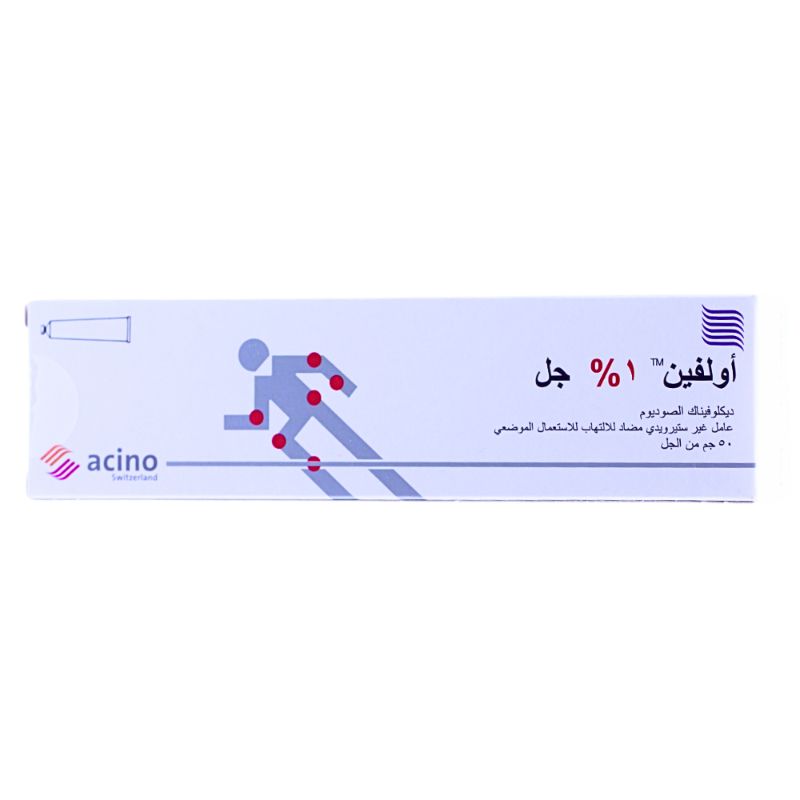
OLFEN 1% GEL 50G
- Sku : I-004593
Key features
OLFEN 1% GEL 50G is a topical gel containing diclofenac sodium 1%. It inhibits COX‑1 and COX‑2, reducing prostaglandin synthesis at the application site to relieve local inflammation, pain and swelling. It is indicated for local symptomatic relief of pain and inflammation in musculoskeletal conditions suitable for topical NSAID therapy, such as acute soft‑tissue injuries (sprains, strains, contusions) and localized osteoarthritis of peripheral joints. Available OTC as a 50 g topical gel.- Brand: OLFEN
- Active Ingredient: DICLOFENAC SODIUM 1%
- Strength: 1%
- Dosage Form: Gel
- Pack Size: 50 g
- Route: Topical
- Prescription Status: OTC
- Therapeutic Class: Musculoskeletal
- Pharmacological Group: Topical Joint & Muscle Products
- Drug Class: Topical nonsteroidal anti-inflammatory drug (NSAID); diclofenac is a phenylacetic acid derivative.
- Manufacturer: Sofarimex SA
- Country of Origin: Portugal
- SFDA Registration No.: 1901268941
- Shelf Life: 36 months
- Storage: do not store above 30°c
- Pain Type: Muscular/Joint
- Nsaid: Yes
- Opioid: No
Frequently bought together
Health Care & Wellness > Medical Supplies
Skin And Body Care > Moisturizers
Skin And Body Care > Moisturizers
Vitamins & Supplements > Vitamins and Minerals
Indications
Approved Uses
Local symptomatic relief of pain and inflammation in musculoskeletal conditions amenable to topical NSAID therapy (e.g., acute soft-tissue injuries such as sprains/strains/contusions and localized rheumatic/degenerative conditions such as osteoarthritis of peripheral joints).
Off-Label Uses
Common off-label uses include localized tendinopathy/tennis elbow, bursitis, and other minor localized sports/overuse injuries where topical NSAIDs are used for symptomatic relief.
Dosage & Administration
Dosing by Condition
Apply a thin layer to the affected area 3-4 times daily; typical amounts are about 2-4 g per application depending on the size of the area/joint, with duration guided by response and need for medical review if not improving.
Initial Dose
Apply 2-4 g (approximately 5-10 cm strip) to the affected area 3-4 times daily
Maintenance Dose
2-4 g applied 3-4 times daily to the affected area
Maximum Dose
Do not exceed 32 g/day total across all sites; typical per-site maximum is 16 g/day
Children's Dosage
Not recommended for children under 14 years
Dose Adjustment Notes
No routine dose adjustment is required for topical use; use the lowest effective amount for the shortest duration and use caution/avoid extensive application in patients with significant renal, hepatic, cardiovascular disease or when using other NSAIDs.
How to Take
Apply a thin layer to clean, dry, intact skin over the affected area and gently rub in; wash hands after application (unless treating the hands). Avoid contact with eyes/mucosa and do not apply to broken/irritated skin or under occlusive dressings; allow the gel to dry before covering with clothing.
Side Effects
Common Side Effects
Common: local application-site reactions such as rash, pruritus/itching, erythema/redness, burning/stinging, dry skin/scaling; contact dermatitis can occur.
Side Effect Frequency
Most common adverse effects are local application-site reactions (e.g., pruritus, erythema, rash/dermatitis, dryness, burning); photosensitivity is uncommon; systemic allergic reactions are rare.
Safety & Warnings
Contraindications
Hypersensitivity to diclofenac/excipients; history of NSAID/aspirin-induced asthma/urticaria or other allergic-type reactions; application to non-intact skin (open wounds, mucosa, eyes); use in the third trimester of pregnancy
Warnings & Precautions
External use only; avoid eyes/mucosa and non-intact skin; do not use under occlusion or with heat; minimize sun/UV exposure on treated area; stop if rash occurs; caution in asthma/NSAID allergy history; use the smallest amount for the shortest duration to limit systemic NSAID risks
Age Restriction
Not recommended for children under 14 years unless directed by a clinician
Driving Warning
Safe
Drug Interactions
Drug Interactions
Clinically relevant interactions are uncommon with topical use; caution with concurrent systemic NSAIDs/aspirin and anticoagulants/antiplatelets if large areas/prolonged use; avoid layering other topical products on the same site
Interaction Severity
Clinically relevant interactions are generally LOW to MODERATE for topical use, but increase with large-area/prolonged use: additive risk with other NSAIDs/aspirin; caution with anticoagulants/antiplatelets (bleeding risk), and with ACEi/ARB/diuretics, lithium, and methotrexate mainly if systemic exposure is significant.
Food Interaction
No restriction
Special Populations
Pregnancy
Category B (first and second trimesters); contraindicated in third trimester
Children
Not recommended for children under 14 years
Elderly
Standard adult dosing; use minimum effective amount and duration due to increased risk of skin reactions
Kidney Impairment
No specific dose adjustment for topical use; use with caution/avoid prolonged or extensive use in advanced renal impairment
Liver Impairment
No specific dose adjustment for topical use; use with caution in severe hepatic impairment
Storage & Patient Advice
Storage Conditions
Do not store above 30°C. Keep tube tightly closed. Keep out of reach of children.
Missed Dose
Apply when remembered; if it is close to the next scheduled application, skip the missed dose and resume the regular schedule-do not apply extra to make up for a missed dose.
Stopping the Medicine
Safe to stop anytime if pain resolves. Consult a healthcare provider if used for more than 21 days.
Overdose
Topical overdose is unlikely; if ingested, manage as NSAID overdose with supportive care and urgent medical evaluation (GI upset/bleeding possible)
Patient Counseling
Apply a thin layer to clean, dry, intact skin only; avoid eyes/mouth/nose and wash hands after use (unless treating hands); do not use occlusive/tight bandages or apply external heat to the area; avoid excessive sunlight/UV exposure on treated skin; stop and seek advice if significant irritation/rash occurs or if symptoms persist beyond ~7-14 days; seek urgent care for signs of systemic NSAID adverse effects or allergy (e.g., swelling, wheeze, black stools).
Monitoring Requirements
No routine laboratory monitoring is required for short-term, limited-area topical use; monitor clinically for skin reactions and, in higher-risk patients or prolonged/large-area use, consider monitoring for NSAID systemic effects (e.g., blood pressure, edema, GI bleeding symptoms, renal function if clinically indicated).
Pharmacology
Mechanism of Action
Inhibits COX-1 and COX-2, reducing prostaglandin synthesis at the site of application, leading to decreased local inflammation, pain, and swelling.
Onset of Action
Typically within about 30-60 minutes, with continued improvement over several days of regular use.
Duration of Effect
Approximately 4-6 hours of symptomatic relief per application (variable by site and condition).
Half-Life
Approximately 1-2 hours (systemic diclofenac terminal half-life; topical use does not materially change the intrinsic elimination half-life of the absorbed fraction).
Bioavailability
Low systemic absorption, typically about ~6% of systemic exposure compared with oral diclofenac (often cited range ~5-10% depending on formulation and area treated).
Metabolism
Minimal systemic absorption for topical use; any absorbed diclofenac undergoes hepatic metabolism primarily via CYP2C9 with minor CYP3A4 contribution, followed by hydroxylation to 4'-hydroxydiclofenac and conjugation.
Excretion
Excreted mainly as metabolites in urine (~65%) with the remainder via bile/feces (~35%).
Protein Binding
>99% plasma protein bound (mainly to albumin).
Product Information
Available Dosage Forms
For this SFDA-registered product: topical gel (diclofenac sodium 1%) in a 50 g tube.
Composition per Dose
Each 1 gram of gel contains: 10mg Diclofenac Sodium
Generic Availability
Yes
OTC Alternatives
Topical NSAID analgesics (e.g., ibuprofen gel, ketoprofen gel, piroxicam gel) and other OTC local analgesics (e.g., capsaicin cream/gel, trolamine salicylate) are reasonable alternatives; oral paracetamol or oral ibuprofen are OTC systemic alternatives when topical therapy is insufficient or unsuitable.
Pain Type
Muscular/Joint
Nsaid
Yes
Opioid
No
Reviewed by Al Mujtama Pharmacy Medical Review Team. Last reviewed 13-05-2026
Similar Products
Medications > Other Medicines
Medications > Cold, Cough, and Allergy Medications
Medications > Painkillers and Antipyretics
Medications > Sexual Health

Medications > Hemorrhoid Medications
Medications > Other Medicines
Medications > Psychiatric Medications
Medications > Cold, Cough, and Allergy Medications
Medications > Gastrointestinal Medications
Medications > Gastrointestinal Medications
