
Use Code: ND30 And Get 30% OFF | Get Free Delivery With No Minimum Order
-1744229570.gif "Almujtama Pharmacy logo")




Frequently bought together
Health Care & Wellness > Napkins
Health Care & Wellness > Napkins
Health Care & Wellness > Napkins
Skin And Body Care > Eye Care
Skin And Body Care > Eye Care
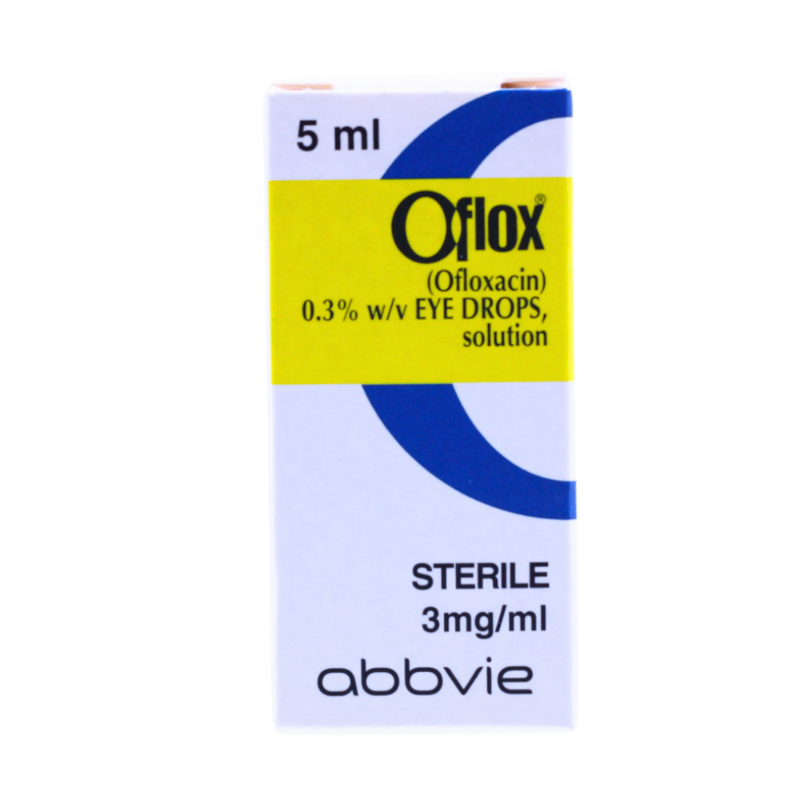
OFLOX 0.3% EYE DROPS 5ML
- Sku : I-004501
Key features
OFLOX 0.3% eye drops (5 mL) is an ophthalmic solution containing ofloxacin, a fluoroquinolone antibiotic. It inhibits bacterial DNA gyrase and topoisomerase IV, essential enzymes for DNA replication and repair, resulting in bacterial cell death. It is indicated for the treatment of bacterial conjunctivitis and bacterial corneal ulcer (bacterial keratitis) caused by susceptible organisms. Supplied as a 0.3% ophthalmic solution in a 5 mL pack.- Brand: OFLOX
- Active Ingredient: OFLOXACIN
- Strength: 0.3%
- Dosage Form: Eye drops, solution
- Pack Size: 5 ml
- Route: Ophthalmic use
- Prescription Status: Prescription
- Therapeutic Class: Ophthalmic
- Pharmacological Group: Anti-infectives (Eye)
- Drug Class: Fluoroquinolone Antibiotic (Ophthalmic)
- Manufacturer: ALLERGAN PHARMACEUTICALS LTD
- Country of Origin: Ireland
- SFDA Registration No.: 1605245319
- Shelf Life: 24 months
- Storage: store below 25°c
- Target Organ: Eye
- Preservative Free: No
Frequently bought together
Health Care & Wellness > Napkins
Health Care & Wellness > Napkins
Health Care & Wellness > Napkins
Skin And Body Care > Eye Care
Skin And Body Care > Eye Care
Indications
Approved Uses
Bacterial conjunctivitis and bacterial corneal ulcer (bacterial keratitis) caused by susceptible organisms.
Dosage & Administration
Dosing by Condition
Bacterial conjunctivitis: Days 1-2: 1-2 drops in affected eye(s) every 2-4 hours while awake; Days 3-7: 1-2 drops 4 times daily. Corneal ulcer: Days 1-2: 1-2 drops every 30 minutes while awake and 4-6 hours after retiring; Days 3-7(-9): 1-2 drops every hour while awake; then 1-2 drops 4 times daily until clinical cure (duration individualized).
Initial Dose
1-2 drops in affected eye(s) every 2-4 hours while awake
Maintenance Dose
1-2 drops in affected eye(s) 4 times daily
Maximum Dose
No systemic maximum dose applies; ophthalmic regimens may be as frequent as 1-2 drops every 30 minutes initially for bacterial corneal ulcer, then tapered per response/prescriber direction.
Children's Dosage
Safety and effectiveness in infants below 1 year have not been established; use in children 1 year and older has not been explicitly confirmed in provided sources as using the same adult dosing regimen
Dose Adjustment Notes
No dose adjustment is required for renal or hepatic impairment with ophthalmic use.
How to Take
Wash hands. Tilt head back and pull down the lower eyelid to form a pocket. Instill 1 drop (or as prescribed) into the conjunctival sac without touching the dropper tip to the eye/skin/surfaces. Close the eye gently and apply nasolacrimal occlusion (press inner corner) for 1-2 minutes. If using other eye drops, separate by at least 5 minutes.
Side Effects
Common Side Effects
Transient ocular burning/stinging/discomfort, conjunctival hyperemia (redness), itching, tearing (lacrimation), blurred vision, photophobia; foreign-body sensation may occur.
Side Effect Frequency
Common (≥1% to <10%): transient ocular burning/stinging/irritation or discomfort after instillation; other reported reactions include conjunctival hyperemia/redness, pruritus, tearing, foreign body sensation, blurred vision, photophobia; less common/uncommon: corneal changes (e.g., keratitis/corneal infiltrates) and hypersensitivity reactions.
Safety & Warnings
Contraindications
Hypersensitivity to ofloxacin, other quinolones/fluoroquinolones, or any component of the formulation.
Warnings & Precautions
For ophthalmic use only (not for injection); avoid contaminating the dropper tip; discontinue at first sign of hypersensitivity; prolonged use may cause overgrowth of non-susceptible organisms including fungi; remove contact lenses before use and reinsert after ~15 minutes (and avoid lenses in active infection).
Age Restriction
Safety and effectiveness in infants <1 year have not been established (use only if clearly needed under specialist supervision).
Driving Warning
Safe
Drug Interactions
Drug Interactions
Clinically significant drug interactions are unlikely due to minimal systemic absorption; if using other ophthalmic products, separate administrations by at least 5 minutes (ointment last).
Interaction Severity
MINOR: Concurrent ophthalmic products can dilute/wash out the drop; administer different eye drops at least 5 minutes apart (ointments last).
Special Populations
Pregnancy
Consult Doctor
Breastfeeding
Caution
Children
Safety and effectiveness in infants below 1 year have not been established; use in children 1 year and older has not been explicitly confirmed in provided sources as using the same adult dosing regimen
Elderly
Standard adult dosing. No overall differences in safety or effectiveness have been observed between elderly and younger patients.
Kidney Impairment
No dose adjustment needed for renal impairment for ophthalmic use.
Liver Impairment
No dose adjustment needed for hepatic impairment for ophthalmic use.
Storage & Patient Advice
Missed Dose
Use the missed dose as soon as remembered; if it is close to the next scheduled dose, skip the missed dose and resume the regular schedule-do not double doses.
Overdose
Ophthalmic overdose is unlikely; if excessive drops are used, rinse/flush the eye with water/saline. If accidentally swallowed, seek medical advice-management is supportive.
Patient Counseling
Use exactly as prescribed and complete the course. Wash hands; avoid touching the dropper tip. Remove contact lenses before use and generally avoid wearing lenses during active infection; if advised to resume, wait at least 15 minutes after dosing. Apply nasolacrimal occlusion for 1-2 minutes. Separate from other eye drops by ≥5 minutes. Temporary blurred vision may occur-avoid driving until clear. Seek care urgently for severe pain, worsening redness/swelling, photophobia, or vision changes. Discard the bottle 28 days after opening (or per local label).
Monitoring Requirements
Monitor clinical response (symptom improvement, reduced discharge/redness); if no improvement or worsening within 48-72 hours, reassess diagnosis/adherence and consider culture/referral; monitor for hypersensitivity or superinfection.
Pharmacology
Mechanism of Action
Inhibits bacterial DNA gyrase (topoisomerase II) and topoisomerase IV, enzymes essential for DNA replication, transcription, repair, and recombination, leading to bacterial cell death
Onset of Action
Begins within minutes after instillation (antibacterial activity starts immediately on contact with ocular tissues).
Half-Life
Ophthalmic half-life: not well established/clinically not defined; systemic elimination half-life is approximately 5-7 hours.
Bioavailability
Minimal systemic absorption after ophthalmic administration (systemic exposure is very low).
Excretion
If systemically absorbed, ofloxacin is eliminated primarily by renal excretion, largely unchanged in urine (majority of dose; commonly cited ~65-80% unchanged).
Protein Binding
Approximately 32% for systemic ofloxacin.
Product Information
Available Dosage Forms
For this SFDA product: Eye drops, solution (ophthalmic).
Composition per Dose
Each mL: 3 mg ofloxacin (0.3%) in aqueous solution
Target Organ
Eye
Preservative Free
No
Reviewed by Al Mujtama Pharmacy Medical Review Team. Last reviewed 24-08-2026
Similar Products
Medications > Sexual Health
Medications > Other Medicines
Medications > Painkillers and Antipyretics
Medications > Dermatology Medications
Medications > Diabetes Medications
Medications > Painkillers and Antipyretics

Medications > Gastrointestinal Medications
Medications > Diabetes Medications
Medications > Other Medicines
Medications > Gastrointestinal Medications
