
Get Free Delivery With No Minimum Order
-1744229570.gif "Almujtama Pharmacy logo")




Oral & Dental Care > Throat & Oral Care

Oral & Dental Care > Throat & Oral Care
Vitamins & Supplements > Vitamins and Minerals
Vitamins & Supplements > Vitamins and Minerals
Vitamins & Supplements > Vitamins and Minerals
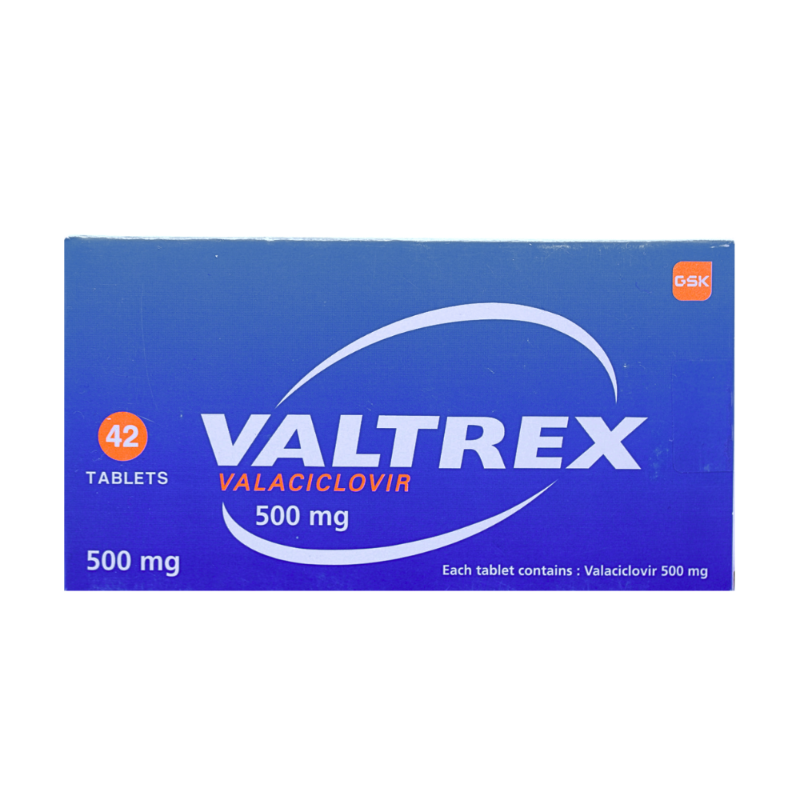
VALTREX 500MG 42 TAB
- Sku : I-027607
Key features
VALTREX 500 mg is supplied as oral tablets containing the active ingredient valaciclovir. Valaciclovir is converted to acyclovir, which is phosphorylated and inhibits viral DNA polymerase, causing DNA chain termination and blocking herpesvirus replication. It is indicated for treatment of herpes zoster (shingles); treatment, recurrent management and chronic suppressive therapy of genital herpes (including reduction of transmission); treatment of herpes labialis (cold sores); and treatment of varicella (chickenpox) in patients aged 2 to under 18 years. Prescription only - supplied as 500 mg tablets in a pack of 42.- Brand: VALTREX
- Active Ingredient: VALACICLOVIR
- Strength: 500mg
- Dosage Form: Tablet
- Pack Size: 42 Tablets
- Route: Oral use
- Prescription Status: Prescription
- Therapeutic Class: Anti-infective
- Pharmacological Group: Direct Acting Antivirals
- Drug Class: Antiviral; nucleoside (guanine) analog DNA polymerase inhibitor (valacyclovir is the oral prodrug of acyclovir).
- Manufacturer: GLAXO SAUDI ARABIA
- Country of Origin: Saudi Arabia
- SFDA Registration No.: 2312200360
- Shelf Life: 24 months
- Storage: do not store above 30°c
- Viral Target: Herpes (HSV-1, HSV-2, VZV)
Oral & Dental Care > Throat & Oral Care
Oral & Dental Care > Throat & Oral Care
Vitamins & Supplements > Vitamins and Minerals
Vitamins & Supplements > Vitamins and Minerals
Vitamins & Supplements > Vitamins and Minerals
Indications
Approved Uses
Herpes zoster (shingles) treatment; genital herpes (initial episode, recurrent episodes, and chronic suppressive therapy) in immunocompetent adults; reduction of transmission of genital herpes in immunocompetent adults; herpes labialis (cold sores) treatment; chickenpox (varicella) treatment in pediatric patients (2 to <18 years).
Off-Label Uses
Off-label examples: CMV prophylaxis in some transplant settings (less common than valganciclovir), HSV prophylaxis in select immunocompromised patients, and adjunct use with corticosteroids for Bell’s palsy (evidence mixed).
Dosage & Administration
Dosing by Condition
Herpes zoster: 1 g PO three times daily for 7 days. Genital herpes-initial episode: 1 g PO twice daily for 10 days. Genital herpes-recurrent episode: 500 mg PO twice daily for 3 days. Genital herpes-suppressive therapy (immunocompetent): 500 mg PO once daily (or 1 g once daily for patients with very frequent recurrences). Reduction of transmission of genital herpes: 500 mg PO once daily (with safer sex practices). Herpes labialis: 2 g PO twice daily for 1 day (doses 12 hours apart). Chickenpox (2 to <18 years): 20 mg/kg PO three times daily for 5 days (max 1 g TID).
Initial Dose
500mg to 1000mg depending on indication
Maintenance Dose
500mg once daily (suppressive therapy) to 1000mg three times daily (herpes zoster)
Maximum Dose
Maximum labeled total daily dose is 8 g/day (2 g four times daily) for CMV prophylaxis in adult renal transplant patients; common maxima in other indications include 3 g/day for zoster and 4 g in 1 day for cold sores.
Children's Dosage
Pediatric use is limited to: Herpes labialis (cold sores) in adolescents ≥12 years: 2000 mg orally every 12 hours for 1 day (2 doses total). Chickenpox (varicella) in children 2 to <18 years: 20 mg/kg orally three times daily for 5 days (maximum 1000 mg per dose). Not established for genital herpes treatment/suppression or herpes zoster in pediatric patients.
Dose Adjustment Notes
Dose adjustment is required in renal impairment (dose/interval adjusted by creatinine clearance, including when CrCl <50 mL/min for several regimens); ensure adequate hydration, and use caution in elderly and with concomitant nephrotoxins.
How to Take
Swallow tablets whole with water; may be taken with or without food; maintain adequate hydration during therapy.
Side Effects
Common Side Effects
Headache, nausea, vomiting, diarrhea, abdominal pain, dizziness, fatigue
Side Effect Frequency
Common: headache, nausea (often the most frequent); also may include abdominal pain, vomiting, diarrhea, dizziness and rash. Serious but uncommon/rare: renal impairment/AKI (especially dehydration/renal disease), and CNS effects (confusion, hallucinations, agitation, tremor, encephalopathy/seizures), plus hypersensitivity reactions (e.g., angioedema/anaphylaxis) and severe cutaneous reactions (e.g., SJS/TEN-rare).
Safety & Warnings
Contraindications
Contraindicated in patients with hypersensitivity to valacyclovir, acyclovir, or any component (excipient) of the formulation.
Warnings & Precautions
Key precautions: adjust dose in renal impairment and in elderly; maintain adequate hydration; monitor for neurotoxicity and renal dysfunction; risk of TTP/HUS in immunocompromised patients at high doses; herpes transmission can still occur (not curative)-counsel on risk reduction/safer sex during genital herpes management.
Age Restriction
Pediatric approvals: Chickenpox (varicella) ≥2 to <18 years; Cold sores (herpes labialis) ≥12 years. Genital herpes and herpes zoster: adults (≥18 years). Not approved for varicella <2 years or cold sores <12 years; pediatric HSV suppression dosing not established.
Driving Warning
No effect on driving or machine operation reported
Drug Interactions
Drug Interactions
Key interactions: probenecid and cimetidine can increase acyclovir exposure (reduced renal tubular secretion); additive nephrotoxicity risk with other nephrotoxic agents (e.g., aminoglycosides, cyclosporine, tacrolimus, amphotericin B, IV contrast; NSAIDs may contribute especially with dehydration/renal risk); monitor closely in renal impairment/high doses.
Interaction Severity
MAJOR/clinically significant: concomitant nephrotoxic agents (e.g., aminoglycosides, amphotericin B, cyclosporine, tacrolimus, high-dose NSAIDs) increase risk of acute kidney injury; MODERATE: probenecid and cimetidine can increase acyclovir exposure by reducing renal tubular secretion; other interactions are generally limited but risk increases in renal impairment/high doses.
Food Interaction
No clinically significant food restriction; may be taken with or without food.
Special Populations
Pregnancy
B
Breastfeeding
Caution
Children
Pediatric use is limited to: Herpes labialis (cold sores) in adolescents ≥12 years: 2000 mg orally every 12 hours for 1 day (2 doses total). Chickenpox (varicella) in children 2 to <18 years: 20 mg/kg orally three times daily for 5 days (maximum 1000 mg per dose). Not established for genital herpes treatment/suppression or herpes zoster in pediatric patients.
Elderly
Standard adult dosing; however, renal function should be assessed and dose adjusted accordingly as renal clearance declines with age. Ensure adequate hydration. Monitor for neurological adverse effects
Kidney Impairment
Renal adjustment is required (dose/interval depend on indication and CrCl); examples consistent with labeling: Zoster-CrCl 30-49: 1 g q12h; 10-29: 1 g q24h; <10: 500 mg q24h. Cold sores (2 g q12h x 1 day regimen)-CrCl 30-49: 1 g q12h x 1 day; 10-29: 500 mg q12h x 1 day; <10: 500 mg once. Suppressive genital herpes-CrCl <30: 500 mg q24h. Give doses after hemodialysis on dialysis days.
Liver Impairment
No dose adjustment is needed in mild to moderate hepatic impairment; limited data in severe hepatic impairment-use caution, particularly with high total daily doses (e.g., around 4 g/day).
Storage & Patient Advice
Missed Dose
Take the missed dose as soon as remembered; if it is close to the next scheduled dose, skip the missed dose and resume the regular schedule; do not double doses.
Stopping the Medicine
Do not stop early for an acute episode-complete the prescribed course; suppressive therapy can be stopped when clinically appropriate but should be reassessed periodically (e.g., at least annually) and stopping may lead to recurrence.
Overdose
Overdose may cause acute renal failure (crystalluria/tubular precipitation) and neurotoxicity (confusion, hallucinations, agitation, seizures, coma) plus GI symptoms; management is supportive with aggressive hydration, renal function monitoring, and hemodialysis can enhance acyclovir removal-seek urgent medical care/poison center.
Patient Counseling
Start as early as possible at first symptoms; take exactly as prescribed and complete the course; maintain good hydration (especially important with renal impairment/older adults); it suppresses HSV but does not cure it and does not fully prevent transmission-use safer sex/condoms; if a dose is missed take it when remembered unless near next dose (do not double); seek urgent care for neurotoxicity (confusion/hallucinations) or reduced urination/renal symptoms; inform prescriber of kidney disease and other nephrotoxic drugs.
Monitoring Requirements
Monitor renal function (SCr/CrCl) in elderly, those with renal impairment, high-dose therapy, dehydration, or concomitant nephrotoxins; monitor for neurotoxicity (confusion, hallucinations, tremor) especially in renal impairment/elderly; ensure hydration.
Pharmacology
Mechanism of Action
Valacyclovir is converted to acyclovir; acyclovir is phosphorylated by viral thymidine kinase then by host kinases to acyclovir triphosphate, which competitively inhibits viral DNA polymerase and causes DNA chain termination, inhibiting herpesvirus replication.
Onset of Action
Acyclovir peak concentrations occur about 1-3 hours after an oral dose; clinical improvement typically begins within ~24-48 hours when started early (condition-dependent).
Duration of Effect
Effect is maintained over the dosing interval; suppressive benefit persists only while taken regularly (no lasting protection after discontinuation).
Half-Life
Acyclovir half-life ~2.5-3.3 hours with normal renal function; prolonged markedly in severe renal impairment/ESRD (up to ~14 hours).
Bioavailability
Approximately 54-55% (systemic availability of aciclovir after oral valaciclovir).
Metabolism
Valaciclovir is rapidly and nearly completely hydrolyzed (first-pass intestinal/hepatic valaciclovirase) to aciclovir and L-valine; aciclovir undergoes minimal metabolism to inactive metabolites (including CMMG).
Excretion
Primarily renal: most of the dose is recovered in urine as aciclovir and its metabolite 9-carboxymethoxymethylguanine (CMMG), with <1% excreted unchanged as valaciclovir.
Protein Binding
Low protein binding: ~13-18% (aciclovir).
Product Information
Available Dosage Forms
Oral tablet (film-coated).
Composition per Dose
Each film-coated tablet: 500mg valaciclovir (as valaciclovir hydrochloride)
Generic Availability
Yes
OTC Alternatives
Topical aciclovir 5% cream may be available OTC in some countries for herpes labialis (cold sores); there is no true OTC oral alternative to valaciclovir for genital herpes or systemic HSV/VZV infections.
Viral Target
Herpes (HSV-1, HSV-2, VZV)
Legal Disclaimer - Al Mujtama Pharmacy
The product information provided is derived from verified pharmaceutical references and is intended for general health education only. It is not a substitute for professional medical advice, diagnosis, or treatment.
Al Mujtama Pharmacy assumes no legal or medical liability for:
- Any therapeutic decision made based on the information displayed without consulting a licensed physician or pharmacist
- Any discrepancy between the information provided and the product's package insert or SFDA guidelines
- Any misuse of medication resulting from personal interpretation of the content displayed
Important notice: Drug formulations and instructions may vary between production batches. Always rely on the leaflet included inside the product packaging you have, and consult your pharmacist or physician before starting, adjusting, or discontinuing any medication.
By using this content, you acknowledge that you have read this disclaimer and agree that Al Mujtama Pharmacy bears no liability arising from reliance on this information as a substitute for direct medical consultation.
Your health is a trust - always consult your doctor first.
