
Get Free Delivery With No Minimum Order
-1744229570.gif "Almujtama Pharmacy logo")




RIFADIN 300MG 8CAP
- Sku : I-010852
Key features
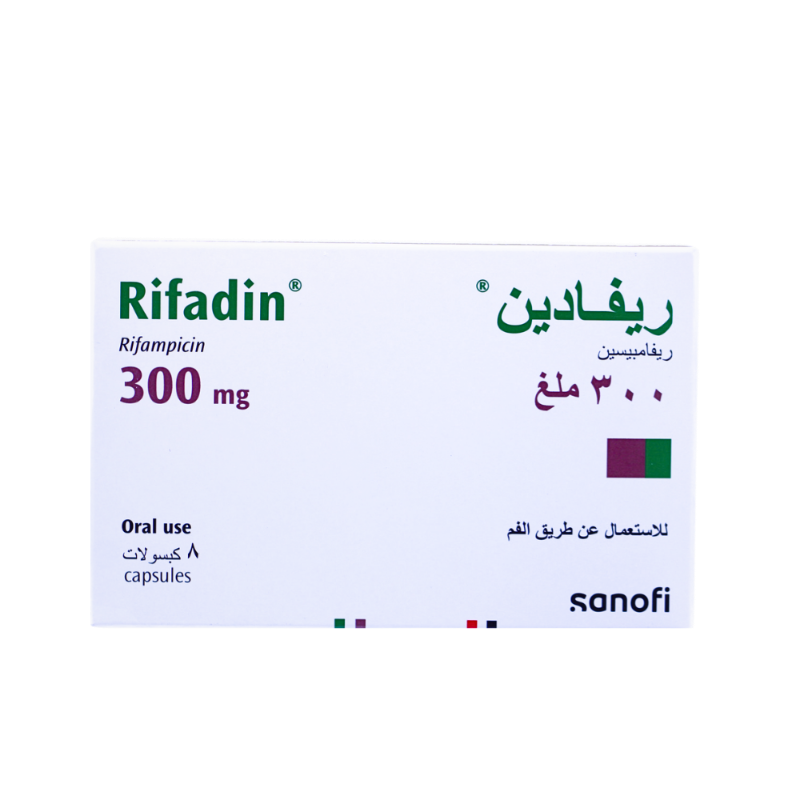
RIFADIN 300MG 8CAP is a prescription hard capsule formulation containing 300 mg of the active ingredient rifampicin. Rifampicin binds the beta subunit of bacterial DNA-dependent RNA polymerase, inhibiting RNA synthesis and producing bactericidal effects against susceptible organisms. It is indicated for use in combination with other antitubercular drugs for treatment of pulmonary and extrapulmonary tuberculosis and for chemoprophylactic eradication of Neisseria meningitidis from the nasopharynx of asymptomatic carriers. Supplied as hard capsules in a pack of 8 capsules.- Brand: RIFADIN
- Active Ingredient: RIFAMPICIN
- Strength: 300mg
- Dosage Form: Capsule, hard
- Pack Size: 8 Capsules
- Route: Oral use
- Prescription Status: Prescription
- Therapeutic Class: Anti-infective
- Drug Class: Rifamycin antibacterial (rifamycin antibiotic).
- Manufacturer: sanofi S.R.L
- Country of Origin: Italy
- SFDA Registration No.: 0706233772
- Shelf Life: 36 months
- Storage: store below 30°c
- Spectrum: Broad-spectrum
- Antibiotic Class: Rifamycin
Indications
Approved Uses
Tuberculosis (pulmonary and extrapulmonary) only in combination with other antitubercular drugs; eradication of Neisseria meningitidis from the nasopharynx of asymptomatic carriers (chemoprophylaxis).
Off-Label Uses
Adjunct therapy for serious staphylococcal infections involving prosthetic material (e.g., prosthetic joint infection, prosthetic valve endocarditis) in combination; treatment of latent TB infection in specific regimens (e.g., 4 months rifampicin) depending on local approvals; cholestatic pruritus (e.g., primary biliary cholangitis) in selected patients; some nontuberculous mycobacterial infections as part of combination therapy.
Dosage & Administration
Dosing by Condition
Tuberculosis (adults): 10 mg/kg (usual 600 mg) once daily (max 600 mg/day) as part of combination therapy; some programs use weight-banded dosing (e.g., 450 mg if <50 kg, 600 mg if ≥50 kg). Meningococcal carrier eradication (adults): 600 mg orally every 12 hours for 2 days. Leprosy (adult MDT): 600 mg once monthly supervised in combination regimens. Brucellosis (adult, in combination e.g., doxycycline): 600-900 mg/day for ~6 weeks (regimen-dependent).
Maintenance Dose
600 mg once daily or as part of intermittent regimen (3 times weekly) throughout treatment course
Maximum Dose
600 mg/day for most indications.
Dose Adjustment Notes
No routine renal dose adjustment; use caution in hepatic impairment-avoid or reduce/individualize dose and monitor closely (risk of hepatotoxicity). Administer on an empty stomach for best absorption; if significant GI intolerance, may take with food acknowledging reduced absorption.
How to Take
Take orally on an empty stomach with a full glass of water (30-60 minutes before food or 2 hours after); swallow capsules whole (do not crush/chew). Harmless red‑orange discoloration of urine/sweat/saliva/tears may occur and soft contact lenses may stain.
Side Effects
Common Side Effects
Red‑orange discoloration of body fluids; gastrointestinal upset (nausea, vomiting, abdominal pain, diarrhea, anorexia); rash/pruritus; headache/dizziness; fever/flu‑like symptoms (more with intermittent dosing); elevated liver enzymes/hepatitis (less common but clinically important).
Side Effect Frequency
Common/very common: orange-red discoloration of body fluids; gastrointestinal upset (nausea, vomiting, abdominal pain, diarrhea, anorexia); rash/pruritus; and asymptomatic elevations in liver enzymes. Serious but uncommon/rare: clinically significant hepatitis/hepatotoxicity, thrombocytopenia/hemolytic anemia, acute renal failure/interstitial nephritis, severe cutaneous reactions (SJS/TEN, DRESS), and flu-like syndrome (more with intermittent dosing).
Safety & Warnings
Contraindications
Contraindicated in hypersensitivity to rifampicin/rifamycins and with concomitant saquinavir/ritonavir; avoid/contraindicated with certain HIV protease inhibitors (e.g., atazanavir, darunavir, fosamprenavir, saquinavir, tipranavir) due to major interaction/virologic failure risk; severe hepatic disease/jaundice is a strong precaution and may be a contraindication per local labeling.
Warnings & Precautions
Baseline and periodic liver function monitoring (especially with liver disease/alcohol use or concomitant hepatotoxins); extensive interaction review due to strong enzyme induction (including reduced hormonal contraceptive efficacy); counsel on harmless orange discoloration of body fluids and staining of soft contact lenses; avoid interrupted/intermittent dosing when possible as it increases immune reactions (flu-like syndrome, thrombocytopenia, renal failure) and risk on re-challenge.
Age Restriction
No absolute minimum age; may be used in neonates/infants and children when clinically indicated under specialist supervision with weight-based dosing.
Drug Interactions
Drug Interactions
Potent inducer of CYP3A4/2C9/2C19/2C8/2B6 and P-gp: markedly lowers exposure/effect of many drugs (notably HIV protease inhibitors/NNRTIs, hormonal contraceptives, warfarin, calcineurin inhibitors, methadone, many antifungals, some statins, benzodiazepines, some CCBs/beta-blockers, oral hypoglycemics); contraindicated with saquinavir/ritonavir; antacids can reduce absorption; combined hepatotoxins (e.g., isoniazid, alcohol) increase liver injury risk.
Interaction Severity
MAJOR: Strong inducer of CYP3A4/2C9/2C19 and P-gp-markedly reduces exposure to many drugs including protease inhibitors/NNRTIs (loss of HIV control; contraindicated with many), warfarin (↓INR), combined hormonal contraceptives (failure), calcineurin inhibitors (rejection risk), methadone (withdrawal), many DOACs (reduced anticoagulation). MAJOR/CONTRAINDICATED: saquinavir/ritonavir (severe hepatotoxicity). MODERATE: additive hepatotoxicity with isoniazid and other hepatotoxins; reduced levels/effects of azole antifungals, some statins, calcium-channel blockers, some antiepileptics, oral hypoglycemics, benzodiazepines, doxycycline. MINOR: antacids may reduce absorption if coadministered (separate dosing).
Food Interaction
Take on empty stomach (30-60 minutes before meals or 2 hours after) for optimal absorption; food reduces peak plasma concentration by approximately 30%; may be taken with food if GI intolerance occurs
Special Populations
Kidney Impairment
No routine dose adjustment required in renal impairment at standard doses (including up to 600 mg/day); monitor if severe renal failure or if using high/intermittent regimens.
Storage & Patient Advice
Storage Conditions
Store below 30°C, protect from light and moisture
Missed Dose
Take the missed dose as soon as remembered the same day; if it is close to the next scheduled dose, skip the missed dose and resume the regular schedule-do not double doses.
Stopping the Medicine
Complete the prescribed course and do not stop without medical advice; stop and seek urgent care if severe hypersensitivity/SCARs, significant hepatotoxicity (e.g., jaundice, marked LFT rise with symptoms), thrombocytopenic bleeding, or acute renal failure symptoms occur.
Overdose
Symptoms: GI upset, pruritus, headache, lethargy, and prominent orange-red discoloration of body fluids/skin; severe cases may include hypotension, facial/periorbital edema, seizures/altered consciousness, and hepatotoxicity/jaundice. Management: urgent medical care, supportive treatment, consider activated charcoal if early, and monitor liver/renal function; no specific antidote.
Patient Counseling
Take rifampicin (RIFADIN) exactly as prescribed and complete the full course. Preferably take on an empty stomach (1 hour before or 2 hours after food) to maximize absorption; if severe GI upset occurs, it may be taken with food but absorption may be reduced. Expect harmless orange-red discoloration of urine, sweat, saliva, and tears; it can permanently stain soft contact lenses. Rifampicin is a strong enzyme inducer and can reduce effectiveness of many medicines (notably hormonal contraceptives, warfarin, some antiretrovirals, azoles, anticonvulsants); use a non-hormonal/backup contraceptive and inform all healthcare providers/pharmacists. Avoid alcohol and seek urgent care for hepatotoxicity symptoms (yellow skin/eyes, dark urine, severe/persistent nausea/vomiting, right upper abdominal pain, unusual fatigue) or bleeding/bruising/rash.
Monitoring Requirements
Baseline and periodic liver function tests (AST/ALT, bilirubin) especially if risk factors; clinical monitoring for hepatitis symptoms; CBC (rare cytopenias) and renal function as clinically indicated; monitor/adjust co-medications affected by enzyme induction (e.g., INR with warfarin, contraceptive efficacy, antiretroviral levels/selection).
Pharmacology
Mechanism of Action
Binds the beta subunit of bacterial DNA-dependent RNA polymerase, inhibiting RNA synthesis (transcription) and thereby suppressing protein synthesis; bactericidal against susceptible organisms.
Onset of Action
Oral peak concentrations typically occur about 2-4 hours after dosing; clinical antibacterial activity begins after achieving therapeutic concentrations (within hours).
Half-Life
About 2-5 hours after a single dose; decreases with repeated dosing due to autoinduction (commonly ~2-3 hours).
Metabolism
Hepatic metabolism mainly via deacetylation to active 25-desacetylrifampicin; potent inducer of CYP enzymes and P-gp with autoinduction of its own metabolism.
Product Information
Available Dosage Forms
For this SFDA product: hard oral capsule. (Rifampicin as a drug is also available in some markets as oral capsules/tablets/suspension and as IV lyophilized powder for solution.)
Composition per Dose
Each capsule: 300 mg rifampicin
Generic Availability
Yes
OTC Alternatives
No OTC alternative
Spectrum
Broad-spectrum
Antibiotic Class
Rifamycin
Legal Disclaimer - Al Mujtama Pharmacy
The product information provided is derived from verified pharmaceutical references and is intended for general health education only. It is not a substitute for professional medical advice, diagnosis, or treatment.
Al Mujtama Pharmacy assumes no legal or medical liability for:
- Any therapeutic decision made based on the information displayed without consulting a licensed physician or pharmacist
- Any discrepancy between the information provided and the product's package insert or SFDA guidelines
- Any misuse of medication resulting from personal interpretation of the content displayed
Important notice: Drug formulations and instructions may vary between production batches. Always rely on the leaflet included inside the product packaging you have, and consult your pharmacist or physician before starting, adjusting, or discontinuing any medication.
By using this content, you acknowledge that you have read this disclaimer and agree that Al Mujtama Pharmacy bears no liability arising from reliance on this information as a substitute for direct medical consultation.
Your health is a trust - always consult your doctor first.
