
Get Free Delivery With No Minimum Order
-1744229570.gif "Almujtama Pharmacy logo")





Health Care & Wellness > Medical Devices And Accessories
Health Care & Wellness > Medical Devices And Accessories
Vitamins & Supplements > Omega-3 Supplements
Vitamins & Supplements > Omega-3 Supplements
Vitamins & Supplements > Omega-3 Supplements
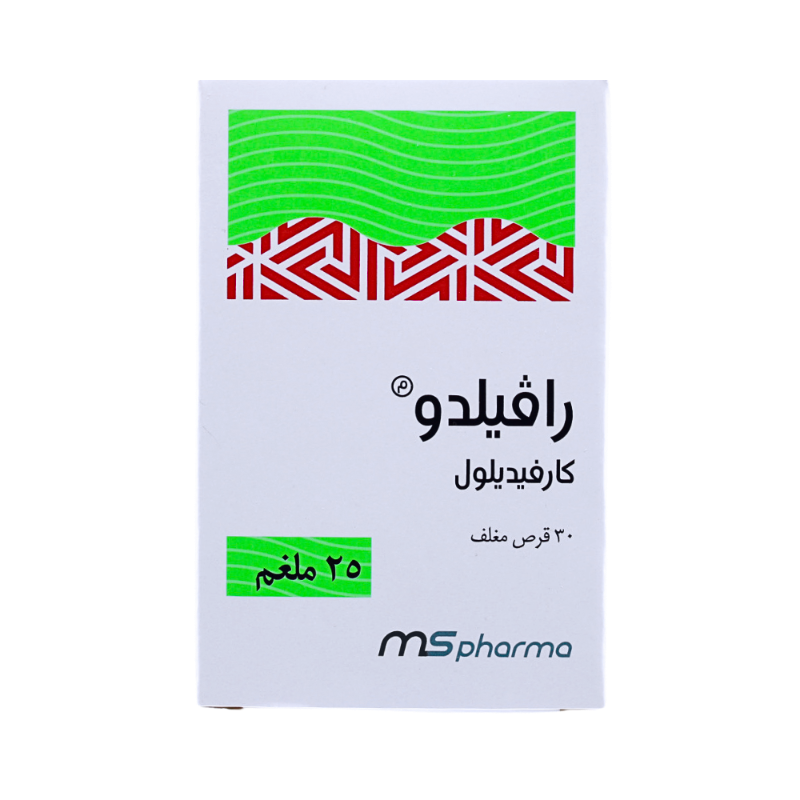
RAVILDO 25/MG FC TAB 30/FC TAB
- Sku : I-029061
Key features
RAVILDO 25 mg film-coated tablets contain carvedilol 25 mg as the active ingredient. It combines nonselective β‑adrenergic blockade (β1 and β2) with α1‑adrenergic blockade to reduce heart rate and contractility, suppress renin release, and produce peripheral vasodilation that lowers systemic vascular resistance and blood pressure. RAVILDO is indicated for heart failure with reduced ejection fraction, hypertension, and left ventricular dysfunction following myocardial infarction. Available as film-coated tablets in packs of 30; prescription only.- Brand: RAVILDO
- Active Ingredient: CARVEDILOL 25mg
- Strength: 25mg
- Dosage Form: Film-coated tablet
- Pack Size: 30 Tablets
- Route: Oral use
- Prescription Status: Prescription
- Therapeutic Class: Cardiovascular
- Pharmacological Group: Beta-Blockers
- Manufacturer: UNITED PHARMACEUTICAL COMPANY
- Country of Origin: Jordan
- SFDA Registration No.: 0509245869
- Shelf Life: 36 months
- Storage: store below 30°c
- Cv Drug Class: Beta-blocker
Health Care & Wellness > Medical Devices And Accessories
Health Care & Wellness > Medical Devices And Accessories
Vitamins & Supplements > Omega-3 Supplements
Vitamins & Supplements > Omega-3 Supplements
Vitamins & Supplements > Omega-3 Supplements
Indications
Approved Uses
Heart failure with reduced ejection fraction, Hypertension, Left ventricular dysfunction following myocardial infarction.
Dosage & Administration
Dosing by Condition
Heart Failure: Start 3.125mg twice daily, titrate every 2 weeks to 6.25mg, 12.5mg, then 25mg twice daily as tolerated. Max 50mg twice daily in patients >85kg. Hypertension: Start 6.25mg twice daily, titrate after 7-14 days to 12.5mg then 25mg twice daily as needed. Max 50mg total daily dose. Left Ventricular Dysfunction Post-MI: Start 6.25mg twice daily, titrate after 3-10 days to 12.5mg then 25mg twice daily as tolerated.
Initial Dose
Hypertension: 6.25 mg twice daily. Heart Failure: 3.125 mg twice daily.
Maintenance Dose
Hypertension: 12.5-25 mg twice daily; Heart failure: 25 mg twice daily (up to 50 mg twice daily if >85 kg)
Maximum Dose
Hypertension: max 50 mg/day; Heart failure: max 25 mg twice daily (50 mg/day) if ≤85 kg, or 50 mg twice daily (100 mg/day) if >85 kg.
Dose Adjustment Notes
Titrate gradually (typically every ≥2 weeks in heart failure) and avoid up‑titration if symptomatic hypotension, bradycardia, or worsening heart failure occurs; reduce dose if clinically significant bradycardia occurs. Severe hepatic impairment: contraindicated. Renal impairment: generally no initial dose adjustment, but monitor renal function in heart failure or hypotension.
How to Take
Oral: swallow the film‑coated tablet with water; take with food. Usual administration is twice daily for immediate‑release carvedilol (e.g., morning and evening) when used for heart failure or hypertension per standard dosing; follow the prescriber’s regimen.
Side Effects
Common Side Effects
Dizziness, fatigue/asthenia, hypotension/orthostatic hypotension, bradycardia, diarrhea, nausea, weight gain, edema/fluid retention, headache; may worsen glycemic control or mask hypoglycemia in diabetics.
Safety & Warnings
Contraindications
Bronchial asthma/bronchospastic disease; second- or third-degree AV block; sick sinus syndrome (unless pacemaker); severe bradycardia; cardiogenic shock; decompensated heart failure requiring IV inotropes; severe hepatic impairment; hypersensitivity to carvedilol.
Warnings & Precautions
Do not stop abruptly; monitor for worsening HF/fluid retention during initiation/titration; may cause bradycardia/hypotension; can mask hypoglycemia and thyrotoxicosis; caution in diabetes, peripheral vascular disease, bronchospastic disease, and during major surgery; pheochromocytoma requires alpha-blockade first.
Age Restriction
Not established/Not routinely recommended in patients <18 years (use only under specialist direction).
Drug Interactions
Interaction Severity
MAJOR: Verapamil/diltiazem (additive bradycardia/AV block), other strong negative chronotropes/AV‑nodal blockers; clonidine (risk of rebound hypertension if clonidine is stopped-taper beta‑blocker first). MODERATE: Digoxin (↑ digoxin levels and additive bradycardia), amiodarone (additive bradycardia/AV block), CYP2D6 inhibitors such as fluoxetine/paroxetine (↑ carvedilol exposure), insulin/oral antidiabetics (masks hypoglycemia; may affect glycemic control), cyclosporine (↑ cyclosporine levels). MINOR: NSAIDs (may blunt antihypertensive effect), rifampin (↓ carvedilol levels).
Food Interaction
Take with food; food slows absorption and reduces the risk of orthostatic hypotension (especially in heart failure).
Special Populations
Breastfeeding
Consult Doctor
Liver Impairment
Contraindicated in severe hepatic impairment; mild-moderate impairment: use with caution and consider lower doses/slow titration.
Storage & Patient Advice
Missed Dose
Take as soon as remembered; skip if it is almost time for the next dose. Do not double the dose
Stopping the Medicine
Do not stop abruptly-taper gradually over ~1-2 weeks under medical supervision.
Patient Counseling
Take with food; rise slowly to reduce dizziness/orthostatic hypotension; do not stop abruptly-taper under medical supervision; monitor BP/HR as advised; in diabetes, monitor glucose more closely because symptoms of hypoglycemia may be masked; report worsening shortness of breath, rapid weight gain, swelling, fainting, or very slow pulse; inform clinicians before surgery/anesthesia.
Monitoring Requirements
Monitor blood pressure and heart rate; in heart failure monitor weight/edema and symptoms of congestion; monitor renal function and electrolytes in heart failure or if hypotension/volume depletion occurs; monitor blood glucose in diabetics; consider liver function tests if hepatic injury symptoms occur.
Pharmacology
Mechanism of Action
Nonselective β‑adrenergic blockade (β1 and β2) plus α1‑adrenergic blockade: decreases heart rate and contractility and suppresses renin release, while α1 blockade causes peripheral vasodilation, lowering systemic vascular resistance and blood pressure.
Duration of Effect
Approximately 12 hours for the immediate‑release formulation (supporting twice‑daily dosing).
Bioavailability
Approximately 25-35% oral bioavailability (extensive first‑pass hepatic metabolism).
Metabolism
Extensive hepatic metabolism, primarily via CYP2D6 and CYP2C9 (with additional pathways), with stereoselective first‑pass metabolism.
Protein Binding
>98% (highly protein bound, ~98-99%)
Product Information
Composition per Dose
Each film-coated tablet: 25 mg carvedilol
Generic Availability
Yes
OTC Alternatives
No OTC alternative
Cv Drug Class
Beta-blocker
Legal Disclaimer - Al Mujtama Pharmacy
The product information provided is derived from verified pharmaceutical references and is intended for general health education only. It is not a substitute for professional medical advice, diagnosis, or treatment.
Al Mujtama Pharmacy assumes no legal or medical liability for:
- Any therapeutic decision made based on the information displayed without consulting a licensed physician or pharmacist
- Any discrepancy between the information provided and the product's package insert or SFDA guidelines
- Any misuse of medication resulting from personal interpretation of the content displayed
Important notice: Drug formulations and instructions may vary between production batches. Always rely on the leaflet included inside the product packaging you have, and consult your pharmacist or physician before starting, adjusting, or discontinuing any medication.
By using this content, you acknowledge that you have read this disclaimer and agree that Al Mujtama Pharmacy bears no liability arising from reliance on this information as a substitute for direct medical consultation.
Your health is a trust - always consult your doctor first.
