
Use Code: ND30 And Get 30% OFF | Get Free Delivery With No Minimum Order
-1744229570.gif "Almujtama Pharmacy logo")




Frequently bought together
Skin And Body Care > Moisturizers
Skin And Body Care > Moisturizers
Health Care & Wellness > Medical Supplies
Health Care & Wellness > Medical Supplies
Vitamins & Supplements > Vitamins and Minerals
Vitamins & Supplements > Vitamins and Minerals
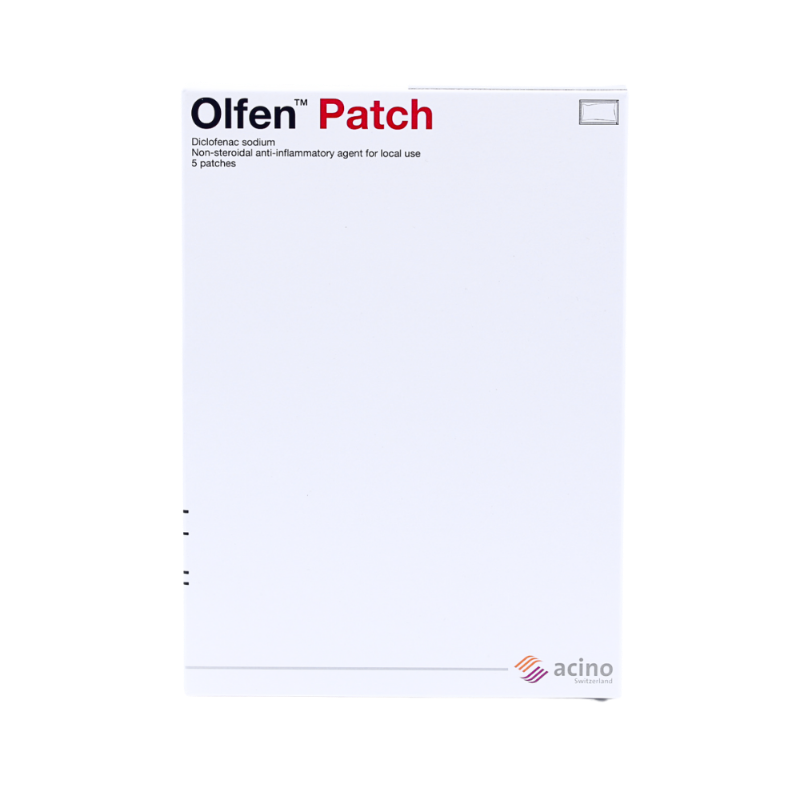
OLFEN PATCH 140/MG 5PATCHES
- Sku : I-027863
Key features
Olfen Patches Transdermal patch 140mg 5 Pa is a transdermal patch containing diclofenac sodium 140 mg. It acts locally by inhibiting cyclooxygenase (COX‑1 and COX‑2), reducing prostaglandin synthesis to relieve pain, inflammation and swelling at the application site. It is indicated for symptomatic relief of localized musculoskeletal pain and inflammation from minor acute soft-tissue injuries such as strains, sprains and contusions. Available OTC as transdermal patches in a pack of 5.- Brand: OLFEN
- Active Ingredient: DICLOFENAC SODIUM 140mg
- Strength: 140mg
- Dosage Form: Transdermal patch
- Pack Size: 5 Patches
- Route: Transdermal use
- Prescription Status: OTC
- Therapeutic Class: Musculoskeletal
- Pharmacological Group: Topical Joint & Muscle Products
- Drug Class: Topical NSAID (diclofenac; phenylacetic acid derivative).
- Manufacturer: Teika Pharmaceutical Co Ltd
- Country of Origin: Japan
- SFDA Registration No.: 2110246081
- Shelf Life: 24 months
- Storage: store below 30°c
- Pain Type: Muscular/Joint
- Nsaid: Yes
- Opioid: No
Frequently bought together
Skin And Body Care > Moisturizers
Skin And Body Care > Moisturizers
Health Care & Wellness > Medical Supplies
Health Care & Wellness > Medical Supplies
Vitamins & Supplements > Vitamins and Minerals
Vitamins & Supplements > Vitamins and Minerals
Indications
Approved Uses
Local symptomatic treatment of pain and inflammation due to minor acute soft-tissue injuries such as strains, sprains, and contusions (localized musculoskeletal pain).
Off-Label Uses
Localized osteoarthritis pain (knee), tendinopathy, bursitis
Dosage & Administration
Dosing by Condition
Acute minor strains/sprains/contusions (localized pain): apply 1 patch to the affected area twice daily (about every 12 hours) for short-term use (commonly up to 7 days unless directed otherwise).
Initial Dose
1 patch applied to the affected area every 12 hours
Maintenance Dose
1 patch every 12 hours (up to 2 patches per day)
Maximum Dose
Maximum: 2 patches in 24 hours (per labeled directions); do not exceed recommended duration without medical advice (commonly short-term use).
Children's Dosage
Approved for use in children 6 years of age and older.
How to Take
Apply to clean, dry, intact skin over the painful area. Remove from pouch, peel off liner, and press firmly (especially edges). Wash hands after application/removal. Do not cut the patch. Avoid applying to broken/irritated skin and avoid occlusive dressings; remove before bathing/showering/swimming if it will not adhere well. Replace per labeled schedule (commonly every ~12 hours if used twice daily).
Side Effects
Common Side Effects
Application-site reactions: redness/erythema, itching/pruritus, rash, irritation/burning, dermatitis, dry skin.
Side Effect Frequency
Most common: local application-site reactions (e.g., pruritus, erythema, dermatitis, burning/irritation, dry skin); systemic NSAID adverse effects (GI upset, headache) are uncommon/rare with topical use but possible.
Safety & Warnings
Contraindications
Hypersensitivity to diclofenac/other NSAIDs (including aspirin) or history of NSAID-induced asthma/urticaria; use in the setting of CABG surgery; third trimester of pregnancy; do not apply to broken/diseased skin at the application site (e.g., open wounds, eczema/dermatitis).
Warnings & Precautions
External use only; avoid eyes/mucosa; do not apply to broken, infected, or eczematous skin; avoid occlusive dressings/heat sources over the patch; use the lowest effective dose for the shortest duration and avoid combining with other NSAIDs; caution in patients with CV disease risk, prior GI ulcer/bleed, renal/hepatic impairment, asthma/NSAID sensitivity; stop if rash or hypersensitivity occurs; remove before MRI if product contains metal (per product instructions).
Age Restriction
Not approved for children under 6 years.
Driving Warning
Safe
Drug Interactions
Interaction Severity
MAJOR: None specific to the patch at recommended use, but avoid concurrent systemic NSAIDs unless advised (additive NSAID toxicity). MODERATE: Anticoagulants/antiplatelets (e.g., warfarin), methotrexate, lithium, digoxin-risk is lower than oral but possible with systemic absorption, especially with prolonged/large-area use. MINOR: Other topical NSAIDs/irritants (additive local skin irritation).
Food Interaction
No clinically relevant food interaction (not applicable for transdermal use).
Special Populations
Children
Approved for use in children 6 years of age and older.
Elderly
Use with caution; elderly patients are at higher risk of adverse skin reactions and systemic NSAID effects. Use the lowest effective dose for the shortest duration.
Kidney Impairment
No routine dose adjustment defined for mild-moderate renal impairment, but use with caution; avoid in severe renal impairment/advanced CKD unless benefits outweigh risks and monitor renal function, especially with diuretics/ACEi/ARB.
Storage & Patient Advice
Missed Dose
Apply a new patch when remembered; if it is close to the next scheduled change, skip the missed one and resume the regular schedule. Do not apply two patches at once.
Stopping the Medicine
May be stopped at any time; no taper is required.
Overdose
Overdose from topical use is unlikely; if excessive patches used, remove patches and wash skin; if accidental ingestion occurs, manage as NSAID overdose (GI upset, dizziness/drowsiness, possible GI bleeding/renal effects) and seek urgent medical care/poison center; treatment is supportive.
Patient Counseling
Apply to clean, dry, intact skin over the painful area; do not apply to broken/irritated/infected skin; wash hands after application; avoid occlusive/tight bandages and external heat sources; avoid using concurrently with other NSAIDs (topical or oral) unless advised; stop and seek advice if significant skin reaction occurs; use the lowest effective duration and consult a clinician if symptoms persist; fold used patches sticky-sides together for safe disposal and keep out of reach of children.
Pharmacology
Mechanism of Action
Inhibits COX-1 and COX-2, reducing prostaglandin synthesis locally and thereby decreasing pain, inflammation, and swelling at the application site.
Onset of Action
Analgesic effect is typically noticed within a few hours after application (often same day); systemic peak plasma timing is not a good proxy for clinical onset with topical patches.
Duration of Effect
Approximately 12 hours per patch.
Bioavailability
Systemic absorption is low compared with oral diclofenac (only a small fraction of the dose reaches systemic circulation).
Metabolism
Hepatic metabolism primarily via CYP2C9 (with minor CYP3A4/2C8), followed by hydroxylation and glucuronide/sulfate conjugation.
Product Information
Available Dosage Forms
Transdermal patch (this product).
Composition per Dose
Each patch: 140mg diclofenac sodium
OTC Alternatives
Topical NSAIDs (e.g., ibuprofen gel, ketoprofen gel) and oral analgesics such as paracetamol; if an oral NSAID is needed, short-course oral ibuprofen or naproxen can be considered if no contraindications.
Pain Type
Muscular/Joint
Nsaid
Yes
Opioid
No
Reviewed by Al Mujtama Pharmacy Medical Review Team. Last reviewed 13-05-2026
Similar Products
Medications > Eye and Ear Medications
Medications > Painkillers and Antipyretics
Medications > Cold, Cough, and Allergy Medications
Medications > Painkillers and Antipyretics
Medications > Cholesterol Medications
Medications > Painkillers and Antipyretics
Medications > Dermatology Medications
Medications > Other Medicines
Medications > Dermatology Medications
Medications > Dermatology Medications
