
Get Free Delivery With No Minimum Order
-1744229570.gif "Almujtama Pharmacy logo")




Vitamins & Supplements > Vitamins and Minerals
Vitamins & Supplements > Vitamins and Minerals
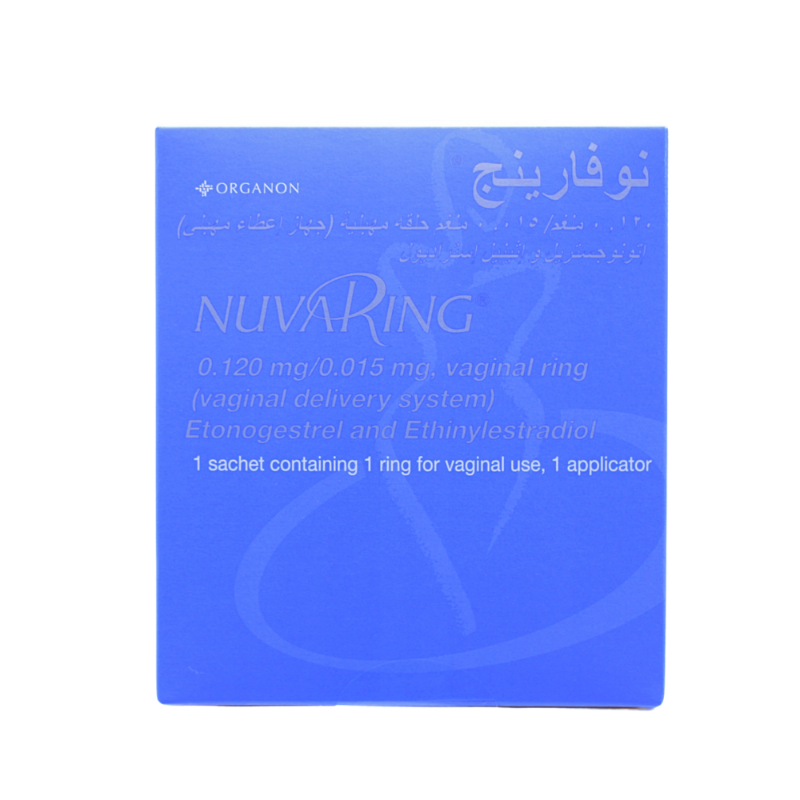
NUVARING VAGINAL RING 1PC @
- Sku : I-004486
Key features
Nuvaring Vaginal Ring is a prescription vaginal delivery system containing etonogestrel 11.7 mg and ethinyl estradiol 2.7 mg. It works by continuously releasing a combined hormonal contraceptive dose that suppresses ovulation, thickens cervical mucus, and alters the endometrium. It is indicated for the prevention of pregnancy in females of reproductive potential. It is supplied as one vaginal ring per pack.- Brand: NUVARING
- Active Ingredient: ETONOGESTREL 11.7mg, ETHINYLESTRADIOL 2.7mg
- Strength: 11.7,2.7mg
- Dosage Form: Vaginal delivery system
- Pack Size: 1 Unit
- Route: Vaginal use
- Prescription Status: Prescription
- Therapeutic Class: Contraceptive
- Pharmacological Group: Hormonal Contraceptives
- Drug Class: Combined hormonal contraceptive (CHC): estrogen (ethinyl estradiol) + progestin (etonogestrel) delivered via an extended‑release vaginal ring.
- Manufacturer: ORGANON
- Country of Origin: Netherlands
- SFDA Registration No.: 1504257232
- Shelf Life: 40 months
- Storage: store in a refrigerator (2°c - 8°c)
- Hormone Type: Combined
- Method: Vaginal Ring
Vitamins & Supplements > Vitamins and Minerals
Vitamins & Supplements > Vitamins and Minerals
Indications
Approved Uses
Prevention of pregnancy in females of reproductive potential
Dosage & Administration
Dosing by Condition
Contraception: Insert 1 ring vaginally and leave in place for 3 continuous weeks, then remove for a 1‑week (7‑day) ring‑free interval; insert a new ring after the interval (ring‑free interval should not exceed 7 days).
Initial Dose
One vaginal ring inserted on or before Day 5 of menstrual cycle (or as directed based on prior contraceptive method)
Maintenance Dose
One ring per 4-week cycle: 3 weeks in, 1 week out
Maximum Dose
One ring per cycle: insert 1 ring for 3 weeks, remove for 1 week; do not leave the same ring in place for more than 4 weeks continuously.
Children's Dosage
Not approved for use before menarche; not applicable in prepubertal females
Dose Adjustment Notes
No dose adjustment is recommended for renal impairment; avoid use in hepatic disease-contraindicated in severe hepatic impairment and in liver tumors.
How to Take
Compress the ring and insert into the vagina; exact position is not critical. Leave in place continuously for 3 weeks (21 days), then remove for a 7‑day ring‑free interval and insert a new ring on the same day of the week/time. To remove, hook a finger under the rim and pull out; dispose in the foil pouch/trash (do not flush).
Side Effects
Common Side Effects
Common adverse effects include vaginal discharge/vaginitis, headache (including migraine), nausea/vomiting, breast tenderness/pain, abdominal pain, dysmenorrhea, acne, mood changes (including depression), decreased libido, breakthrough bleeding/spotting, and device-related events (foreign body sensation/discomfort, expulsion).
Side Effect Frequency
Common adverse reactions (≥2% in clinical trials) include: vaginitis, headache, mood changes, device-related events (e.g., expulsion/foreign body sensation), nausea/vomiting, vaginal discharge, increased weight, vaginal discomfort, breast pain/tenderness, dysmenorrhea, abdominal pain, acne, and decreased libido; serious but rare risks include venous thromboembolism and other arterial/venous events.
Safety & Warnings
Contraindications
Contraindicated in: high risk/history of arterial or venous thromboembolism (DVT/PE, stroke, MI) or known thrombophilia; migraine with aura; breast cancer/estrogen- or progestin-sensitive malignancy; liver tumors or severe hepatic disease; uncontrolled hypertension; diabetes with vascular disease; undiagnosed abnormal uterine bleeding; pregnancy; hypersensitivity; women >35 who smoke; and concomitant use with HCV regimens containing ombitasvir/paritaprevir/ritonavir (± dasabuvir) due to ALT elevations.
Warnings & Precautions
Key warnings/precautions: increased risk of VTE/arterial thrombosis (avoid in smokers >35); monitor blood pressure; discontinue for thrombotic symptoms, significant BP elevation, or jaundice/hepatic dysfunction; migraine with aura is a contraindication; does not protect against HIV/STIs; counsel on expulsion/reinsertion rules and not leaving ring in >4 weeks; consider mood changes/depression and metabolic effects (lipids/glucose).
Age Restriction
Not indicated before menarche; intended for females of reproductive potential (no specific upper age cutoff, but risk/contraindications apply-especially smokers ≥35 years).
Driving Warning
Safe
Drug Interactions
Drug Interactions
Efficacy reduced by enzyme inducers (e.g., rifampin/rifabutin, carbamazepine, phenytoin, phenobarbital, topiramate, St. John’s wort; some antiretrovirals); contraindicated with ombitasvir/paritaprevir/ritonavir (± dasabuvir) due to ALT elevations; azole antifungals such as vaginal miconazole may increase hormone exposure; CHCs can lower lamotrigine levels.
Interaction Severity
MAJOR: Strong enzyme inducers (e.g., rifampin/rifabutin; carbamazepine; phenytoin; phenobarbital/primidone) and certain antiretrovirals can reduce efficacy-use alternative/backup contraception; ombitasvir/paritaprevir/ritonavir ± dasabuvir is contraindicated due to ALT elevations. MODERATE: St. John’s wort; topiramate (especially ≥200 mg/day); aprepitant (may reduce hormone levels)-backup advised. MINOR/CLINICALLY RELEVANT: CHCs can lower lamotrigine concentrations (risk of loss of seizure control).
Food Interaction
No clinically meaningful food restrictions; grapefruit/grapefruit juice is not routinely contraindicated but may theoretically increase ethinyl estradiol exposure via CYP3A4 inhibition.
Alcohol Interaction
Safe
Special Populations
Pregnancy
Contraindicated
Breastfeeding
Consult Doctor
Children
Not approved for use before menarche; not applicable in prepubertal females
Elderly
Not indicated for use in postmenopausal women.
Kidney Impairment
No renal dose adjustment recommended (limited data); use usual clinical caution in significant renal disease.
Liver Impairment
No dose adjustment recommended; contraindicated in severe hepatic impairment or liver tumors (avoid use in active/severe liver disease).
Storage & Patient Advice
Storage Conditions
Store at 25°C (77°F); excursions permitted to 15-30°C (59-86°F). [See USP controlled room temperature].
Missed Dose
If the ring is expelled/removed for <3 hours: rinse with cool to lukewarm water and reinsert ASAP-no backup needed. If out >3 hours in Week 1 or 2: reinsert ASAP and use backup contraception for 7 days. If out >3 hours in Week 3: either insert a new ring immediately (start a new 3‑week period) OR have a ring‑free interval of up to 7 days (counting time out) and then insert a new ring; use backup for 7 days and consider emergency contraception if unprotected sex occurred in the preceding days.
Stopping the Medicine
Can be removed/discontinued at any time; if used for contraception, counsel that fertility may return quickly and alternative contraception is needed immediately if pregnancy prevention is desired; routine schedule is 3 weeks in/1 week out (do not leave in >4 weeks).
Overdose
Overdose is unlikely via vaginal use; if overdose/accidental ingestion occurs, symptoms may include nausea, vomiting, and withdrawal/vaginal bleeding-remove the ring and provide symptomatic/supportive care (no specific antidote).
Patient Counseling
Counsel on correct use: insert 1 ring into the vagina and leave in place for 3 weeks (21 days), then remove for 1 week (7 days) and insert a new ring on the same day of the week/time; position is not critical as long as it remains in the vagina. If expelled, rinse with cool-to-lukewarm (not hot) water and reinsert as soon as possible; if out for >3 hours during weeks 1-2, reinsert and use backup contraception for 7 days; if out for >3 hours during week 3, discard and either insert a new ring immediately (start a new 3-week cycle; backup 7 days) or have a ring-free interval up to 7 days then insert a new ring (backup 7 days if ring-free interval >7 days). Does not protect against HIV/STIs. Review serious warning signs of thromboembolism/stroke (e.g., chest pain/SOB, severe headache, vision changes, unilateral leg pain/swelling) and avoid use in smokers ≥35 years or those with VTE risk factors/contraindications; advise to contact clinician for severe mood changes/depression. Disposal: place used ring in the reclosable foil pouch and discard in household trash (do not flush). Storage: keep refrigerated (2-8°C) prior to dispensing; after dispensing, may be stored at room temperature up to 30°C for up to 4 months, protected from direct sunlight.
Monitoring Requirements
Check blood pressure before initiation and periodically thereafter; routine follow-up/annual review is typical, with targeted monitoring (e.g., lipids in dyslipidemia, glucose in diabetes) based on comorbidities and CHC risk factors.
Pharmacology
Mechanism of Action
Continuous vaginal release of etonogestrel and ethinyl estradiol suppresses gonadotropins (inhibits ovulation) and also thickens cervical mucus and alters the endometrium.
Onset of Action
If inserted on Day 1 of menses: immediate contraceptive protection. If started at any other time (including Days 2-5 or later): use backup contraception for 7 days.
Duration of Effect
Each ring provides contraceptive hormone delivery for 3 weeks (21 days) of continuous in‑vagina use per cycle.
Bioavailability
Etonogestrel: ~100% (vaginal). Ethinyl estradiol: ~56% (vaginal).
Metabolism
Etonogestrel: hepatic metabolism primarily via CYP3A4. Ethinyl estradiol: hepatic metabolism via CYP3A4 and conjugation (glucuronidation/sulfation) with enterohepatic recirculation.
Excretion
Etonogestrel (as metabolites): excreted in urine and feces. Ethinyl estradiol (as metabolites): excreted in urine and feces (approximately 40% urine, 60% feces).
Product Information
Available Dosage Forms
Vaginal ring (extended‑release vaginal delivery system/insert).
Composition per Dose
Each vaginal ring: Etonogestrel 11.7 mg + Ethinyl estradiol 2.7 mg; releases approximately 120 mcg/day etonogestrel and 15 mcg/day ethinyl estradiol over 3 weeks
Generic Availability
No
OTC Alternatives
No OTC alternative
Hormone Type
Combined
Method
Vaginal Ring
Legal Disclaimer - Al Mujtama Pharmacy The product information provided is derived from verified pharmaceutical references and is intended for general health education only. It is not a substitute for professional medical advice, diagnosis, or treatment. Al Mujtama Pharmacy assumes no legal or medical liability for: Any therapeutic decision made based on the information displayed without consulting a licensed physician or pharmacist Any discrepancy between the information provided and the product's package insert or SFDA guidelines Any misuse of medication resulting from personal interpretation of the content displayed Important notice: Drug formulations and instructions may vary between production batches. Always rely on the leaflet included inside the product packaging you have, and consult your pharmacist or physician before starting, adjusting, or discontinuing any medication. By using this content, you acknowledge that you have read this disclaimer and agree that Al Mujtama Pharmacy bears no liability arising from reliance on this information as a substitute for direct medical consultation. Your health is a trust - always consult your doctor first.