
Get Free Delivery With No Minimum Order
-1744229570.gif "Almujtama Pharmacy logo")




Health Care & Wellness > Medical Devices And Accessories
Vitamins & Supplements > Omega-3 Supplements
Vitamins & Supplements > Omega-3 Supplements
Health Care & Wellness > Medical Devices And Accessories
Vitamins & Supplements > Omega-3 Supplements
Vitamins & Supplements > Omega-3 Supplements
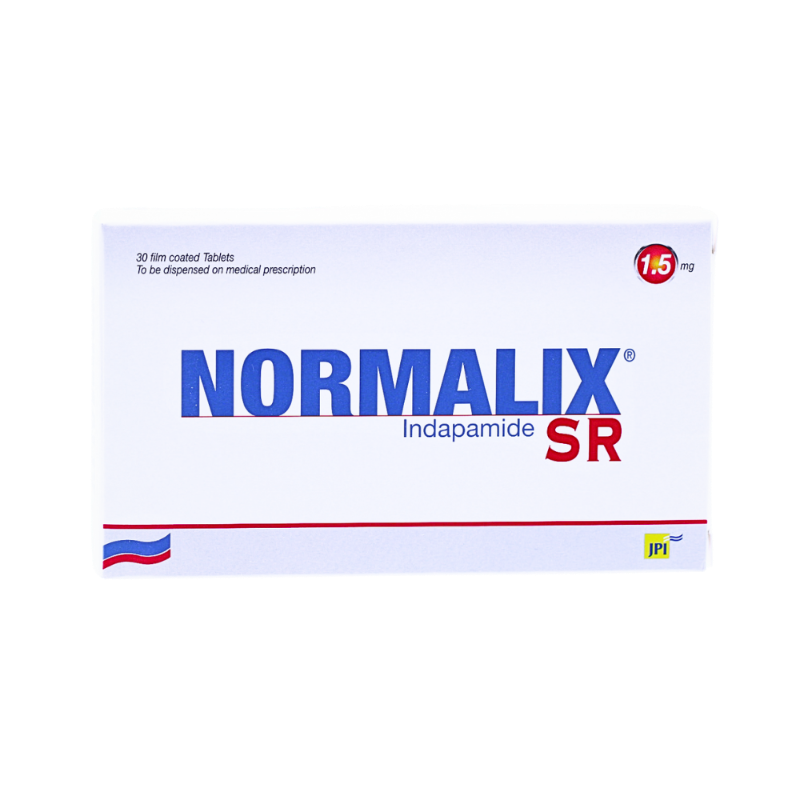
NORMALIX SR 1.5MG/30TAB
- Sku : I-023336
Key features
NORMALIX SR 1.5 mg modified-release ta is a modified‑release tablet containing indapamide 1.5 mg. It acts as a thiazide‑like diuretic by inhibiting NaCl reabsorption in the distal convoluted tubule to increase natriuresis and diuresis, and it also reduces peripheral vascular resistance through direct vasodilatory effects. It is indicated for the treatment of essential hypertension. Available as modified‑release tablets in a pack of 30.- Brand: NORMALIX
- Active Ingredient: INDAPAMIDE
- Strength: 1.5mg
- Dosage Form: modified-release tablet
- Pack Size: 30 Tablets
- Route: Oral use
- Prescription Status: Prescription
- Therapeutic Class: Cardiovascular
- Pharmacological Group: Diuretics
- Drug Class: Indoline-class thiazide-like diuretic with vasodilatory properties
- Manufacturer: Jazeera Pharmaceutical Industries (JPI)
- Country of Origin: Saudi Arabia
- SFDA Registration No.: 2710211241
- Shelf Life: 24 months
- Storage: store below 30°c
- Cv Drug Class: Diuretic
Health Care & Wellness > Medical Devices And Accessories
Vitamins & Supplements > Omega-3 Supplements
Vitamins & Supplements > Omega-3 Supplements
Health Care & Wellness > Medical Devices And Accessories
Vitamins & Supplements > Omega-3 Supplements
Vitamins & Supplements > Omega-3 Supplements
Indications
Approved Uses
Essential hypertension (for this product: indapamide 1.5 mg modified-release).
Off-Label Uses
Adjunct in heart failure-related fluid overload (off-label depending on jurisdiction) and secondary stroke prevention as part of antihypertensive regimens (e.g., indapamide-based BP lowering); nephrogenic diabetes insipidus is a recognized class off-label use but is less commonly used with indapamide specifically.
Dosage & Administration
Dosing by Condition
Hypertension: 1.5 mg modified-release orally once daily in the morning (this product).
Initial Dose
1.5 mg once daily in the morning for hypertension
Maintenance Dose
1.5 mg once daily for hypertension
Maximum Dose
1.5 mg once daily (modified-release) for this product
Children's Dosage
Not approved for children.
Dose Adjustment Notes
No routine titration for indapamide 1.5 mg modified-release; avoid dose escalation of SR for BP control-add another antihypertensive if needed; avoid/use with great caution in severe renal impairment and severe hepatic impairment (risk of encephalopathy) and monitor closely in elderly.
How to Take
Swallow whole with water; do not crush, chew, or split the modified-release tablet; take preferably in the morning
Side Effects
Common Side Effects
Electrolyte disturbances (especially hypokalemia, hyponatremia), dizziness, headache, fatigue, orthostatic hypotension; may increase uric acid (hyperuricemia/gout) and cause GI upset (nausea).
Side Effect Frequency
Common (1-10%): dizziness, headache; electrolyte disturbances such as hypokalemia can occur (frequency varies by dose/population). Uncommon (<1%): nausea/vomiting, rash/pruritus/photosensitivity. Rare/very rare: pancreatitis, significant arrhythmias/QT prolongation (usually secondary to electrolyte imbalance).
Safety & Warnings
Contraindications
Hypersensitivity to indapamide or sulfonamide-derived drugs; severe renal impairment/anuria; hepatic encephalopathy or severe hepatic impairment; hypokalemia
Warnings & Precautions
Monitor electrolytes (Na+, K+) and renal function, especially elderly or those on digoxin/QT-prolongers; correct hypokalemia to reduce arrhythmia risk; caution in hepatic impairment (encephalopathy risk); caution in gout/hyperuricemia and diabetes (may worsen uric acid/glucose); avoid dehydration and monitor with NSAIDs/RAAS blockers; photosensitivity and sulfonamide allergy precautions; counsel to seek urgent care for sudden eye pain/vision changes (angle-closure glaucoma)
Age Restriction
Not approved under 18 years.
Driving Warning
May Cause Drowsiness
Drug Interactions
Drug Interactions
Lithium (↑ lithium levels/toxicity); NSAIDs (↓ antihypertensive/diuretic effect, ↑ renal risk); other antihypertensives (additive hypotension); ACE inhibitors/ARBs (first-dose hypotension/renal function changes especially if volume-depleted); digoxin (hypokalemia ↑ toxicity); systemic corticosteroids/laxatives (↑ hypokalemia); QT-prolonging/antiarrhythmic drugs (torsades risk if hypokalemia); iodinated contrast (AKI risk if dehydrated); metformin (lactic acidosis risk in dehydration/renal impairment)
Interaction Severity
MAJOR: Lithium (increased lithium levels/toxicity). MODERATE: NSAIDs (reduced antihypertensive/diuretic effect and renal risk), digoxin (toxicity risk if hypokalemia), other QT-prolonging/arrhythmogenic drugs when hypokalemia present (torsades risk), systemic corticosteroids/laxatives (additive hypokalemia).
Food Interaction
No restriction.
Alcohol Interaction
Avoid
Special Populations
Pregnancy
Consult Doctor
Breastfeeding
Consult Doctor
Children
Not approved for children.
Elderly
Standard adult dosing (1.5 mg once daily); monitor electrolytes and renal function more frequently due to increased risk of hyponatremia and hypokalemia
Kidney Impairment
No dose adjustment in mild-moderate renal impairment with monitoring; contraindicated in severe renal impairment/anuria (often operationalized as CrCl/eGFR <30 mL/min)
Liver Impairment
Mild-to-moderate hepatic impairment: use with caution, monitor closely. Severe hepatic impairment or hepatic encephalopathy: contraindicated
Storage & Patient Advice
Storage Conditions
Store below 30°C
Missed Dose
Take the missed dose as soon as remembered the same day; if it is close to the next dose, skip the missed dose; do not double.
Stopping the Medicine
Do not stop abruptly without clinician advice; stopping may lead to loss of blood-pressure control (monitor BP after discontinuation)
Overdose
Symptoms: hypotension, dehydration, nausea/vomiting, dizziness/confusion, polyuria/oliguria, and electrolyte disturbances (hyponatremia, hypokalemia) with possible arrhythmias; Management: urgent medical care, supportive treatment with IV fluids and electrolyte correction, ECG monitoring, and decontamination (activated charcoal) if early
Patient Counseling
Take once daily in the morning; swallow modified-release tablet whole (do not crush/chew); expect increased urination early; rise slowly to reduce dizziness; maintain hydration; avoid excess alcohol; attend periodic blood tests for electrolytes/renal function; report muscle weakness/cramps, palpitations, severe dizziness, or gout symptoms.
Monitoring Requirements
Monitor BP; serum electrolytes (Na+, K+ ± Mg2+), renal function (SCr/eGFR) at baseline and periodically; uric acid (and glucose in patients at risk/diabetes).
Pharmacology
Mechanism of Action
Thiazide-like diuretic: inhibits NaCl reabsorption in the distal convoluted tubule (cortical diluting segment), increasing natriuresis/diuresis; also reduces peripheral vascular resistance via direct vascular effects.
Onset of Action
Diuretic effect begins within hours; blood pressure-lowering effect may be seen within several days to 1 week, with maximal antihypertensive effect typically achieved over 4-8 weeks.
Duration of Effect
Diuretic/antihypertensive effect provides approximately 24-hour coverage with once-daily modified-release dosing.
Half-Life
Approximately 14-25 hours (effective terminal half-life; may be described as biphasic).
Bioavailability
High oral absorption; absolute bioavailability is high (commonly reported around >90% for indapamide immediate-release; SR has high absorption with modified release of drug).
Metabolism
Extensively metabolized in the liver to inactive metabolites.
Excretion
Primarily renal (~70% of dose in urine, mainly as metabolites) with the remainder via feces (~20-25%).
Protein Binding
Approximately 79% protein binding (mainly to plasma proteins, including albumin).
Product Information
Available Dosage Forms
Modified-release tablet (this product).
Composition per Dose
Each modified-release tablet: 1.5 mg indapamide
Generic Availability
Yes
OTC Alternatives
No OTC alternative
Cv Drug Class
Diuretic
Legal Disclaimer - Al Mujtama Pharmacy
The product information provided is derived from verified pharmaceutical references and is intended for general health education only. It is not a substitute for professional medical advice, diagnosis, or treatment.
Al Mujtama Pharmacy assumes no legal or medical liability for:
- Any therapeutic decision made based on the information displayed without consulting a licensed physician or pharmacist
- Any discrepancy between the information provided and the product's package insert or SFDA guidelines
- Any misuse of medication resulting from personal interpretation of the content displayed
Important notice: Drug formulations and instructions may vary between production batches. Always rely on the leaflet included inside the product packaging you have, and consult your pharmacist or physician before starting, adjusting, or discontinuing any medication.
By using this content, you acknowledge that you have read this disclaimer and agree that Al Mujtama Pharmacy bears no liability arising from reliance on this information as a substitute for direct medical consultation.
Your health is a trust - always consult your doctor first.
