
Get Free Delivery With No Minimum Order
-1744229570.gif "Almujtama Pharmacy logo")





Health Care & Wellness > Medical Devices And Accessories
Health Care & Wellness > Medical Devices And Accessories

Vitamins & Supplements > Omega-3 Supplements
Vitamins & Supplements > Omega-3 Supplements
Vitamins & Supplements > Omega-3 Supplements
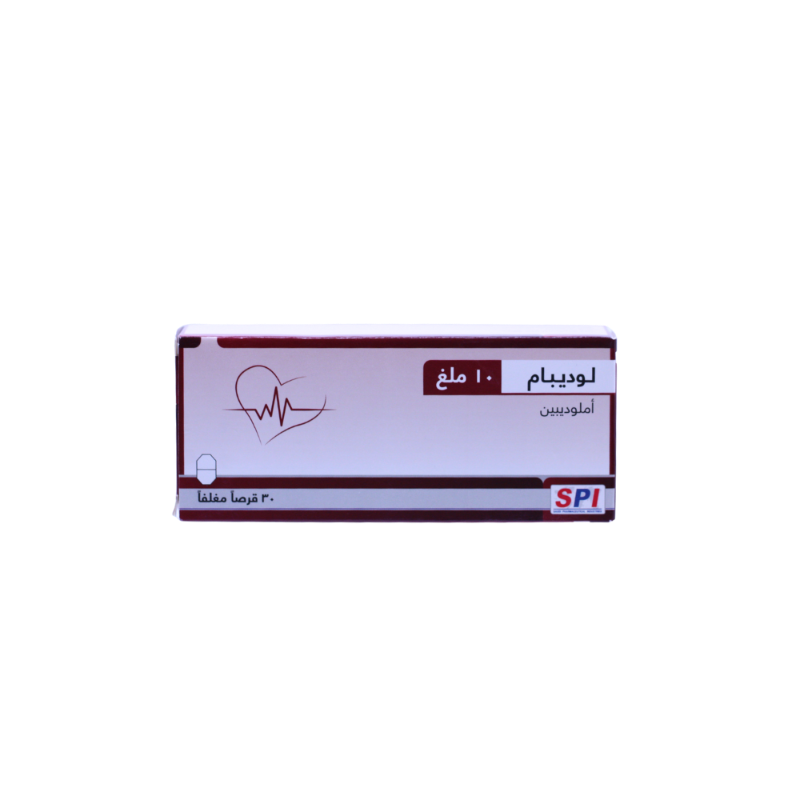
LODIPAM 10/MG FC TAB 30/TAB
- Sku : I-022899
Key features
LODIPAM 10 mg film-coated tablets contain the active ingredient amlodipine besilate. It is a dihydropyridine calcium‑channel blocker that inhibits L‑type calcium influx in vascular smooth muscle, producing peripheral and coronary arterial vasodilation and reducing peripheral vascular resistance. It is indicated for the treatment of hypertension, chronic stable angina, vasospastic (Prinzmetal’s) angina, and in patients with angiographically documented coronary artery disease. Available as film-coated tablets in packs of 30 tablets, supplied by prescription.- Brand: LODIPAM
- Active Ingredient: AMLODIPINE BESILATE
- Strength: 10mg
- Dosage Form: Film-coated tablet
- Pack Size: 30 Tablets
- Route: Oral use
- Prescription Status: Prescription
- Therapeutic Class: Cardiovascular
- Pharmacological Group: Dihydropyridine CCBs
- Drug Class: Dihydropyridine Calcium Channel Blocker (CCB), third-generation
- Manufacturer: SAUDI PHARMACEUTICAL INDUSTRIES
- Country of Origin: Saudi Arabia
- SFDA Registration No.: 2109222626
- Shelf Life: 36 months
- Storage: store below 30°c
- Cv Drug Class: CCB
Health Care & Wellness > Medical Devices And Accessories
Health Care & Wellness > Medical Devices And Accessories
Vitamins & Supplements > Omega-3 Supplements
Vitamins & Supplements > Omega-3 Supplements
Vitamins & Supplements > Omega-3 Supplements
Indications
Approved Uses
Hypertension, chronic stable angina, vasospastic angina (Prinzmetal's angina), angiographically documented coronary artery disease
Off-Label Uses
Raynaud’s phenomenon.
Dosage & Administration
Dosing by Condition
Hypertension (adults): 5 mg once daily initially; maintenance 5-10 mg once daily; max 10 mg/day. Chronic stable angina/vasospastic angina: 5-10 mg once daily; max 10 mg/day. Coronary artery disease: 5-10 mg once daily.
Initial Dose
5 mg once daily
Maintenance Dose
5-10 mg once daily
Maximum Dose
10mg once daily.
Children's Dosage
For hypertension in children 6-17 years: 2.5mg to 5mg once daily. Doses above 5mg have not been studied.
Dose Adjustment Notes
Elderly and hepatic impairment: consider lower initial dose (e.g., 2.5 mg once daily) and titrate slowly every 7-14 days based on response/tolerability; renal impairment: no dose adjustment generally required.
How to Take
Swallow tablet whole with a glass of water. Can be taken with or without food. Take at the same time each day.
Side Effects
Common Side Effects
Swelling of legs and ankles (edema), headache, dizziness, flushing, fatigue, nausea, abdominal pain, sleepiness, palpitations.
Side Effect Frequency
Very common: peripheral edema. Common: headache, dizziness, flushing, palpitations, fatigue, nausea, abdominal pain, somnolence. Uncommon: hypotension/syncope, dyspnea/rhinitis, dyspepsia/vomiting, rash/pruritus/alopecia/purpura, mood changes/insomnia/tremor, myalgia/arthralgia/muscle cramps/back pain, urinary frequency/nocturia, impotence/gynecomastia, weight changes.
Safety & Warnings
Contraindications
Known hypersensitivity to amlodipine (including amlodipine besilate) or other dihydropyridine calcium channel blockers (and/or any excipients).
Warnings & Precautions
Key warnings/precautions: risk of worsening angina/MI when starting or increasing dose in severe obstructive CAD; use caution in severe aortic stenosis; use caution in heart failure; use caution and titrate slowly in hepatic impairment; monitor for hypotension and peripheral edema; discontinue only under medical supervision (especially if treated for angina).
Age Restriction
Hypertension: approved for children ≥6 years (6-17 years); not established/approved <6 years. Angina/CAD: not established/approved in pediatrics (<18 years).
Driving Warning
No specific warning; may cause dizziness.
Drug Interactions
Drug Interactions
Clinically relevant interactions include: strong/moderate CYP3A4 inhibitors (e.g., clarithromycin, azoles, ritonavir) ↑ amlodipine exposure; CYP3A4 inducers (e.g., rifampin, St. John’s wort) ↓ exposure; simvastatin-limit simvastatin to max 20 mg/day with amlodipine; tacrolimus/cyclosporine-may ↑ calcineurin inhibitor levels (monitor/adjust); additive hypotension with other antihypertensives and PDE5 inhibitors. NSAIDs are not a specific major interaction for amlodipine (any BP effect is generally more relevant to ACEi/diuretics).
Interaction Severity
MAJOR/clinically significant: strong/moderate CYP3A4 inhibitors (e.g., clarithromycin, azole antifungals, ritonavir/cobicistat) → increased amlodipine exposure/hypotension risk. MODERATE: simvastatin (limit simvastatin to 20 mg/day with amlodipine), tacrolimus/cyclosporine (levels may increase-monitor and adjust), diltiazem/verapamil (increase amlodipine levels/additive BP effects). MINOR: CYP3A4 inducers (e.g., rifampin, St. John’s wort) may reduce effect; additive hypotension with other antihypertensives/PDE5 inhibitors (monitor).
Food Interaction
May be taken with or without food; grapefruit/grapefruit juice may increase amlodipine exposure-avoid or limit, especially if adverse effects (e.g., hypotension, edema) occur.
Special Populations
Pregnancy
Consult Doctor
Children
For hypertension in children 6-17 years: 2.5mg to 5mg once daily. Doses above 5mg have not been studied.
Elderly
Start at a lower dose of 2.5mg once daily and titrate slowly due to decreased clearance and increased drug exposure.
Kidney Impairment
No renal dose adjustment required; not significantly removed by dialysis.
Liver Impairment
Hepatic impairment: start at a lower dose (commonly 2.5 mg once daily) and titrate slowly; use caution especially in severe impairment due to prolonged half-life.
Storage & Patient Advice
Missed Dose
Take the missed dose as soon as remembered the same day; if it is close to the time of the next dose, skip the missed dose and resume the regular schedule-do not double doses.
Stopping the Medicine
Do not stop without prescriber advice; abrupt discontinuation is not typically associated with rebound hypertension, but in angina/CAD patients stopping suddenly may worsen angina-tapering/clinical supervision is prudent.
Overdose
Overdose may cause marked peripheral vasodilation with severe/prolonged hypotension (± reflex tachycardia) and shock; management is supportive (airway/IV fluids, vasopressors as needed), consider activated charcoal if recent ingestion, IV calcium may help; continuous cardiac/hemodynamic monitoring; amlodipine is not effectively removed by dialysis.
Patient Counseling
Take once daily at the same time, with or without food; do not stop without prescriber advice; expect possible ankle swelling, flushing, headache, dizziness-rise slowly and report troublesome edema or symptoms of hypotension; avoid/limit grapefruit; inform clinicians about interacting medicines (e.g., macrolides/azoles/ritonavir, simvastatin, tacrolimus/cyclosporine).
Monitoring Requirements
Monitor blood pressure (and clinical symptoms such as dizziness) and assess for peripheral edema; routine lab monitoring is not required in most patients, but consider liver function/clinical monitoring in hepatic impairment and monitor interacting drugs when applicable (e.g., tacrolimus/cyclosporine levels).
Pharmacology
Mechanism of Action
Dihydropyridine calcium-channel blocker that inhibits L-type calcium influx predominantly in vascular smooth muscle, causing peripheral and coronary arterial vasodilation and reduced peripheral vascular resistance (BP lowering).
Onset of Action
Gradual onset; peak plasma concentrations occur about 6-12 hours after a dose, with full antihypertensive effect typically developing over ~1-2 weeks after initiation or dose change.
Duration of Effect
Approximately 24 hours (supports once-daily dosing).
Half-Life
30-50 hours.
Bioavailability
64-90%.
Metabolism
Extensively metabolized in the liver, primarily via CYP3A4, to inactive metabolites.
Excretion
Renal (~60% as metabolites, ~10% unchanged), fecal (~20-25%)
Product Information
Available Dosage Forms
Film-coated tablet (oral)
Composition per Dose
Each film-coated tablet: 13.87 mg amlodipine besilate equivalent to 10 mg amlodipine
Generic Availability
Yes
OTC Alternatives
No OTC alternative
Cv Drug Class
CCB
Legal Disclaimer - Al Mujtama Pharmacy
The product information provided is derived from verified pharmaceutical references and is intended for general health education only. It is not a substitute for professional medical advice, diagnosis, or treatment.
Al Mujtama Pharmacy assumes no legal or medical liability for:
- Any therapeutic decision made based on the information displayed without consulting a licensed physician or pharmacist
- Any discrepancy between the information provided and the product's package insert or SFDA guidelines
- Any misuse of medication resulting from personal interpretation of the content displayed
Important notice: Drug formulations and instructions may vary between production batches. Always rely on the leaflet included inside the product packaging you have, and consult your pharmacist or physician before starting, adjusting, or discontinuing any medication.
By using this content, you acknowledge that you have read this disclaimer and agree that Al Mujtama Pharmacy bears no liability arising from reliance on this information as a substitute for direct medical consultation.
Your health is a trust - always consult your doctor first.
