
Get Free Delivery With No Minimum Order
-1744229570.gif "Almujtama Pharmacy logo")




Health Care & Wellness > Medical Devices And Accessories
Vitamins & Supplements > Omega-3 Supplements

Vitamins & Supplements > Omega-3 Supplements
Health Care & Wellness > Medical Devices And Accessories
Vitamins & Supplements > Omega-3 Supplements
Vitamins & Supplements > Omega-3 Supplements
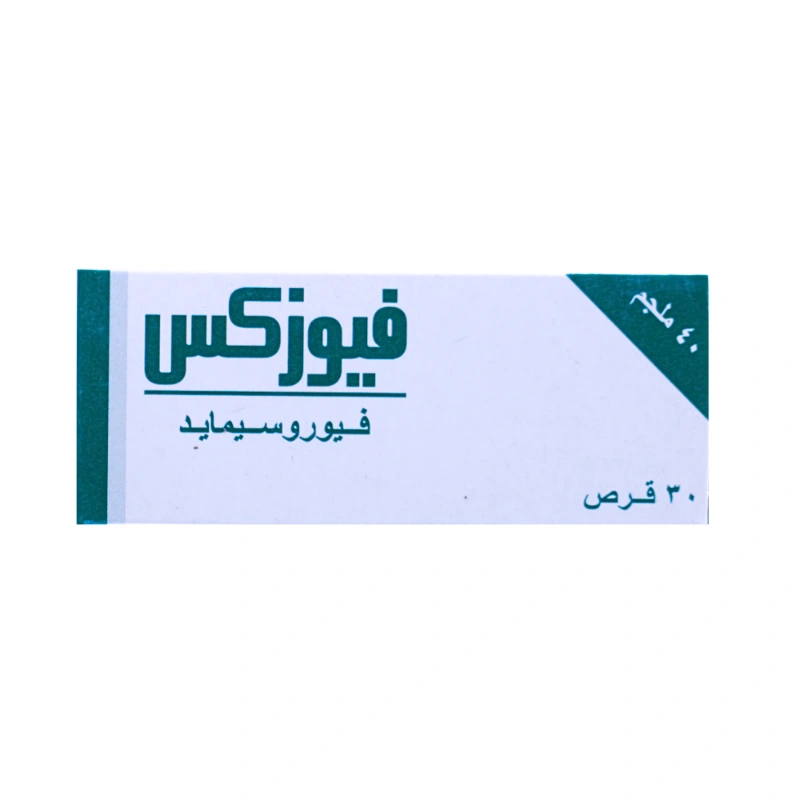
FUSIX 40/MG TAB 30/TAB
- Sku : I-002396
Key features
Fusix 40mg Tablet 30 Tablets is a tablet formulation containing furosemide 40 mg. A sulfonamide-derived loop diuretic, it inhibits the Na+/K+/2Cl− cotransporter (NKCC2) in the thick ascending limb of the loop of Henle, reducing sodium and chloride reabsorption and increasing renal excretion of water and electrolytes. It is indicated for edema associated with congestive heart failure, cirrhosis, and renal disease (including nephrotic syndrome), and for the management of hypertension. Available by prescription as 40 mg tablets in a pack of 30.- Brand: FUSIX
- Active Ingredient: FUROSEMIDE 40mg
- Strength: 40mg
- Dosage Form: Tablet
- Pack Size: 30 Tablets
- Route: Oral use
- Prescription Status: Prescription
- Therapeutic Class: Cardiovascular
- Pharmacological Group: Diuretics
- Drug Class: Loop diuretic (sulfonamide-derived).
- Manufacturer: KUWAIT SAUDI PHARMACEUTICAL INDUSTRIES
- Country of Origin: Kuwait
- SFDA Registration No.: 0804257208
- Shelf Life: 36 months
- Storage: store below 30°c
- Cv Drug Class: Diuretic
Health Care & Wellness > Medical Devices And Accessories
Vitamins & Supplements > Omega-3 Supplements
Vitamins & Supplements > Omega-3 Supplements
Health Care & Wellness > Medical Devices And Accessories
Vitamins & Supplements > Omega-3 Supplements
Vitamins & Supplements > Omega-3 Supplements
Indications
Approved Uses
Edema associated with congestive heart failure, cirrhosis of the liver, and renal disease (including nephrotic syndrome), Hypertension.
Off-Label Uses
Adjunct in acute pulmonary edema (often IV in emergencies), adjunct management of hypercalcemia (with saline), and adjunct management of hyperkalemia (to enhance urinary potassium excretion when appropriate).
Dosage & Administration
Dosing by Condition
Edema (adults): 20-80 mg orally once; may repeat or increase by 20-40 mg no sooner than 6-8 hours based on response; maximum up to 600 mg/day in severe cases. Hypertension (adults): 40 mg orally twice daily initially; adjust based on blood pressure/response (not typically first-line).
Initial Dose
Edema: 20-80 mg orally once daily; Hypertension: 80 mg, usually divided into 40 mg twice a day.
Maintenance Dose
The individually determined single dose should then be given once or twice daily (e.g., at 8 am and 2 pm). The dose of furosemide may be carefully titrated up to 600 mg/day in patients with clinically severe edematous states.
Maximum Dose
600mg/day (edema); 240mg/day (hypertension)
Dose Adjustment Notes
Titrate to clinical response and monitor electrolytes/renal function; in significant renal impairment, higher doses may be required to achieve diuresis. In hepatic cirrhosis, use cautiously (often initiate/adjust under close supervision) to avoid precipitating hepatic encephalopathy from rapid fluid/electrolyte shifts.
How to Take
Swallow the tablet with water; may be taken with or without food. Take in the morning; if a second daily dose is prescribed, take it in the early afternoon (e.g., lunchtime) to reduce nocturia.
Side Effects
Common Side Effects
Increased urination, dizziness/orthostatic hypotension, dehydration, electrolyte disturbances (especially hypokalemia and hyponatremia), nausea/vomiting.
Side Effect Frequency
Common: electrolyte disturbances (especially hypokalemia, hyponatremia), dehydration/volume depletion, hypotension, hyperuricemia; GI upset (nausea) and dizziness may occur. Uncommon/Rare: ototoxicity (dose/IV/renal-risk related), blood dyscrasias (e.g., thrombocytopenia), severe cutaneous reactions (e.g., SJS/TEN), pancreatitis.
Safety & Warnings
Contraindications
Anuria, hypersensitivity to furosemide.
Warnings & Precautions
Key warnings/precautions: risk of profound diuresis with dehydration/hypotension-monitor weight, BP, fluid status; monitor electrolytes (Na/K/Mg) and renal function; ototoxicity risk with high doses/ototoxins; may worsen gout (↑ uric acid) and affect glucose control; sulfonamide cross-sensitivity possible; caution in elderly and in hepatic cirrhosis (risk of encephalopathy); NSAIDs may blunt effect; may exacerbate SLE (rare).
Age Restriction
No fixed minimum age restriction; pediatric/neonatal use requires specialist dosing and close monitoring (extra caution in premature infants/neonates).
Drug Interactions
Drug Interactions
Major clinically relevant interactions include: aminoglycosides/other ototoxins (e.g., ethacrynic acid) and cisplatin (↑ ototoxicity/nephrotoxicity); NSAIDs (↓ diuretic/antihypertensive effect, ↑ renal risk); lithium (↑ lithium levels/toxicity); digoxin (hypokalemia ↑ toxicity); ACEi/ARBs/other antihypertensives (additive hypotension/renal impairment); corticosteroids/amphotericin B (↑ hypokalemia); probenecid (↓ tubular secretion/↓ effect); sucralfate (↓ absorption-separate dosing).
Interaction Severity
MAJOR: Aminoglycosides (↑ ototoxicity/nephrotoxicity), Cisplatin (↑ ototoxicity/nephrotoxicity), Lithium (↑ lithium levels/toxicity). MODERATE: Digoxin (risk of toxicity via hypokalemia), NSAIDs (↓ diuretic/antihypertensive effect; ↑ renal risk), ACE inhibitors/ARBs and other antihypertensives (additive hypotension/renal effects), Corticosteroids/amphotericin B (↑ hypokalemia). MINOR/ADMINISTRATION: Sucralfate (↓ absorption-separate by at least 2 hours).
Special Populations
Kidney Impairment
No fixed dose reduction; reduced GFR may require higher doses to achieve diuresis; discontinue if increasing azotemia and oliguria occur; contraindicated in anuria/unresponsive renal failure.
Storage & Patient Advice
Stopping the Medicine
Do not stop abruptly without prescriber direction; discontinue/withhold if increasing azotemia and oliguria occur, and otherwise stopping may worsen edema/heart failure due to loss of diuretic effect.
Overdose
Symptoms: marked diuresis with dehydration/hypovolemia, hypotension, electrolyte disturbances (e.g., hyponatremia, hypokalemia, hypochloremic alkalosis), possible arrhythmias/renal impairment. Management: supportive care with IV/oral fluid and electrolyte replacement, monitor vitals/ECG/renal function; consider GI decontamination only if very recent ingestion per toxicology guidance; seek urgent medical care.
Patient Counseling
Take in the morning (and if a second dose is prescribed, early afternoon) to reduce nighttime urination; expect increased urination. Stand up slowly to reduce dizziness/low blood pressure. Maintain appropriate hydration and follow clinician advice on salt/potassium; report symptoms of dehydration or electrolyte imbalance (thirst, weakness, muscle cramps, palpitations), reduced urination, severe dizziness, or hearing changes. Keep scheduled labs for electrolytes and kidney function; diabetics should monitor glucose more closely.
Monitoring Requirements
Monitor blood pressure, weight/fluid status and urine output; serum electrolytes (especially potassium and sodium; also magnesium), and renal function (SCr/BUN). Consider uric acid and glucose in at-risk patients; assess hearing with high-dose/prolonged therapy or when combined with ototoxins.
Pharmacology
Mechanism of Action
Inhibits the Na+/K+/2Cl− cotransporter (NKCC2) in the thick ascending limb of the loop of Henle, reducing sodium/chloride reabsorption and increasing excretion of water and electrolytes (including potassium).
Onset of Action
Oral: about 30-60 minutes.
Duration of Effect
Oral: approximately 6-8 hours.
Bioavailability
47-70%.
Metabolism
Minimal hepatic metabolism; a portion is conjugated to a glucuronide (predominantly in the kidney), with most drug eliminated unchanged in urine.
Protein Binding
Highly protein bound, ~95-99% (mainly to albumin).
Product Information
Available Dosage Forms
Tablet (this product: 40 mg oral tablet). Other furosemide dosage forms that may exist in general include oral solution and injectable solution (IV/IM).
Composition per Dose
Each tablet: 40mg furosemide
Generic Availability
Yes
OTC Alternatives
No OTC alternative
Cv Drug Class
Diuretic
Legal Disclaimer - Al Mujtama Pharmacy
The product information provided is derived from verified pharmaceutical references and is intended for general health education only. It is not a substitute for professional medical advice, diagnosis, or treatment.
Al Mujtama Pharmacy assumes no legal or medical liability for:
- Any therapeutic decision made based on the information displayed without consulting a licensed physician or pharmacist
- Any discrepancy between the information provided and the product's package insert or SFDA guidelines
- Any misuse of medication resulting from personal interpretation of the content displayed
Important notice: Drug formulations and instructions may vary between production batches. Always rely on the leaflet included inside the product packaging you have, and consult your pharmacist or physician before starting, adjusting, or discontinuing any medication.
By using this content, you acknowledge that you have read this disclaimer and agree that Al Mujtama Pharmacy bears no liability arising from reliance on this information as a substitute for direct medical consultation.
Your health is a trust - always consult your doctor first.
