
Get Free Delivery With No Minimum Order
-1744229570.gif "Almujtama Pharmacy logo")




Oral & Dental Care > Throat & Oral Care
Oral & Dental Care > Throat & Oral Care
Oral & Dental Care > Throat & Oral Care
Vitamins & Supplements > Vitamins and Minerals
Vitamins & Supplements > Vitamins and Minerals
Vitamins & Supplements > Vitamins and Minerals
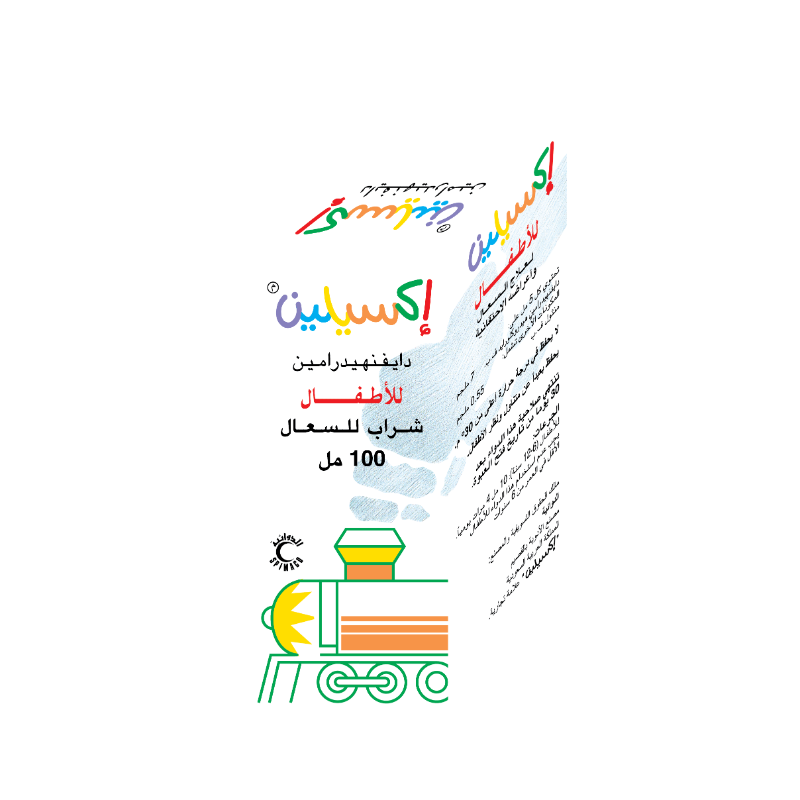
EXYLIN PAEDIATRIC SYRUP 100ML
- Sku : I-002058
Key features
EXYLIN Paediatric Syrup 100 mL is an over‑the‑counter pediatric syrup containing diphenhydramine hydrochloride 140 mg and menthol 11 mg. Diphenhydramine, a first‑generation H1 antihistamine, antagonizes peripheral and central H1 receptors to reduce histamine‑mediated symptoms and provide sedative/antitussive effects, while menthol activates TRPM8 receptors to give a cooling, soothing sensation in the upper airway. It is used for symptomatic relief of allergy and common‑cold upper respiratory symptoms such as rhinorrhea, sneezing, and nasal/throat irritation, and may help associated cough. Available OTC in a 100 mL syrup.- Brand: EXYLIN
- Active Ingredient: DIPHENHYDRAMINE HYDROCHLORIDE 140mg, MENTHOL 11mg
- Strength: 140,11mg
- Dosage Form: Syrup
- Pack Size: 100 ml
- Route: Oral use
- Prescription Status: OTC
- Therapeutic Class: Antiallergic
- Pharmacological Group: Antihistamines
- Drug Class: First-generation H1 antihistamine (ethanolamine class): diphenhydramine; combined with menthol, a topical counterirritant/antitussive soothing agent.
- Manufacturer: SPIMACO
- Country of Origin: Saudi Arabia
- SFDA Registration No.: 1208258009
- Shelf Life: 48 months
- Storage: store below 30°c
- Symptom Target: Cough, Runny Nose, Allergy
- Sedating: Yes
Oral & Dental Care > Throat & Oral Care
Oral & Dental Care > Throat & Oral Care
Oral & Dental Care > Throat & Oral Care
Vitamins & Supplements > Vitamins and Minerals
Vitamins & Supplements > Vitamins and Minerals
Vitamins & Supplements > Vitamins and Minerals
Indications
Approved Uses
Symptomatic relief of allergy/common-cold upper respiratory symptoms such as runny nose (rhinorrhea), sneezing, and nasal/throat irritation; may also help associated cough due to antihistamine/soothing effect.
Off-Label Uses
Short-term insomnia (adults), motion sickness/vertigo-related nausea, and treatment of acute dystonic reactions/drug-induced parkinsonism (adjunct/alternative when anticholinergic therapy is needed).
Dosage & Administration
Dosing by Condition
Dose is product-specific and should follow the label; in general for diphenhydramine immediate-release for allergy/cold symptoms: Children 2-5 years: 6.25 mg every 4-6 h (max 4 doses/24 h); Children 6-11 years: 12.5-25 mg every 4-6 h (max 4 doses/24 h); ≥12 years: 25-50 mg every 4-6 h (max 300 mg/day). Do not use in children <2 years unless directed by a clinician.
Maintenance Dose
Children 2-5 years: 6.25 mg every 4-6 hours as needed; max 37.5 mg daily (PO); Children 6-11 years: 12.5 to 25 mg every 4-6 hours as needed; max 150 mg/day (PO)
Maximum Dose
Maximum diphenhydramine (immediate-release) daily dose: children 2 to <6 years: 37.5 mg/day; children 6 to <12 years: 150 mg/day; ≥12 years/adults: 300 mg/day (all divided doses).
Dose Adjustment Notes
Use caution and consider lower doses in hepatic impairment and in older adults due to increased sensitivity to sedation/anticholinergic effects; renal impairment generally does not require specific adjustment but warrants caution with repeated dosing.
How to Take
Shake well before use; administer orally using an accurate measuring device (oral syringe/cup); may be taken with or without food; do not exceed the labeled dose/frequency and avoid concomitant sedatives/alcohol.
Side Effects
Common Side Effects
Drowsiness/sedation, dizziness, dry mouth/nose/throat, blurred vision, constipation, urinary retention, nausea/epigastric upset; paradoxical excitation may occur in children.
Side Effect Frequency
Frequency not reliably classifiable into fixed % bands for this OTC cough/cold combination; clinically expected: common-sedation/drowsiness and anticholinergic effects (dry mouth, dizziness); less common/rare-paradoxical excitation (especially in children), urinary retention, blurred vision, palpitations/tachycardia, hypotension, confusion, seizures (overdose).
Safety & Warnings
Contraindications
Hypersensitivity to diphenhydramine (or other ethanolamine antihistamines) or menthol/excipients; use in premature infants and neonates; concomitant use with MAO inhibitors (or within 14 days of stopping); acute asthma attack/lower respiratory tract disease (including acute exacerbation); narrow-angle glaucoma; urinary retention (including due to prostatic hypertrophy); pyloroduodenal obstruction/stenosing peptic ulcer.
Warnings & Precautions
May cause marked drowsiness/dizziness-avoid driving/operating machinery; avoid alcohol and other sedatives; do not exceed recommended dose or combine with other antihistamine-containing products; not for children <2 years; use caution in asthma/COPD or other lower respiratory disease, narrow-angle glaucoma/increased intraocular pressure, urinary retention/prostatic hypertrophy, pyloroduodenal obstruction, cardiovascular disease/hypertension, hyperthyroidism; avoid with MAO inhibitors; paradoxical excitation may occur in young children.
Age Restriction
Not recommended for children under 2 years of age. Do not use in children 2 to 5 years unless directed by a doctor. Use with caution in children 6 to 11 years.
Drug Interactions
Interaction Severity
MAJOR: other CNS depressants (alcohol, opioids, benzodiazepines, sedative-hypnotics) due to additive sedation/respiratory depression risk; MODERATE: other anticholinergics (e.g., TCAs, some antipsychotics) due to additive anticholinergic toxicity; MODERATE/AVOID: MAO inhibitors may intensify/prolong anticholinergic/CNS effects.
Special Populations
Kidney Impairment
No specific renal dose adjustment is defined; use with caution in severe renal impairment (monitor for increased sedation/anticholinergic effects).
Storage & Patient Advice
Storage Conditions
Store below 30°C. Keep away from light. Keep out of reach of children.
Missed Dose
Take as soon as remembered; skip if near the time of the next dose. Do not double the dose.
Stopping the Medicine
Safe to stop anytime
Overdose
Symptoms: prominent anticholinergic toxidrome (mydriasis, dry mouth, flushing, hyperthermia, tachycardia, urinary retention, ileus), CNS effects ranging from agitation/hallucinations/delirium and seizures (often in children) to coma/respiratory depression; possible QRS/QT abnormalities/arrhythmias. Management: urgent medical evaluation; activated charcoal if early and airway protected; supportive care (airway/ventilation, IV fluids, temperature control), benzodiazepines for seizures/agitation; consider sodium bicarbonate for wide QRS; physostigmine may be considered for severe anticholinergic delirium in selected cases under expert guidance.
Patient Counseling
May cause marked drowsiness-avoid driving/activities requiring alertness; avoid alcohol and other sedating/anticholinergic medicines and do not combine with other diphenhydramine-containing products; use an accurate measuring device and do not exceed labeled frequency; do not use in children <2 years unless directed by a clinician; seek advice if breathing problems (e.g., asthma/wheezing), urinary retention, severe sedation, or paradoxical agitation occur; store below 30°C (SFDA).
Monitoring Requirements
Baseline creatinine levels should be obtained for pediatric patients. All patients should be screened for mental alertness and relief of symptoms. Clinicians should monitor patients for adverse anticholinergic effects such as sedation, constipation, and urinary retention.
Pharmacology
Mechanism of Action
Diphenhydramine competitively antagonizes peripheral and central H1 receptors, reducing histamine-mediated allergy symptoms and causing sedation; it can reduce cough via central sedative/antitussive effects. Menthol activates TRPM8 receptors producing a cooling sensation and mild local anesthetic/soothing effect in the upper airway.
Duration of Effect
4-6 hours.
Half-Life
Variable; commonly ~4-9 hours in adults, and may be shorter in children (often reported around ~5 hours but variable).
Excretion
Primarily renal excretion as metabolites (urine), with only small amounts excreted unchanged.
Protein Binding
Approximately 80-85% (diphenhydramine)
Product Information
Available Dosage Forms
Syrup
Generic Availability
Yes
OTC Alternatives
For allergic rhinitis symptoms: non-sedating antihistamines such as loratadine or cetirizine (age-appropriate formulations). For cough due to cold (where appropriate by age): dextromethorphan-containing products may be used in older children/adults; saline/honey (age-appropriate) are non-drug options.
Symptom Target
Cough, Runny Nose, Allergy
Sedating
Yes
Legal Disclaimer - Al Mujtama Pharmacy
The product information provided is derived from verified pharmaceutical references and is intended for general health education only. It is not a substitute for professional medical advice, diagnosis, or treatment.
Al Mujtama Pharmacy assumes no legal or medical liability for:
- Any therapeutic decision made based on the information displayed without consulting a licensed physician or pharmacist
- Any discrepancy between the information provided and the product's package insert or SFDA guidelines
- Any misuse of medication resulting from personal interpretation of the content displayed
Important notice: Drug formulations and instructions may vary between production batches. Always rely on the leaflet included inside the product packaging you have, and consult your pharmacist or physician before starting, adjusting, or discontinuing any medication.
By using this content, you acknowledge that you have read this disclaimer and agree that Al Mujtama Pharmacy bears no liability arising from reliance on this information as a substitute for direct medical consultation.
Your health is a trust - always consult your doctor first.
