
Get Free Delivery With No Minimum Order
-1744229570.gif "Almujtama Pharmacy logo")




Vitamins & Supplements > Vitamin_D & Bone Health

Vitamins & Supplements > Vitamin_D & Bone Health
Vitamins & Supplements > Vitamins and Minerals
Vitamins & Supplements > Vitamin_D & Bone Health
Vitamins & Supplements > Vitamin_D & Bone Health
Vitamins & Supplements > Vitamins and Minerals
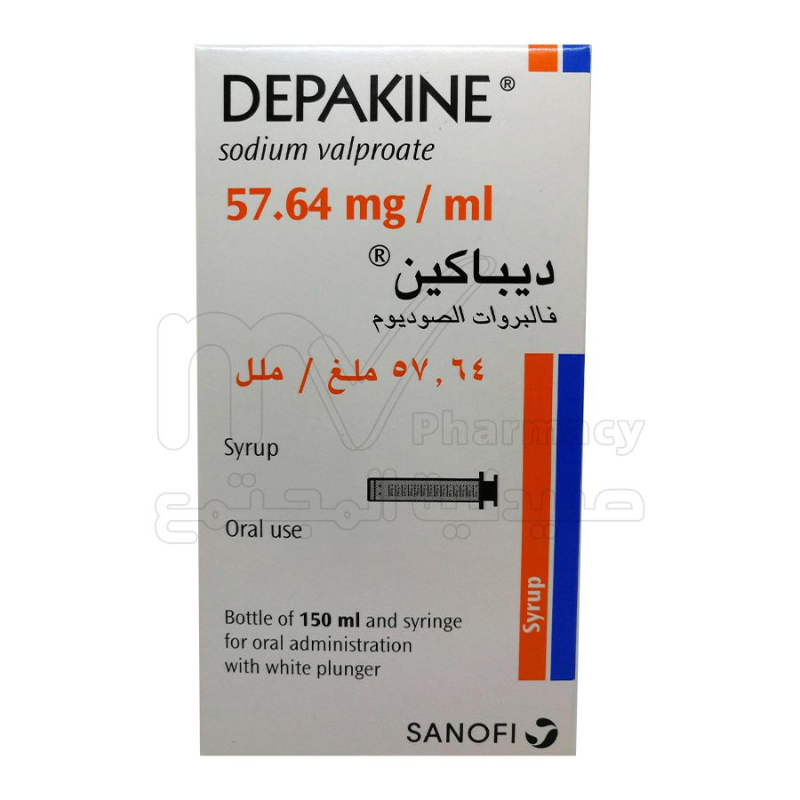
DEPAKIN 150ML SYRUP
- Sku : I-001535
Key features
DEPAKIN 150 ml Syrup contains the active ingredient valproate sodium 57.64 mg/ml. It is a broad‑spectrum anticonvulsant that enhances inhibitory GABAergic neurotransmission and modulates neuronal excitability by blocking voltage‑gated sodium channels and reducing T‑type calcium currents. It is indicated for the treatment of epilepsy, including generalized, focal (partial) and absence seizures, as monotherapy or adjunctive therapy. Available as a prescription syrup in a 150 ml pack.- Brand: DEPAKINE
- Active Ingredient: VALPROATE SODIUM 57.64mg/ml
- Strength: 57.64mg/ml
- Dosage Form: Syrup
- Pack Size: 150 ml
- Route: Oral use
- Prescription Status: Prescription
- Therapeutic Class: Anticonvulsant
- Pharmacological Group: Antiepileptics
- Drug Class: Broad-spectrum antiepileptic (anticonvulsant) with mood-stabilizing properties; a fatty-acid derivative that enhances GABAergic neurotransmission.
- Manufacturer: Unither Liquid Manufacturing
- Country of Origin: France
- SFDA Registration No.: 0503256985
- Shelf Life: 24 months
- Storage: store below 25°c
- Also Used For: Mood Stabilization, Migraine Prevention, Neuropathic Pain, Bipolar Disorder
Vitamins & Supplements > Vitamin_D & Bone Health
Vitamins & Supplements > Vitamin_D & Bone Health
Vitamins & Supplements > Vitamins and Minerals
Vitamins & Supplements > Vitamin_D & Bone Health
Vitamins & Supplements > Vitamin_D & Bone Health
Vitamins & Supplements > Vitamins and Minerals
Indications
Approved Uses
Epilepsy/seizure disorders (including generalized and focal/partial seizures, and absence seizures; as monotherapy or adjunctive therapy depending on seizure type and patient factors).
Off-Label Uses
Off-label uses vary by jurisdiction; commonly cited off-label uses include agitation/aggression in certain neuropsychiatric conditions and some pain syndromes (e.g., neuropathic pain), but evidence is mixed and these are not SFDA-verified indications for this product.
Dosage & Administration
Dosing by Condition
Epilepsy (adults): Initial 10-15 mg/kg/day in divided doses, increase by 5-10 mg/kg/week; maintenance generally <60 mg/kg/day. No FDA dosing for bipolar mania or migraine prophylaxis in Depakene label.
Initial Dose
Adults (epilepsy): 10-15 mg/kg/day PO in 2-3 divided doses; increase by 5-10 mg/kg/day at weekly intervals as needed/tolerated. Bipolar mania: 750 mg/day PO in divided doses (or 20 mg/kg/day), then adjust based on clinical response and serum levels.
Maintenance Dose
Epilepsy (adults): typically 15-60 mg/kg/day PO in divided doses (commonly ~1000-2500 mg/day; max 60 mg/kg/day), adjusted to clinical response and serum valproate concentrations.
Maximum Dose
60 mg/kg/day (adults and children); 3000 mg/day for migraine prophylaxis
Children's Dosage
Children ≥2 years: 15-45 mg/kg/day in divided doses; start at 15 mg/kg/day and increase by 5-10 mg/kg/week; use with extreme caution in children under 2 years due to high risk of fatal hepatotoxicity
Dose Adjustment Notes
Start low and titrate gradually to clinical response and tolerability; use therapeutic drug monitoring when clinically indicated (e.g., lack of response, suspected toxicity, interactions, adherence issues); reduce starting dose and titrate more slowly in the elderly; avoid/use extreme caution in hepatic impairment (contraindicated in significant liver disease); in renal impairment, total levels may be misleading-monitor clinical response and consider free valproate if hypoalbuminemia/renal dysfunction; divide doses for immediate-release syrup as prescribed.
How to Take
Shake well before each dose; administer orally using the provided measuring device (not a household spoon); may be taken with or without food-taking with food can reduce gastrointestinal upset; take at the same times daily and divide the total daily dose as prescribed (often 2-3 divided doses for immediate-release liquid formulations).
Side Effects
Common Side Effects
Nausea, vomiting, diarrhea, abdominal pain, weight gain, tremor, somnolence, dizziness, headache, alopecia (hair loss), thrombocytopenia, increased appetite
Side Effect Frequency
Very common/common adverse effects include GI upset (nausea ± vomiting), tremor, somnolence, weight gain/increased appetite, and alopecia; thrombocytopenia is a recognized common/very common dose-related effect; serious but rare risks include hepatotoxicity, pancreatitis, severe cutaneous reactions (e.g., SJS/TEN), and hyperammonemic encephalopathy.
Safety & Warnings
Contraindications
Contraindicated in: active liver disease/significant hepatic dysfunction; known mitochondrial disorders caused by POLG mutations (and children <2 years suspected of POLG-related disease); known urea cycle disorders; hypersensitivity to valproate/valproic acid/valproate sodium; porphyria. Also contraindicated for migraine prophylaxis in pregnancy (and in women of childbearing potential not using effective contraception, per many regulators).
Warnings & Precautions
Key warnings/precautions: monitor for hepatotoxicity (baseline and during first 6 months; highest risk in children <2 years and POLG/metabolic disorders); pancreatitis (stop if suspected); strong pregnancy prevention/avoidance due to teratogenicity and neurodevelopmental risk; hyperammonemia/encephalopathy risk (especially with urea cycle disorders or topiramate); thrombocytopenia/bleeding (monitor platelets/coagulation as indicated); suicidality monitoring; avoid/use extreme caution in mitochondrial (POLG) disease; counsel on CNS effects, weight gain/metabolic effects, and endocrine effects (e.g., menstrual irregularities/possible PCOS).
Age Restriction
Not contraindicated by age, but use with extreme caution in children <2 years (highest risk of fatal hepatotoxicity), especially with polytherapy or suspected metabolic/mitochondrial disorders; may be used in children ≥2 years when clinically indicated for epilepsy under specialist supervision.
Driving Warning
May Cause Drowsiness
Drug Interactions
Drug Interactions
Clinically important interactions include: carbapenems (markedly decrease valproate concentrations-avoid if possible); lamotrigine (valproate increases lamotrigine levels/SJS risk-use lower lamotrigine doses); phenobarbital (valproate increases levels/CNS depression); phenytoin (protein-binding/metabolism interaction-monitor free levels); topiramate (increased risk of hyperammonemia/encephalopathy); aspirin/salicylates (increase free valproate/bleeding risk, especially in children); warfarin/other anticoagulants (increased bleeding via protein-binding/platelet effects-monitor INR/bleeding); alcohol/other CNS depressants (additive sedation).
Special Populations
Pregnancy
Contraindicated
Breastfeeding
Caution
Children
Children ≥2 years: 15-45 mg/kg/day in divided doses; start at 15 mg/kg/day and increase by 5-10 mg/kg/week; use with extreme caution in children under 2 years due to high risk of fatal hepatotoxicity
Elderly
Start at lower doses and titrate slowly; monitor for excessive sedation, tremor, and fluid/nutritional intake; lower protein binding in elderly may increase free drug levels
Liver Impairment
Contraindicated in significant hepatic impairment/active liver disease; if mild impairment is present, use only if benefits outweigh risks with specialist oversight, consider lower starting dose and close clinical/LFT monitoring.
Storage & Patient Advice
Missed Dose
Take the missed dose as soon as remembered; if it is close to the next scheduled dose, skip the missed dose and resume the regular schedule; do not double doses.
Stopping the Medicine
Do not stop abruptly; taper gradually under medical supervision to reduce risk of seizure recurrence/status epilepticus.
Overdose
Overdose may cause CNS depression (drowsiness to coma), respiratory depression, hypotension, metabolic acidosis, hyperammonemia, and rarely cerebral edema; management is urgent supportive care (airway/ventilation, hemodynamics), activated charcoal if appropriate, consider L-carnitine for significant toxicity/hyperammonemia/hepatotoxicity, and hemodialysis in severe poisoning (very high levels, shock, severe acidosis, cerebral edema).
Patient Counseling
Key counseling: take exactly as prescribed and do not stop abruptly; shake well and measure doses accurately; may take with food to reduce stomach upset; avoid alcohol and use caution with driving until effects are known; urgently report signs of liver injury (jaundice, dark urine, severe fatigue), pancreatitis (severe abdominal pain), unusual bruising/bleeding, or marked drowsiness/confusion (possible hyperammonemia); discuss all new medicines due to major interactions (especially carbapenems and lamotrigine); pregnancy prevention is critical-valproate is highly teratogenic and generally should be avoided in pregnancy unless no suitable alternative, with effective contraception and specialist oversight.
Monitoring Requirements
Baseline and periodic: liver function tests (especially during the first 6 months), complete blood count including platelets; consider coagulation parameters (e.g., PT/INR) if bleeding risk/surgery; serum valproate concentrations when clinically indicated; monitor weight/metabolic effects; check ammonia if unexplained lethargy/vomiting/mental status changes; assess for pancreatitis symptoms.
Pharmacology
Mechanism of Action
Increases inhibitory neurotransmission by increasing brain GABA (via effects on GABA metabolism) and also modulates neuronal firing by blocking voltage-gated sodium channels and reducing T-type calcium currents.
Duration of Effect
Immediate-release valproate syrup provides therapeutic effect for ~8-12 hours per dose (consistent with divided dosing 2-3 times daily); elimination half-life is commonly ~9-16 hours (variable with age, comedications, and hepatic function).
Half-Life
Adults: 13-19 hours; generally shorter in children (often 7-13 hours in infants <2 months, variable) and longer in neonates (10-67 hours).
Bioavailability
Oral bioavailability is high and essentially complete for immediate-release valproate (≈90-100%); extended-release products have lower relative bioavailability (~80-90% vs delayed-release).
Protein Binding
High, concentration-dependent protein binding (typically ~80-95% to albumin; decreases at higher concentrations and in hypoalbuminemia).
Product Information
Available Dosage Forms
Syrup (oral use) for this specific SFDA product; other valproate dosage forms exist globally (e.g., gastro-resistant/modified-release tablets, capsules/granules, and IV formulations) but are product- and country-specific and cannot be asserted for this SFDA-registered item without local registration evidence.
Generic Availability
Yes
OTC Alternatives
No OTC alternative
Also Used For
Mood Stabilization, Migraine Prevention, Neuropathic Pain, Bipolar Disorder
Legal Disclaimer - Al Mujtama Pharmacy
The product information provided is derived from verified pharmaceutical references and is intended for general health education only. It is not a substitute for professional medical advice, diagnosis, or treatment.
Al Mujtama Pharmacy assumes no legal or medical liability for:
- Any therapeutic decision made based on the information displayed without consulting a licensed physician or pharmacist
- Any discrepancy between the information provided and the product's package insert or SFDA guidelines
- Any misuse of medication resulting from personal interpretation of the content displayed
Important notice: Drug formulations and instructions may vary between production batches. Always rely on the leaflet included inside the product packaging you have, and consult your pharmacist or physician before starting, adjusting, or discontinuing any medication.
By using this content, you acknowledge that you have read this disclaimer and agree that Al Mujtama Pharmacy bears no liability arising from reliance on this information as a substitute for direct medical consultation.
Your health is a trust - always consult your doctor first.
