
Get Free Delivery With No Minimum Order
-1744229570.gif "Almujtama Pharmacy logo")




Vitamins & Supplements > Omega-3 Supplements
Vitamins & Supplements > Omega-3 Supplements
Vitamins & Supplements > Omega-3 Supplements
Vitamins & Supplements > Omega-3 Supplements
Vitamins & Supplements > Omega-3 Supplements
Vitamins & Supplements > Omega-3 Supplements
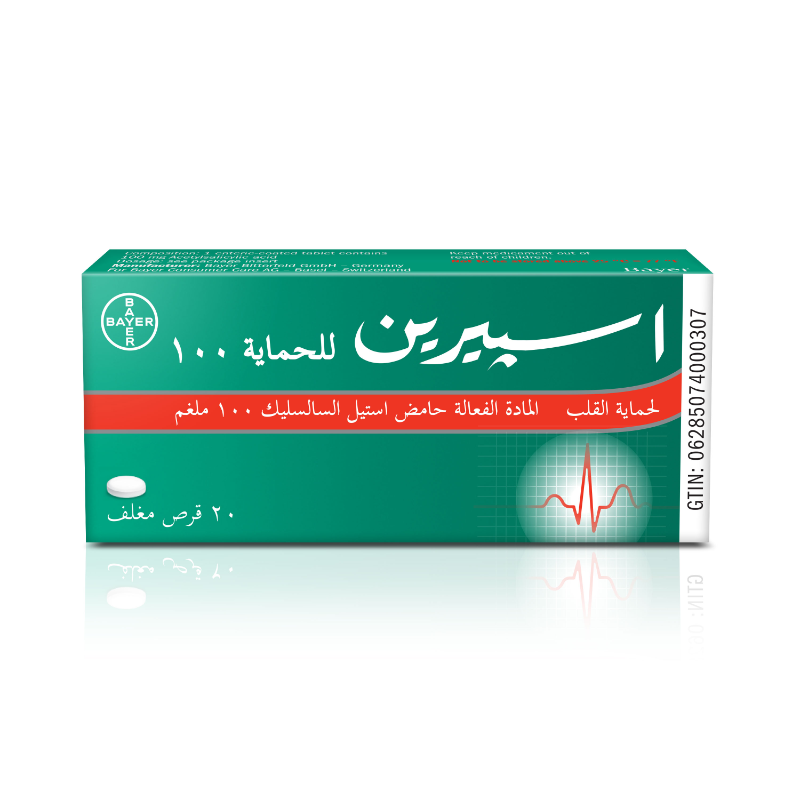
ASPIRIN PROTECT 100/MG EC TAB 60/EC TAB
- Sku : I-022592
Key features
Aspirin Protect 100 mg EC is an enteric‑coated tablet containing 100 mg of acetylsalicylic acid. It irreversibly inhibits platelet cyclooxygenase‑1, reducing thromboxane A2 production and thereby inhibiting platelet aggregation for the lifespan of affected platelets, with additional COX‑1/COX‑2 inhibition of prostaglandin synthesis at higher doses. It is used as antiplatelet therapy for secondary prevention of atherothrombotic events such as myocardial infarction and ischemic stroke/TIA in patients with established cardiovascular or cerebrovascular disease, including chronic coronary syndromes/angina and post‑revascularization when clinically indicated. Available OTC as enteric‑coated tablets, pack of 60.- Brand: ASPIRIN
- Active Ingredient: ACETYLSALICYLIC ACID 100mg
- Strength: 100mg
- Dosage Form: Enteric-coated tablet
- Pack Size: 60 Tablets
- Route: Oral use
- Prescription Status: OTC
- Therapeutic Class: Analgesic
- Pharmacological Group: Non-opioid Analgesics
- Drug Class: Salicylate NSAID with antiplatelet activity; irreversible cyclooxygenase (COX‑1 > COX‑2) inhibitor / platelet aggregation inhibitor.
- Manufacturer: Bayer Bitterfeld GmbH
- Country of Origin: Germany
- SFDA Registration No.: 0902221714
- Shelf Life: 36 months
- Storage: store below 25°c
- Cv Drug Class: Antiplatelet
Vitamins & Supplements > Omega-3 Supplements
Vitamins & Supplements > Omega-3 Supplements
Vitamins & Supplements > Omega-3 Supplements
Vitamins & Supplements > Omega-3 Supplements
Vitamins & Supplements > Omega-3 Supplements
Vitamins & Supplements > Omega-3 Supplements
Indications
Approved Uses
Antiplatelet therapy for secondary prevention of atherothrombotic events (e.g., myocardial infarction, ischemic stroke/TIA) in patients with established cardiovascular/cerebrovascular disease, including chronic coronary syndromes/angina and post‑revascularization when indicated by clinician.
Off-Label Uses
Primary prevention of ASCVD in select adults at elevated risk and low bleeding risk (now used more selectively per contemporary guidelines); prevention of pre‑eclampsia in high‑risk pregnancy (typically 75-162 mg nightly, per obstetric guidance).
Dosage & Administration
Dosing by Condition
Secondary prevention/antiplatelet: 75-100 mg orally once daily (this product: 100 mg once daily). For suspected acute MI, immediate‑release aspirin 150-325 mg chewed is used as a loading dose (enteric‑coated tablets are not preferred for loading), then 75-100 mg daily maintenance.
Initial Dose
For secondary prevention, 75-100mg once daily. A loading dose of 150-300mg may be used in acute events like a heart attack.
Maintenance Dose
75-100mg once daily for cardiovascular prevention
Maximum Dose
For this product’s intended antiplatelet use: 100 mg once daily (do not exceed 100 mg/day unless directed by a clinician).
Children's Dosage
Not recommended under 16 years due to risk of Reye's syndrome, except under specialist supervision for specific conditions (e.g., Kawasaki disease: 80-100mg/kg/day in 4 divided doses during acute phase)
Dose Adjustment Notes
No routine dose adjustment for the 75-100 mg/day antiplatelet regimen; use caution/avoid in severe renal impairment and severe hepatic disease, and avoid use in active bleeding or aspirin hypersensitivity. In older adults, use the lowest effective antiplatelet dose and reassess bleeding risk.
How to Take
Swallow the enteric‑coated tablet whole with a full glass of water; do not crush, chew, or split. May be taken with food if stomach upset occurs (do not routinely use food to justify altering the tablet).
Side Effects
Common Side Effects
Dyspepsia/heartburn, nausea, abdominal pain; increased bleeding tendency (easy bruising, epistaxis, prolonged bleeding).
Safety & Warnings
Contraindications
Hypersensitivity to aspirin/salicylates or other NSAIDs (including AERD); active peptic ulcer or GI bleeding; bleeding disorders/hemorrhagic diathesis; severe hepatic impairment; severe renal impairment; severe heart failure; concomitant methotrexate ≥15 mg/week; third trimester of pregnancy.
Warnings & Precautions
Warnings/precautions: increased GI bleeding risk (higher in elderly, prior ulcer, concomitant NSAIDs/SSRIs/corticosteroids/alcohol; consider PPI if high risk); asthma/AERD risk; monitor for bleeding; perioperative management-if interruption needed, stop ~5-7 days before elective procedures; caution in uncontrolled hypertension (bleeding stroke risk), renal/hepatic impairment, gout/hyperuricemia, and G6PD deficiency; avoid in children/teens with viral illness.
Age Restriction
Not recommended in children <16 years unless specifically prescribed by a doctor (avoid in children/teens with viral illness due to Reye’s syndrome risk).
Drug Interactions
Drug Interactions
Key interactions: anticoagulants (e.g., warfarin/DOACs/heparins) and other antiplatelets (e.g., clopidogrel) ↑ bleeding; other NSAIDs (esp. ibuprofen) ↑ GI bleeding and may blunt antiplatelet effect; methotrexate ↑ toxicity (notably ≥15 mg/week contraindicated); SSRIs/SNRIs and corticosteroids ↑ GI bleeding; alcohol ↑ GI bleeding; ACEi/ARBs/diuretics may reduce renal function/antihypertensive effect; uricosurics (probenecid) antagonized.
Interaction Severity
MAJOR: Anticoagulants (warfarin/DOACs), other antiplatelets (e.g., clopidogrel) and thrombolytics (additive bleeding); methotrexate (especially higher doses) (toxicity risk); chronic NSAID use (additive GI bleeding). MODERATE/CLINICALLY IMPORTANT: Ibuprofen/naproxen can reduce aspirin’s antiplatelet effect if taken concomitantly (separate dosing or avoid); SSRIs/SNRIs and systemic corticosteroids increase GI bleeding risk; ACEi/ARBs/diuretics may worsen renal function and blunt antihypertensive effect in susceptible patients.
Food Interaction
Take with food
Alcohol Interaction
Avoid
Special Populations
Breastfeeding
Consult Doctor
Children
Not recommended under 16 years due to risk of Reye's syndrome, except under specialist supervision for specific conditions (e.g., Kawasaki disease: 80-100mg/kg/day in 4 divided doses during acute phase)
Elderly
Standard adult dosing (75-100mg daily) is used, but with increased caution due to a higher risk of bleeding.
Liver Impairment
Avoid use in patients with severe hepatic impairment. Use with caution in mild to moderate impairment.
Storage & Patient Advice
Missed Dose
Take the missed dose as soon as remembered the same day; if it is close to the next scheduled dose, skip the missed dose and resume the regular schedule-do not double doses.
Stopping the Medicine
Do not stop chronic antiplatelet aspirin without clinician advice; if stopping for elective surgery/bleeding risk, typically stop ~5-7 days prior when clinically appropriate (individualize, especially after recent stent/ACS).
Patient Counseling
Swallow whole (do not crush/chew/split). Take once daily as directed; take with food if dyspepsia occurs. Do not stop without clinician advice if used for heart/stroke protection. Watch for bleeding (black stools, vomiting blood, unusual bruising) and seek care if present. Avoid/limit alcohol. Avoid ibuprofen/naproxen unless advised; if needed, separate from aspirin to avoid reducing antiplatelet effect. Tell healthcare providers/dentist before procedures. Avoid in children/teens with viral illness (Reye risk) and in aspirin allergy/asthma sensitive to NSAIDs.
Monitoring Requirements
Monitor for bleeding (GI bleeding: melena/hematemesis; easy bruising/epistaxis) and anemia symptoms; consider periodic CBC/hemoglobin and renal function in long‑term therapy or higher‑risk patients; monitor for hypersensitivity/bronchospasm in susceptible individuals.
Pharmacology
Mechanism of Action
Irreversibly inhibits COX‑1 in platelets, decreasing thromboxane A2 synthesis and thereby inhibiting platelet aggregation for the platelet lifespan; also inhibits prostaglandin synthesis (COX‑1/COX‑2) at higher doses.
Onset of Action
Enteric‑coated aspirin has delayed/variable absorption; platelet inhibition begins after absorption and may be slower than immediate‑release (often several hours), whereas immediate‑release aspirin acts faster (within ~1 hour).
Duration of Effect
Antiplatelet effect persists for the life of the platelet (~7-10 days) after a dose; GI/analgesic effects are not clinically relevant at 100 mg/day.
Half-Life
Aspirin (acetylsalicylic acid) plasma half‑life ~15-20 minutes; salicylate half‑life is dose‑dependent-about 2-3 hours at low doses and can extend to ~15-30 hours at high/anti‑inflammatory doses or overdose.
Bioavailability
Oral aspirin has variable systemic bioavailability due to rapid presystemic hydrolysis; for enteric‑coated low‑dose products, systemic aspirin exposure is often reduced and delayed, while salicylate exposure is generally comparable-overall bioavailability is commonly cited as ~40-50% (range ~30-70%) depending on formulation and conditions.
Metabolism
Rapid hydrolysis by esterases in plasma and tissues (including liver) to salicylic acid; salicylate is then primarily hepatically metabolized via glycine conjugation (salicyluric acid) and glucuronidation (phenolic and acyl glucuronides), with minor oxidative pathways.
Protein Binding
Salicylate is ~80-90% albumin‑bound at therapeutic concentrations, with concentration/dose‑dependent (nonlinear) binding that decreases as levels rise.
Product Information
Composition per Dose
Each enteric-coated tablet: 100mg acetylsalicylic acid
Generic Availability
Yes
OTC Alternatives
OTC alternatives for the same active ingredient include other low‑dose aspirin (75-100 mg) enteric‑coated or immediate‑release products; there is no OTC non‑aspirin antiplatelet substitute (e.g., clopidogrel is prescription).
Cv Drug Class
Antiplatelet
Legal Disclaimer - Al Mujtama Pharmacy
The product information provided is derived from verified pharmaceutical references and is intended for general health education only. It is not a substitute for professional medical advice, diagnosis, or treatment.
Al Mujtama Pharmacy assumes no legal or medical liability for:
- Any therapeutic decision made based on the information displayed without consulting a licensed physician or pharmacist
- Any discrepancy between the information provided and the product's package insert or SFDA guidelines
- Any misuse of medication resulting from personal interpretation of the content displayed
Important notice: Drug formulations and instructions may vary between production batches. Always rely on the leaflet included inside the product packaging you have, and consult your pharmacist or physician before starting, adjusting, or discontinuing any medication.
By using this content, you acknowledge that you have read this disclaimer and agree that Al Mujtama Pharmacy bears no liability arising from reliance on this information as a substitute for direct medical consultation.
Your health is a trust - always consult your doctor first.
