
Use Code: ND30 And Get 30% OFF | Get Free Delivery With No Minimum Order
-1744229570.gif "Almujtama Pharmacy logo")




Frequently bought together
Health Care & Wellness > Napkins

Health Care & Wellness > Napkins

Skin And Body Care > Eye Care
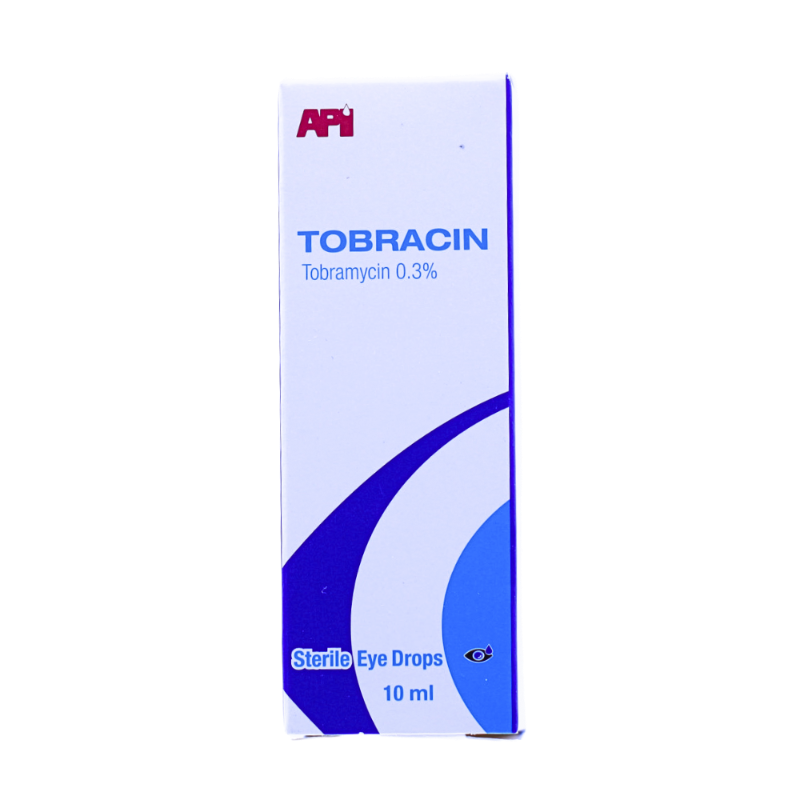
TOBRACIN 0.3% EYE DROPS 10ML
- Sku : I-028984
Key features
TOBRACIN 0.3% eye drops contain the active ingredient tobramycin 0.3% as an ophthalmic solution. It is an aminoglycoside antibiotic that binds the bacterial 30S ribosomal subunit, inhibiting protein synthesis and causing misreading of mRNA to produce bactericidal activity. The product is indicated for the treatment of external bacterial infections of the eye and its adnexa, including bacterial conjunctivitis, blepharitis, blepharoconjunctivitis, and superficial keratitis caused by susceptible organisms. Available as a 10 ml dropper bottle and supplied by prescription.- Brand: TOBRACIN
- Active Ingredient: TOBRAMYCIN 0.3%
- Strength: 0.3%
- Dosage Form: Eye drops
- Pack Size: 10 ml
- Route: Ophthalmic use
- Prescription Status: Prescription
- Therapeutic Class: Ophthalmic
- Pharmacological Group: Anti-infectives (Eye)
- Drug Class: Aminoglycoside Antibiotic (Ophthalmic)
- Manufacturer: Amman Pharmaceutical Industries (API)
- Country of Origin: Jordan
- SFDA Registration No.: 37-290-09
- Shelf Life: 36 months
- Storage: do not store above 30°c
- Target Organ: Eye
- Preservative Free: No
Frequently bought together
Health Care & Wellness > Napkins
Health Care & Wellness > Napkins
Skin And Body Care > Eye Care
Indications
Approved Uses
Treatment of external bacterial infections of the eye and its adnexa caused by susceptible organisms (e.g., bacterial conjunctivitis/blepharitis/blepharoconjunctivitis; may be used for superficial keratitis per product labeling in many references).
Dosage & Administration
Dosing by Condition
Bacterial Conjunctivitis (Mild to Moderate): Instill 1-2 drops into the affected eye(s) every 4 hours. Bacterial Conjunctivitis (Severe): Instill 2 drops into the eye(s) hourly until improvement, then reduce frequency.
Initial Dose
1-2 drops in the affected eye(s) every 4 hours (mild-moderate); every 1 hour (severe infection)
Maintenance Dose
1-2 drops every 4 hours.
Maximum Dose
Severe infections: 2 drops in the affected eye(s) every hour; reduce frequency as improvement occurs.
Children's Dosage
Approved for use in children. Clinical studies have shown tobramycin to be safe and effective for use in children.
Dose Adjustment Notes
No dose adjustment is generally required in renal or hepatic impairment for ophthalmic use because systemic absorption is minimal; use caution with prolonged/high-frequency use or if combined with systemic aminoglycosides.
How to Take
Wash hands. Tilt head back, pull down lower eyelid to form a pocket, instill the prescribed number of drops into the conjunctival sac. Avoid touching the dropper tip to the eye/skin/any surface. Close the eye gently and apply nasolacrimal occlusion (press inner corner near the nose) for 1-2 minutes. Replace cap immediately.
Side Effects
Common Side Effects
Transient ocular burning/stinging/irritation or discomfort, conjunctival redness (erythema), tearing (lacrimation), eyelid itching and eyelid swelling.
Side Effect Frequency
Common (≥1% to <10%): ocular irritation/discomfort including burning/stinging, conjunctival hyperemia/erythema, lacrimation/tearing, eyelid itching/pruritus and eyelid edema/swelling; Uncommon (<1%): keratitis/corneal epithelial toxicity (e.g., corneal abrasion), hypersensitivity reactions, blurred vision/visual disturbance, conjunctival edema, dry eye, eye pain, and superinfection with prolonged use.
Safety & Warnings
Contraindications
Hypersensitivity to tobramycin, other aminoglycosides, or any component of the formulation.
Warnings & Precautions
For ophthalmic use only (not for injection/oral use); avoid contamination of dropper tip; discontinue if hypersensitivity occurs; prolonged use may cause overgrowth of non-susceptible organisms including fungi; cross-sensitivity with other aminoglycosides may occur; remove contact lenses before use and reinsert after an appropriate interval if permitted by clinician.
Age Restriction
No specific minimum age restriction in labeling; may be used in pediatrics including infants when clinically indicated, with caution in neonates/young infants.
Drug Interactions
Drug Interactions
Clinically significant interactions are unlikely with ophthalmic use; use caution/monitoring if used concurrently with systemic aminoglycosides or other nephrotoxic/ototoxic agents, especially with prolonged/high-frequency dosing or compromised ocular surface.
Interaction Severity
MINOR/clinically unlikely: concomitant systemic aminoglycosides may theoretically increase additive nephro/ototoxicity, but systemic exposure from eye drops is minimal; consider caution with prolonged intensive ophthalmic dosing.
Food Interaction
No restriction
Special Populations
Children
Approved for use in children. Clinical studies have shown tobramycin to be safe and effective for use in children.
Kidney Impairment
No adjustment needed for ophthalmic use.
Storage & Patient Advice
Missed Dose
Instill the missed dose as soon as remembered; if it is close to the next dose, skip the missed dose and resume the regular schedule-do not double doses.
Stopping the Medicine
Complete the prescribed course; do not stop early unless hypersensitivity/serious adverse effects occur or prescriber advises.
Overdose
Ocular overdose may cause increased local irritation (e.g., punctate keratitis, redness, tearing, lid edema/itching); manage by flushing the eye with lukewarm water/saline; systemic toxicity is unlikely, and accidental ingestion is usually low risk but seek advice if large amount or symptoms occur.
Patient Counseling
Use exactly as prescribed and complete the course. Wash hands; avoid touching the dropper tip; close eye and press inner corner 1-2 minutes after dosing. Remove contact lenses before use and generally avoid lens wear during active infection; if permitted, wait at least 15 minutes before reinsertion. Seek care urgently for worsening pain, swelling, rash, vision changes, or no improvement within 48 hours; do not share drops.
Monitoring Requirements
No routine laboratory monitoring is required for ophthalmic use; clinically monitor for improvement within 48 hours, hypersensitivity, and superinfection (including fungal overgrowth) with prolonged use.
Pharmacology
Mechanism of Action
Aminoglycoside antibiotic that binds the bacterial 30S ribosomal subunit, inhibiting protein synthesis and causing misreading of mRNA, leading to bactericidal cell death.
Onset of Action
Within minutes after instillation (local antibacterial activity begins promptly).
Duration of Effect
Approximately 4 hours per dose (hence typical dosing every 4 hours; may be more frequent initially in severe infections as prescribed).
Half-Life
Systemic elimination half-life is ~2 hours (about 2-3 hours) when systemically absorbed; after ophthalmic use, systemic absorption is minimal and no clinically meaningful systemic half-life is typically observed.
Bioavailability
Minimal systemic absorption after ophthalmic administration; primarily local ocular exposure.
Metabolism
Not significantly metabolized; eliminated largely unchanged (primarily via renal excretion if systemically absorbed).
Excretion
If systemically absorbed, tobramycin is eliminated primarily by the kidneys as unchanged drug via glomerular filtration.
Protein Binding
Less than 10%.
Product Information
Available Dosage Forms
Eye drops (solution)
Composition per Dose
Each mL: Tobramycin 3 mg (0.3%)
Generic Availability
Yes
OTC Alternatives
No OTC alternative
Target Organ
Eye
Preservative Free
No
Reviewed by Al Mujtama Pharmacy Medical Review Team. Last reviewed 24-08-2026
Similar Products
Medications > Hypertesion & Cardiovascular Medications
Medications > Hypertesion & Cardiovascular Medications
Medications > Cold, Cough, and Allergy Medications

Medications > Painkillers and Antipyretics

Medications > Psychiatric Medications
Medications > Gastrointestinal Medications
Medications > Painkillers and Antipyretics
Medications > Diabetes Medications
Medications > Psychiatric Medications

Medications > Painkillers and Antipyretics
