
Use Code: ND30 And Get 30% OFF | Get Free Delivery With No Minimum Order
-1744229570.gif "Almujtama Pharmacy logo")




Frequently bought together
Oral & Dental Care > Throat & Oral Care

Oral & Dental Care > Throat & Oral Care
Vitamins & Supplements > Vitamins and Minerals

Vitamins & Supplements > Vitamins and Minerals
Vitamins & Supplements > Vitamins and Minerals
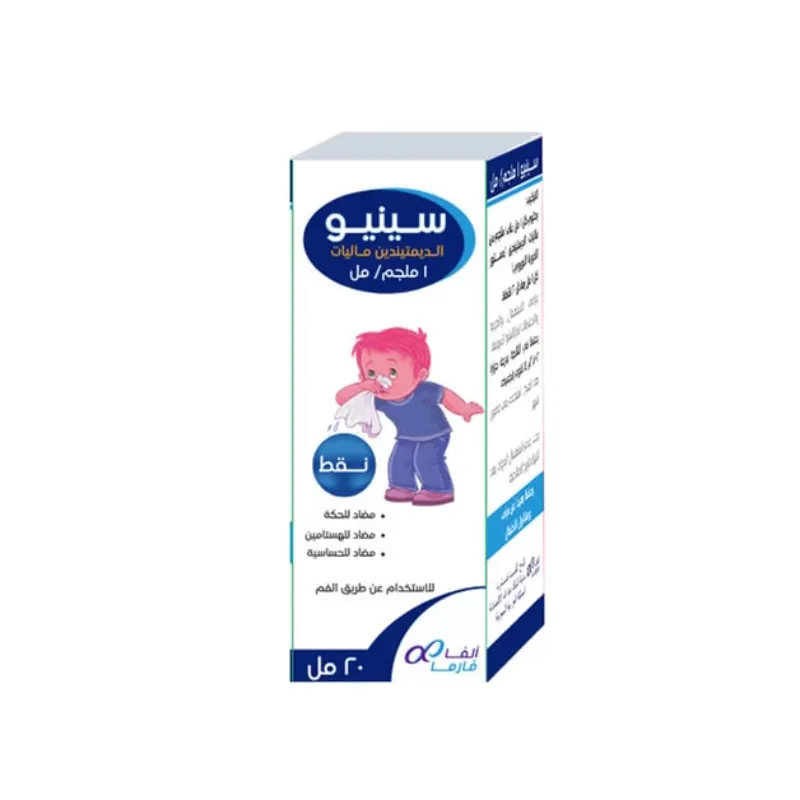
SINEO ORAL DROPS 1MG/ML 20ML
- Sku : I-034356
Key features
SINEO Oral Drops 1 mg/ml contain dimethindene maleate 1 mg/ml as the active ingredient in an oral drop formulation. It is a first‑generation H1 antihistamine that competitively blocks H1 receptors to inhibit histamine‑mediated responses and also exhibits anticholinergic activity with central sedative effects. The product is indicated for symptomatic relief of allergic conditions such as allergic rhinitis, urticaria and pruritus of allergic or dermatologic origin (e.g., insect bites, eczema/dermatitis). Available by prescription as a 20 ml oral drops bottle.- Brand: SINEO
- Active Ingredient: DIMETHINDENE MALEATE 1mg/ml
- Strength: 1mg/ml
- Dosage Form: Oral drops
- Pack Size: 20 ml
- Route: Oral use
- Prescription Status: Prescription
- Therapeutic Class: Dermatological
- Drug Class: First-generation H1 antihistamine (H1 receptor antagonist) with anticholinergic and sedative properties.
- Manufacturer: ALPHA PHARMA INDUSTRY
- Country of Origin: Saudi Arabia
- SFDA Registration No.: 2910234402
- Shelf Life: 18 months
- Storage: Store in a refrigerator (2°C - 8°C), do not freeze
- Symptom Target: Allergy, Runny Nose
- Sedating: Yes
Frequently bought together
Oral & Dental Care > Throat & Oral Care
Oral & Dental Care > Throat & Oral Care
Vitamins & Supplements > Vitamins and Minerals
Vitamins & Supplements > Vitamins and Minerals
Vitamins & Supplements > Vitamins and Minerals
Indications
Approved Uses
Symptomatic relief of allergic conditions such as allergic rhinitis and urticaria, and pruritus (itching) of allergic/dermatologic origin (e.g., insect bites, eczema/dermatitis).
Off-Label Uses
No well-established off-label uses are routinely recommended; use is generally limited to labeled symptomatic treatment of allergy/pruritus.
Dosage & Administration
Dosing by Condition
Allergic conditions/pruritus: Adults and adolescents ≥12 years: 20-40 drops (1-2 mg) three times daily. Children: total daily dose 0.1 mg/kg/day divided into 3 doses (per prescriber).
Dose Adjustment Notes
No specific renal dose adjustment is typically required; use caution and consider lower doses in hepatic impairment and in older adults due to increased sensitivity to sedation/anticholinergic effects.
How to Take
Oral use: measure the prescribed dose with the dropper; may be given directly or mixed with a small amount of cool/lukewarm water, juice, or milk (including in an infant’s bottle if not hot).
Side Effects
Common Side Effects
Sedation, drowsiness, dizziness, dry mouth, fatigue, headache, nausea
Side Effect Frequency
Common: drowsiness/sedation and fatigue; other anticholinergic effects (e.g., dry mouth) occur; paradoxical excitation is uncommon/rare (especially in children)
Safety & Warnings
Contraindications
Hypersensitivity to dimethindene (or excipients); infants <1 month (including premature infants); narrow‑angle glaucoma; urinary retention/bladder neck obstruction (e.g., symptomatic prostatic hypertrophy).
Warnings & Precautions
May cause marked drowsiness-avoid driving/operating machinery; caution in epilepsy/seizure risk, asthma/COPD or other respiratory disease, hepatic/renal impairment, narrow‑angle glaucoma, prostatic hypertrophy/urinary retention, and with other CNS depressants; avoid in infants <1 month and use caution in infants/young children due to apnea/paradoxical excitation risk.
Age Restriction
Contraindicated in infants <1 month (including neonates); avoid in premature infants; use with caution in infants/children due to risk of sedation/apnea.
Drug Interactions
Drug Interactions
Additive CNS depression with alcohol, sedatives/tranquilizers, opioids and other CNS depressants; additive anticholinergic effects with anticholinergics and tricyclic antidepressants; avoid/contraindicated with MAO inhibitors due to potentiation of anticholinergic/CNS effects.
Interaction Severity
MAJOR: other CNS depressants (alcohol, benzodiazepines, opioids, sedative-hypnotics) due to additive sedation/respiratory depression risk. MODERATE: other anticholinergics (e.g., TCAs, antiparkinsonian anticholinergics) due to additive anticholinergic effects. MAOIs: use with caution (potentially enhanced anticholinergic/CNS effects), not typically described as causing hypertensive crisis with antihistamines.
Food Interaction
May be taken with or without food; mixing the drops with a small amount of liquid is acceptable.
Special Populations
Kidney Impairment
No established renal dose adjustment; use with caution in severe renal impairment (monitor for increased sedation/anticholinergic effects).
Storage & Patient Advice
Missed Dose
Take as soon as remembered; skip if it is almost time for the next dose. Do not double the dose
Stopping the Medicine
Can be stopped at any time; no tapering required.
Overdose
Symptoms: CNS depression (adults) or paradoxical CNS excitation (children), anticholinergic effects (dry mouth, mydriasis, tachycardia, urinary retention), fever/flushing, ataxia/hallucinations, seizures, and possible respiratory depression; Management: urgent medical care, supportive/symptomatic treatment, consider activated charcoal if early after ingestion and airway protected.
Patient Counseling
May cause drowsiness and impaired alertness-avoid driving/operating machinery until effects are known; avoid alcohol and other sedatives. Use exactly as prescribed and do not exceed the dose (especially in children). Measure with the dropper; may mix with a small amount of cool/lukewarm liquid. Store refrigerated at 2-8°C and do not freeze (per SFDA). Seek medical advice if urinary retention, severe dizziness, palpitations, or breathing difficulty occurs; use in infants only under medical direction.
Monitoring Requirements
No routine monitoring required; monitor for excessive sedation in children and elderly
Pharmacology
Mechanism of Action
Competitive H1-receptor antagonist that blocks histamine-mediated responses; also has anticholinergic activity and causes sedation due to CNS penetration.
Onset of Action
Typically within 30 minutes (about 30-60 minutes).
Duration of Effect
Approximately 6-8 hours.
Half-Life
Approximately 6 hours (range reported in references)
Bioavailability
Unknown (not reliably established in authoritative product information)
Metabolism
Hepatic metabolism (primarily oxidative metabolism and conjugation, including N-demethylation and glucuronidation)
Excretion
Renal and fecal (as metabolites), with urinary excretion predominating
Protein Binding
Approximately 90%
Product Information
Available Dosage Forms
For this SFDA-registered product: oral drops (1 mg/mL). Other dimethindene products in some markets may include topical gel, but extended-release capsules and nasal spray are not standard dimethindene dosage forms.
Composition per Dose
Each 1 ml: dimethindene maleate 1 mg
Generic Availability
Yes
OTC Alternatives
Non-sedating second-generation antihistamines such as cetirizine or loratadine (formulation depends on age: syrup/drops/tablets per local availability).
Symptom Target
Allergy, Runny Nose
Sedating
Yes
Reviewed by Al Mujtama Pharmacy Medical Review Team. Last reviewed 15-08-2026
Similar Products
Medications > Sexual Health
Medications > Sexual Health
Medications > Diabetes Medications
Medications > Diabetes Medications
Medications > Psychiatric Medications
Medications > Diabetes Medications
Medications > Psychiatric Medications
Medications > Painkillers and Antipyretics
Medications > Painkillers and Antipyretics
Medications > Eye and Ear Medications
