
Get Free Delivery With No Minimum Order
-1744229570.gif "Almujtama Pharmacy logo")




Vitamins & Supplements > Vitamins and Minerals

Vitamins & Supplements > Vitamins and Minerals
Vitamins & Supplements > Vitamins and Minerals
Vitamins & Supplements > Vitamins and Minerals
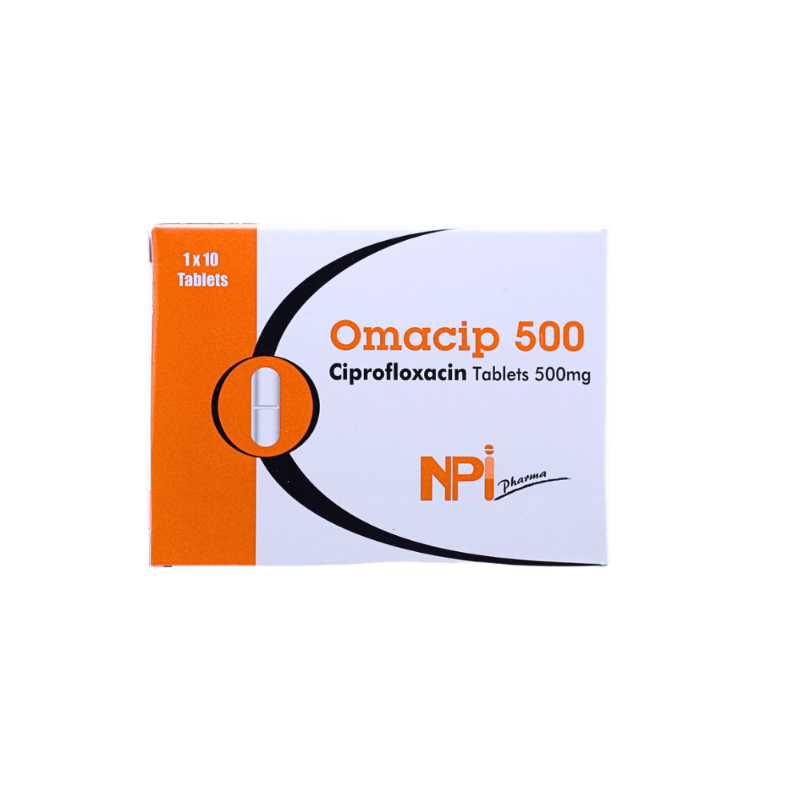
OMACIP 500/MG TAB 10/TAB
- Sku : I-011738
Key features
Omacip 500mg Tablets Film-coated tablet is a film-coated tablet formulation containing ciprofloxacin 500 mg as the active ingredient. It inhibits bacterial DNA gyrase (topoisomerase II) and topoisomerase IV, enzymes essential for DNA replication and repair, resulting in bacterial cell death. It is indicated for a broad range of systemic bacterial infections, including complicated and uncomplicated urinary tract infections (including pyelonephritis), lower respiratory tract infections, acute bacterial sinusitis, skin and soft tissue infections, bone and joint infections, complicated intra‑abdominal infections (with metronidazole), infectious diarrhea, typhoid fever, chronic bacterial prostatitis, and select severe infections such as inhalational anthrax and plague. Available by prescription as film-coated tablets in packs of 10.- Brand: OMACIP
- Active Ingredient: CIPROFLOXACIN 500mg
- Strength: 500mg
- Dosage Form: Film-coated tablet
- Pack Size: 10 Tablets
- Route: Oral use
- Prescription Status: Prescription
- Therapeutic Class: Anti-infective
- Pharmacological Group: Fluoroquinolones
- Drug Class: Second-generation Fluoroquinolone Antibiotic
- Manufacturer: NATIONAL PHARMACEUTICAL INDUSTRIES CO
- Country of Origin: Oman
- SFDA Registration No.: 0210258315
- Shelf Life: 36 months
- Storage: store below 25°c
- Spectrum: Broad-spectrum
- Antibiotic Class: Fluoroquinolone
Vitamins & Supplements > Vitamins and Minerals
Vitamins & Supplements > Vitamins and Minerals
Vitamins & Supplements > Vitamins and Minerals
Vitamins & Supplements > Vitamins and Minerals
Indications
Approved Uses
Common approved indications for systemic ciprofloxacin include: complicated and uncomplicated urinary tract infections (including pyelonephritis), lower respiratory tract infections, acute bacterial sinusitis, skin/skin structure infections, bone and joint infections, complicated intra‑abdominal infections (with metronidazole), infectious diarrhea, typhoid fever, chronic bacterial prostatitis, inhalational anthrax (post‑exposure prophylaxis and treatment), and plague. (Gonorrhea is not reliably an approved/appropriate indication in many current guidelines due to resistance and is generally not recommended.)
Off-Label Uses
Commonly cited off‑label uses include traveler’s diarrhea (treatment; prophylaxis generally discouraged), certain sexually transmitted infections such as chancroid where susceptible/appropriate, and selected prophylaxis/treatment scenarios guided by local susceptibility (e.g., some neutropenia prophylaxis regimens historically, though practice varies). Tuberculosis and Crohn’s disease are not standard off‑label uses for ciprofloxacin in guidelines (TB requires multi‑drug regimens; Crohn’s use is limited/adjunctive and not a typical ciprofloxacin indication).
Dosage & Administration
Dosing by Condition
Typical adult oral immediate‑release dosing (guideline/label dependent): uncomplicated cystitis: 250 mg q12h for 3 days (where appropriate); complicated UTI/pyelonephritis: 500 mg q12h for 7-14 days; acute bacterial sinusitis: 500 mg q12h for ~10 days; lower respiratory tract infections: 500-750 mg q12h for 7-14 days; skin/skin structure: 500-750 mg q12h for 7-14 days; bone/joint: 500-750 mg q12h for 4-8 weeks; infectious diarrhea: 500 mg q12h for 3-5 (up to 7) days; typhoid fever: 500 mg q12h for 7-10 days; chronic bacterial prostatitis: 500 mg q12h for 28 days; complicated intra‑abdominal infection: 500 mg q12h for 7-14 days with metronidazole; inhalational anthrax PEP: 500 mg q12h for 60 days; plague: 500 mg q12h for 10-14 days.
Initial Dose
500mg every 12 hours
Maintenance Dose
250mg-750mg every 12 hours depending on infection severity
Maximum Dose
1500mg per day (750mg twice daily for severe infections)
Children's Dosage
Not recommended for routine use in children under 18 years due to risk of arthropathy; exception: complicated UTI/pyelonephritis (1-17 years): 10-20mg/kg q12h (max 750mg/dose); inhalation anthrax: 15mg/kg q12h (max 500mg/dose)
Dose Adjustment Notes
Dose adjustment is required in renal impairment (e.g., reduce dose/extend interval when CrCl <50 mL/min; more significant adjustment when CrCl <30 mL/min). No routine dose adjustment is required for hepatic impairment. Use caution in older adults and those at higher risk of fluoroquinolone toxicities (tendinopathy, CNS effects, QT risk).
How to Take
Swallow the 500 mg film‑coated tablet whole with a full glass of water; may be taken with or without food. Avoid co-administration with polyvalent cations (antacids containing Mg/Al, sucralfate, iron, zinc, calcium supplements, multivitamins) and separate dosing (typically ciprofloxacin ≥2 hours before or ≥6 hours after these products). Do not take with dairy products or calcium‑fortified juices alone (they reduce absorption), though dairy as part of a meal is acceptable.
Side Effects
Common Side Effects
Common adverse effects: nausea, diarrhea, vomiting, abdominal pain/discomfort, headache, dizziness, rash, and transient elevations in liver enzymes (ALT/AST).
Side Effect Frequency
Common (1-10%): nausea, diarrhea, vomiting, abdominal pain, headache, dizziness; rash and transaminase elevations are also reported; serious events (tendinopathy/rupture, peripheral neuropathy, seizures, QT prolongation, C. difficile colitis, anaphylaxis) are rare but clinically critical
Safety & Warnings
Contraindications
Contraindications: hypersensitivity to ciprofloxacin/other quinolones; concomitant use with tizanidine. (Myasthenia gravis is a strong warning/avoid use, not an absolute contraindication in many labels.)
Warnings & Precautions
Precautions: reserve for appropriate infections when alternatives are unsuitable; stop immediately for tendon pain/swelling, neuropathy symptoms, or serious CNS effects; higher tendon-rupture risk in age >60, corticosteroid use, and transplant patients; avoid in myasthenia gravis; monitor QT risk (electrolytes, concomitant QT drugs); monitor glucose in diabetics; counsel on photosensitivity; assess for C. difficile diarrhea; maintain hydration to reduce crystalluria; use caution in patients with known aortic aneurysm or major risk factors.
Age Restriction
Generally avoid routine use in patients <18 years; use only when benefits outweigh risks for specific pediatric indications (e.g., complicated UTI/pyelonephritis, inhalational anthrax post-exposure, plague) per local labeling/guidelines.
Driving Warning
Safe
Drug Interactions
Drug Interactions
Key interactions: tizanidine (contraindicated); polyvalent cations/antacids/sucralfate/iron/zinc/calcium (reduced absorption-separate dosing); theophylline/caffeine (↑ levels via CYP1A2 inhibition); warfarin (↑ INR/bleeding-monitor); antidiabetic agents esp. sulfonylureas/insulin (dysglycemia); QT-prolonging drugs (additive QT risk); NSAIDs (↑ CNS stimulation/seizure risk); probenecid (↑ ciprofloxacin levels); clozapine/ropinirole/sildenafil (possible ↑ levels); methotrexate (reduced clearance/toxicity risk); cyclosporine (possible ↑ nephrotoxicity/SCr).
Interaction Severity
MAJOR/Contraindicated: tizanidine. MAJOR: strong risk interactions include theophylline (↑ levels/toxicity), QT‑prolonging drugs in high‑risk patients (additive QT risk), and warfarin (clinically significant INR increase-requires close monitoring). MODERATE: antidiabetic agents (dysglycemia), NSAIDs (↑ CNS stimulation/seizure risk), cyclosporine (↑ nephrotoxicity risk), clozapine (↑ levels), methotrexate (↓ clearance), caffeine (↑ effects). ABSORPTION interaction (manage by separation, not “severity” toxicity): antacids/sucralfate/iron/zinc/calcium/multivitamins and dairy/calcium-fortified products.
Food Interaction
May be taken with or without food; food may improve GI tolerability. Avoid taking with dairy products or calcium‑fortified juices alone and separate from antacids/sucralfate/iron/zinc/calcium/multivitamins (commonly ciprofloxacin ≥2 hours before or ≥6 hours after) to prevent reduced absorption.
Special Populations
Pregnancy
Not assigned a pregnancy category (Risk Summary: Use only if potential benefit justifies potential risk to fetus)
Breastfeeding
Caution
Children
Not recommended for routine use in children under 18 years due to risk of arthropathy; exception: complicated UTI/pyelonephritis (1-17 years): 10-20mg/kg q12h (max 750mg/dose); inhalation anthrax: 15mg/kg q12h (max 500mg/dose)
Elderly
Use standard adult dosing with caution; increased risk of tendon rupture (especially with concurrent corticosteroid use), QT prolongation, and CNS adverse effects. Monitor renal function and adjust dose accordingly
Kidney Impairment
Dose adjustment required: CrCl 30-50 mL/min: 250-500 mg every 12 hours; CrCl 5-29 mL/min: 250-500 mg every 18-24 hours; hemodialysis/peritoneal dialysis: 250-500 mg every 24 hours, give after dialysis.
Liver Impairment
No routine dose adjustment required in hepatic impairment (including stable cirrhosis); use caution if severe hepatic disease coexists with renal impairment because dosing is primarily renal.
Storage & Patient Advice
Storage Conditions
Store below 25°C. Keep in original packaging. Keep out of reach of children.
Missed Dose
Take as soon as remembered. If it is almost time for the next dose, skip the missed dose and continue with the regular schedule. Do not take a double dose.
Stopping the Medicine
Complete the prescribed course; do not stop early unless a clinician advises or serious adverse effects occur (e.g., tendon pain, neuropathy, severe allergy, severe diarrhea).
Overdose
Overdose may cause GI upset, CNS toxicity (dizziness, tremor, seizures), QT prolongation, and renal impairment/crystalluria; management is supportive (consider activated charcoal if early, maintain hydration, monitor ECG/renal function); no specific antidote and dialysis removes only a small amount-seek urgent medical care.
Patient Counseling
Complete the full prescribed course; take with a full glass of water and stay well hydrated. May take with or without food, but separate from antacids/sucralfate/iron/zinc/calcium/multivitamins and avoid dairy/calcium-fortified juices alone around dosing (follow ≥2 hours before or ≥6 hours after rule). Avoid excessive sun/UV exposure (photosensitivity). Stop and seek care urgently for tendon pain/swelling, sudden tendon rupture, peripheral neuropathy symptoms (numbness/tingling/burning), severe mood/CNS effects, severe/persistent diarrhea, or allergic reaction. Use caution with driving if dizzy. Inform clinician about history of seizures, QT prolongation/arrhythmias, myasthenia gravis, kidney disease, and interacting drugs (notably warfarin, theophylline, tizanidine).
Monitoring Requirements
No routine labs are required for all patients, but monitor as clinically indicated: renal function (especially if impaired/elderly or prolonged therapy), INR if on warfarin, blood glucose in diabetics, and monitor for tendinopathy, peripheral neuropathy, CNS effects, severe diarrhea (C. difficile), and consider ECG/QT risk assessment in susceptible patients.
Pharmacology
Mechanism of Action
Inhibits bacterial DNA gyrase (topoisomerase II) and topoisomerase IV, enzymes essential for DNA replication, transcription, repair, and recombination, leading to bacterial cell death.
Onset of Action
Oral absorption is rapid with peak concentrations about 1-2 hours after dosing; clinical improvement in infection is typically seen within 24-72 hours if the pathogen is susceptible.
Duration of Effect
Approximately 12 hours for immediate‑release oral ciprofloxacin (supports q12h dosing).
Product Information
Available Dosage Forms
Ciprofloxacin is available (by market) as: immediate‑release oral tablets (film‑coated), extended‑release oral tablets, oral suspension, IV infusion/solution for infusion, and ophthalmic solution (eye drops); otic formulations exist in some markets (often as combinations).
Composition per Dose
Each film-coated tablet: 500mg ciprofloxacin (as ciprofloxacin hydrochloride)
Generic Availability
Yes
OTC Alternatives
No OTC alternative-ciprofloxacin/fluoroquinolones are prescription-only (SFDA legal status: Prescription).
Spectrum
Broad-spectrum
Antibiotic Class
Fluoroquinolone
Legal Disclaimer - Al Mujtama Pharmacy
The product information provided is derived from verified pharmaceutical references and is intended for general health education only. It is not a substitute for professional medical advice, diagnosis, or treatment.
Al Mujtama Pharmacy assumes no legal or medical liability for:
- Any therapeutic decision made based on the information displayed without consulting a licensed physician or pharmacist
- Any discrepancy between the information provided and the product's package insert or SFDA guidelines
- Any misuse of medication resulting from personal interpretation of the content displayed
Important notice: Drug formulations and instructions may vary between production batches. Always rely on the leaflet included inside the product packaging you have, and consult your pharmacist or physician before starting, adjusting, or discontinuing any medication.
By using this content, you acknowledge that you have read this disclaimer and agree that Al Mujtama Pharmacy bears no liability arising from reliance on this information as a substitute for direct medical consultation.
Your health is a trust - always consult your doctor first.
