
Get Free Delivery With No Minimum Order
-1744229570.gif "Almujtama Pharmacy logo")





Vitamins & Supplements > Vitamin_D & Bone Health

Vitamins & Supplements > Vitamin_D & Bone Health

Vitamins & Supplements > Vitamins and Minerals

Vitamins & Supplements > Vitamins and Minerals

Vitamins & Supplements > Vitamin_D & Bone Health

Vitamins & Supplements > Vitamins and Minerals
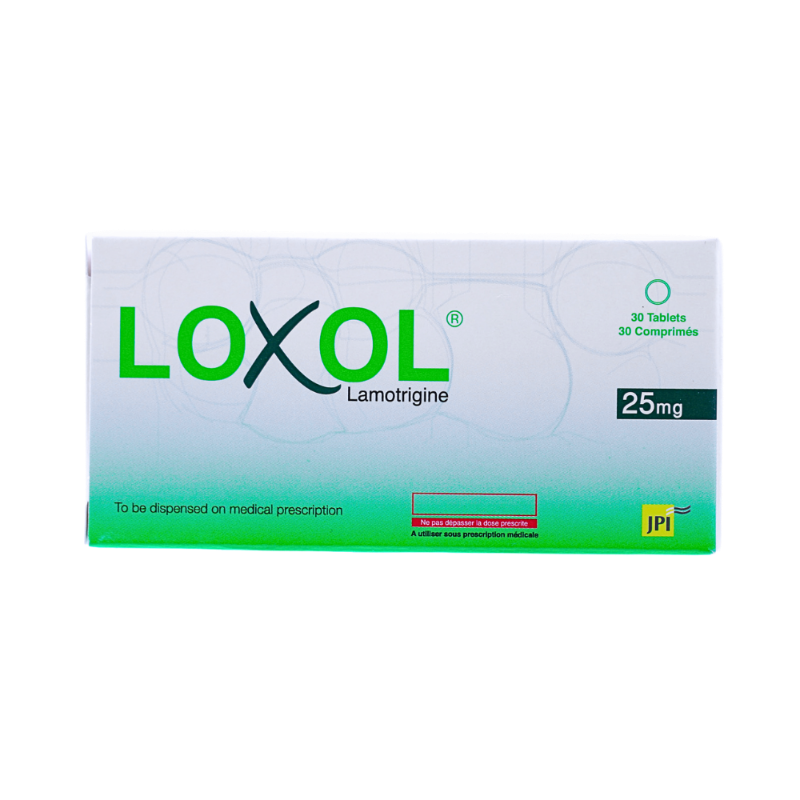
LOXOL 25 MG 30 TAB
- Sku : I-026899
Key features
LOXOL 25 MG 30 TAB is a tablet formulation containing 25 mg of the active ingredient lamotrigine. It acts by blocking voltage‑gated sodium channels to stabilize neuronal membranes and by reducing presynaptic release of excitatory neurotransmitters, notably glutamate and aspartate. It is indicated for epilepsy - including partial seizures, generalized tonic‑clonic seizures, absence seizures and Lennox‑Gastaut syndrome - and for maintenance treatment of Bipolar I disorder to delay mood episodes. Packaged as 30 tablets per pack and available by prescription.- Brand: LOXOL
- Active Ingredient: LAMOTRIGINE
- Strength: 25mg
- Dosage Form: Tablet
- Pack Size: 30 Tablets
- Route: Oral use
- Prescription Status: Prescription
- Therapeutic Class: Anticonvulsant
- Pharmacological Group: Antiepileptics
- Drug Class: Phenyltriazine anticonvulsant (antiepileptic); also used as a mood stabilizer for bipolar disorder maintenance.
- Manufacturer: Jazeera Pharmaceutical Industries (JPI)
- Country of Origin: Saudi Arabia
- SFDA Registration No.: 0802221698
- Shelf Life: 36 months
- Storage: store below 30°c
- Also Used For: Mood Stabilization, Bipolar Disorder Maintenance
Vitamins & Supplements > Vitamin_D & Bone Health
Vitamins & Supplements > Vitamin_D & Bone Health
Vitamins & Supplements > Vitamins and Minerals
Vitamins & Supplements > Vitamins and Minerals
Vitamins & Supplements > Vitamin_D & Bone Health
Vitamins & Supplements > Vitamins and Minerals
Indications
Approved Uses
Epilepsy (partial seizures, generalized tonic-clonic seizures, absence seizures, Lennox-Gastaut syndrome), Bipolar I disorder (maintenance treatment to delay mood episodes)
Off-Label Uses
Off-label uses with variable evidence include bipolar depression (acute), neuropathic pain, migraine prophylaxis, and certain psychiatric conditions (e.g., borderline personality disorder/PTSD) where evidence is limited; not all are guideline-endorsed.
Dosage & Administration
Dosing by Condition
Epilepsy (adjunct or monotherapy): dosing is regimen-dependent and must follow labeled titration schedules; typical adult maintenance ranges are ~100-200 mg/day with valproate, ~200-400 mg/day with enzyme inducers (without valproate), and ~225-375 mg/day for monotherapy (some patients may require up to 500 mg/day). Bipolar I maintenance (prevention of mood episodes): typical target 200 mg/day (range 100-400 mg/day depending on interacting drugs).
Initial Dose
25 mg once daily for the first 2 weeks (monotherapy or with valproate regimen)
Maintenance Dose
100-200 mg/day (monotherapy or with valproate); 200-400 mg/day (with enzyme-inducing AEDs)
Maximum Dose
Epilepsy: typical maximum 500 mg/day (depending on regimen/inducers); Bipolar disorder: typical maximum 200 mg/day (up to 400 mg/day when used with enzyme-inducing drugs and without valproate).
Children's Dosage
Epilepsy (2-12 years, monotherapy): Initial 0.3 mg/kg/day in 1-2 divided doses for 2 weeks, then 0.6 mg/kg/day for 2 weeks, then increase by 0.6 mg/kg every 1-2 weeks; maintenance 1-10 mg/kg/day (max 200 mg/day). Not approved for bipolar disorder in patients under 18 years
Dose Adjustment Notes
Titrate slowly to reduce rash risk; reduce lamotrigine dose when used with valproate; increase dose when used with enzyme inducers (e.g., carbamazepine, phenytoin, phenobarbital, primidone, rifampin); use caution and consider lower maintenance doses in significant hepatic impairment and in significant renal impairment (especially end-stage).
How to Take
Oral tablet: swallow with water; may be taken with or without food; take at the same time each day. Do not crush/chew unless the specific product is labeled dispersible/chewable.
Side Effects
Common Side Effects
Dizziness, headache, nausea/vomiting, somnolence or insomnia, diplopia/blurred vision, ataxia (lack of coordination), tremor, rash, fatigue.
Side Effect Frequency
Common: headache, dizziness, drowsiness, nausea, diplopia, ataxia, rash, blurred vision, vomiting, fatigue. Serious: SJS/TEN, multiorgan hypersensitivity.
Safety & Warnings
Contraindications
Contraindicated in patients with hypersensitivity to lamotrigine or any excipients; do not re-initiate in patients who discontinued due to rash associated with prior lamotrigine treatment unless benefits clearly outweigh risks.
Warnings & Precautions
Key warnings/precautions: risk of serious rash/SJS/TEN-higher with rapid titration, high starting dose, or valproate; stop at first rash unless clearly not drug-related and do not restart after serious rash; monitor for suicidal thoughts/behavior; avoid abrupt discontinuation (taper when possible); consider interaction with estrogen-containing contraceptives (reduced lamotrigine levels); watch for hypersensitivity/DRESS, aseptic meningitis, HLH, and cardiac conduction issues in at-risk patients.
Age Restriction
Epilepsy: approved for patients ≥2 years (as adjunctive therapy; some indications include monotherapy in older children/adults depending on label). Bipolar disorder: not approved/recommended in patients <18 years.
Driving Warning
May Cause Drowsiness
Drug Interactions
Drug Interactions
Major interactions: Valproate increases lamotrigine levels (requires lower lamotrigine dosing); enzyme inducers (carbamazepine, phenytoin, phenobarbital, primidone, rifampin) decrease lamotrigine levels (may require higher dosing); estrogen-containing oral contraceptives decrease lamotrigine levels (monitor/adjust). Protease inhibitors (e.g., lopinavir/ritonavir, atazanavir/ritonavir) can decrease lamotrigine exposure; sertraline is not a consistent/major interaction (monitor clinically if combined).
Interaction Severity
MAJOR: Valproate (markedly increases lamotrigine levels and serious rash risk-requires lower lamotrigine dosing/titration). MODERATE: Enzyme inducers (carbamazepine, phenytoin, phenobarbital, primidone, rifampin) decrease lamotrigine levels; estrogen-containing contraceptives decrease lamotrigine levels and levels may rise during hormone-free interval; some protease inhibitors (e.g., lopinavir/ritonavir, atazanavir/ritonavir) can reduce lamotrigine levels. OTHER/variable: Sertraline and other agents may have minor/variable effects-monitor clinically.
Food Interaction
No clinically significant food restriction; may be taken with or without food.
Alcohol Interaction
Avoid
Special Populations
Breastfeeding
Caution
Children
Epilepsy (2-12 years, monotherapy): Initial 0.3 mg/kg/day in 1-2 divided doses for 2 weeks, then 0.6 mg/kg/day for 2 weeks, then increase by 0.6 mg/kg every 1-2 weeks; maintenance 1-10 mg/kg/day (max 200 mg/day). Not approved for bipolar disorder in patients under 18 years
Kidney Impairment
Use with caution in significant renal impairment; reduced maintenance doses may be effective (especially in end-stage renal disease), while initial titration is generally per standard with close monitoring.
Liver Impairment
Hepatic impairment: reduce dose ~25% in moderate (Child-Pugh B) and ~50% in severe (Child-Pugh C); greater reduction may be needed in severe impairment with ascites.
Storage & Patient Advice
Missed Dose
Take the missed dose as soon as remembered unless it is close to the next dose; do not double. If several days of doses are missed, contact the prescriber because re-titration may be needed to reduce rash risk.
Stopping the Medicine
Do not stop abruptly; taper over at least 2 weeks if possible, unless safety requires immediate discontinuation (e.g., serious rash/SJS/TEN, hypersensitivity).
Overdose
Overdose may cause ataxia, nystagmus, dizziness, seizures, reduced consciousness/coma, and cardiac conduction abnormalities (e.g., QRS prolongation/arrhythmias); management is supportive with airway/ventilation as needed, activated charcoal if appropriate, and cardiac/neurologic monitoring-seek emergency care.
Patient Counseling
Key counseling: take exactly as prescribed with slow titration; do not stop abruptly; report any rash immediately (especially in first 2 months) and seek urgent care if rash is severe or with fever/mucosal lesions; inform providers about valproate, enzyme-inducing antiseizure meds, and hormonal contraceptives; caution with driving/alcohol until effects known; monitor for mood changes/suicidal thoughts; if therapy is interrupted for several days, contact prescriber as re-titration may be required.
Monitoring Requirements
No routine serum level monitoring is required; clinically monitor for rash (especially during early titration), CNS adverse effects, seizure control or mood symptoms, and suicidality; consider hepatic/renal function monitoring in patients with impairment or when clinically indicated.
Pharmacology
Mechanism of Action
Blocks voltage-gated sodium channels, stabilizing neuronal membranes and reducing repetitive firing; decreases presynaptic release of excitatory neurotransmitters (notably glutamate; also aspartate).
Bioavailability
Approximately 98% (oral bioavailability).
Metabolism
Hepatic metabolism primarily via glucuronidation (mainly UGT1A4; also UGT2B7); minimal CYP450 involvement.
Product Information
Available Dosage Forms
For LOXOL (lamotrigine) specifically per verified API data: Tablet (immediate-release) only.
Composition per Dose
Each tablet: 25 mg lamotrigine
Generic Availability
Yes
OTC Alternatives
No OTC alternative
Also Used For
Mood Stabilization, Bipolar Disorder Maintenance
Legal Disclaimer - Al Mujtama Pharmacy
The product information provided is derived from verified pharmaceutical references and is intended for general health education only. It is not a substitute for professional medical advice, diagnosis, or treatment.
Al Mujtama Pharmacy assumes no legal or medical liability for:
- Any therapeutic decision made based on the information displayed without consulting a licensed physician or pharmacist
- Any discrepancy between the information provided and the product's package insert or SFDA guidelines
- Any misuse of medication resulting from personal interpretation of the content displayed
Important notice: Drug formulations and instructions may vary between production batches. Always rely on the leaflet included inside the product packaging you have, and consult your pharmacist or physician before starting, adjusting, or discontinuing any medication.
By using this content, you acknowledge that you have read this disclaimer and agree that Al Mujtama Pharmacy bears no liability arising from reliance on this information as a substitute for direct medical consultation.
Your health is a trust - always consult your doctor first.
